Operations | Monitoring | ITSM | DevOps | Cloud

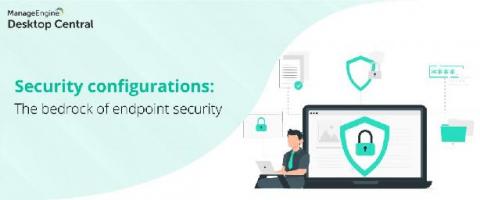
Security configurations-Part one: 7 reasons why security configurations are crucial to your security blueprint

Security configurations are security-specific settings used to secure heterogeneous endpoints such as servers, desktops, laptops, mobile devices, and tablets. As endpoints in your network diversify, securing each endpoint becomes a challenge. One way to ensure effective endpoint security is by automating it, which is where security configurations come into play. Security configurations are utilized to secure and control every facet of your network.
Avoiding Memory Leaks in NodeJS: Best Practices for Performance

Memory leaks are something every developer has to eventually face. They are common in most languages, even if the language automatically manages memory for you. Memory leaks can result in problems such as application slowdowns, crashes, high latency, and so on. In this blog post, we will look at what memory leaks are and how you can avoid them in your NodeJS application. Though this is more focused on NodeJS, it should generally apply to JavaScript and TypeScript as well.

How to Deploy an Azure Kubernetes Cluster with AKS

At the end of October 2017, Microsoft announced the release of Azure Kubernetes Service (AKS), its hosted version of Kubernetes. If you’re new to AKS and curious about how to get a proof of concept (PoC) set up in your environment, read on. In this AKS tutorial, you’re going to learn, step-by-step, how to get an Azure Kubernetes cluster built with AKS.

DX NetOps 20.2 Solves For Network Congestion with Industry's First AI-Driven Network Monitoring Tool

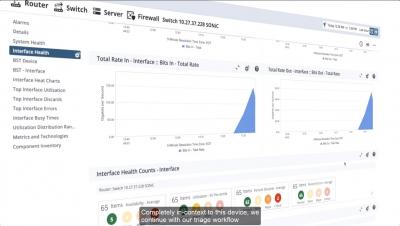
DX NetOps 20.2 network monitoring software powered by Broadcom Silicon and BroadView™ Telemetry delivers the industry’s first AI-driven, high scale operations monitoring and analytics solution. As a global infrastructure technology and software solutions leader, Broadcom provides next-generation network monitoring software that simplifies 5G, IoT, Cloud and SD-WAN deployments by applying AI and ML to the rich granular data captured at the chip level to enable a uniquely automated AI-driven solution that remediates network congestion.

Using Elasticsearch as a Time-Series Database in the Endpoint Agent

At ThousandEyes and the Endpoint Agent, we have a track record of using Elasticsearch as a time-series database for the metrics that we collect from our agents. I will be presenting how we decided to use Elasticsearch as a Time Series Database (TSDB), and how we got buy-in from stakeholders. Stathis spent several years in Athens, Greece, as a Software Engineer before moving to London. Enjoys working with large distributed systems using technologies like Elasticsearch, Kafka, Java, Kotlin. Wants to build his own tech when he grows up.

Coffee Break: SCOM Update Rollup 1

Heard about the SCOM Update Rollup 1 but unsure of exactly what it includes? Let Shawn Williams, SquaredUp Technical Evangelist and Leon Laude, SCOM Consultant and author of popular ‘The System Center Blog’ break it down for you. Among other topics, they will cover updates announced at Ignite 2019 vs what’s been included, new features and fixes, a step-by-step guide to updating and the most useful resources to get started.

Release Webinar: SquaredUp 4.6

Join our Senior Product Team for an in-depth tour of SquaredUp v4.6. John Shaw (Chief Product Officer) and John Knowles (Director of Products) will take you through the impressive product enhancements included in our latest release. Improvements spanning both our SCOM and Azure products include Dark Theme Open Access and Dashboard Pack upgrades. Azure-specific upgrades include deeper insights from Azure Cost Management, Azure Lighthouse support and an improved trial and install experience.

Master Class - PCI Compliance and Vulnerability Management for Kubernetes - 2020-05-05

This is the Rancher Master Class with NeuVector that was held on May 5, 2020. In it NeuVector talks about the challenges with PCI-DSS compliance when working with Kubernetes and presents strategies for securing containers and content, both using OSS tools and with their paid solutions.