Operations | Monitoring | ITSM | DevOps | Cloud

The latest News and Information on Service Mesh, APIs and related technologies.

Transforming application logs into metrics with Istio and Grafana Cloud

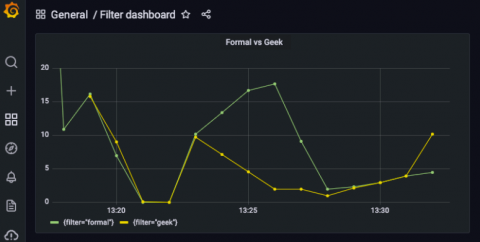
Do you actually know what your customers are looking for? A way to uncover new business opportunities is to analyze your system, collect what you really need, and visualize it through a comprehensive graph! Log traces are a great place to start because they usually contain useful information on your customers' interests. You just need to transform them.

Configuring Grafana Tempo and Linkerd for distributed tracing

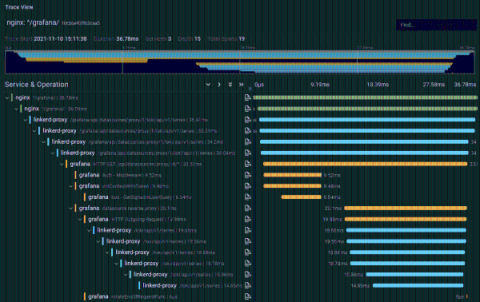
Anders Østhus is a DevOps Engineer on the Digital Tools team at Proactima AS, a consulting firm based in Norway that offers services and expertise in risk management, cybersecurity, healthcare, environmental solutions, and more. It can be difficult to orient yourself in the distributed tracing space, and getting all the parts of a tracing setup to play well with each other can be a bit tricky. But the benefits of tracing are undeniable.

How To Use Buildpacks To Run Containers

The high demand to deliver software that is both highly available and able to meet customer requests has, in part, led to the adoption of microservice architecture, a software architecture pattern that makes it easier to deploy applications as self-contained entities called containers. These containers are nothing but processes that run as long as the application in them is running.

Istio Log Analysis Guide

Istio has quickly become a cornerstone of most Kubernetes clusters. As your container orchestration platform scales, Istio embeds functionality into the fabric of your cluster that makes monitoring, observability, and flexibility much more straightforward. However, it leaves us with our next question – how do we monitor Istio? This Istio log analysis guide will help you get to the bottom of what your Istio platform is doing.

Implementing Istio in a Kubernetes cluster

As the complexity of a microservice architecture grows, it becomes important to implement a service mesh for better insights into your cluster and microservices. In this blog, Kristijan explains how Istio can be used as a service mesh, along with a detailed installation steps & configuration setup. Service Mesh? You’ve heard about it, but does it solve something, or is it just another hot buzzword in the industry?

Podcast: Break Things on Purpose | Zack Butcher, Founding Engineer at Tetrate

Welcome back to another edition of “Build Things on Purpose.” This time Jason is joined by Zack Butcher, a founding engineer at Tetrate. They also break down Istio’s ins and outs and the lessons learned there, the role of open source projects and their reception, and more. Tune in to this episode and others for all things chaos engineering!

How to monitor containerized and service-meshed network communication with Datadog NPM

Containers are lightweight, portable, easily scalable, and enable you to run multiple workloads on the same host efficiently, particularly when using an orchestration platform like Kubernetes or Amazon ECS. But containers also introduce monitoring challenges. Containerized environments may comprise vast webs of distributed endpoints and dependencies that rely on complex network communication.

Do you really need a service mesh?

The challenges involved in deploying and managing microservices have led to the creation of the service mesh, a tool for adding observability, security, and traffic management capabilities at the application layer. While a service mesh is intended to help developers and SREs with a number of use cases related to service-to-service communication within Kubernetes clusters, a service mesh also adds operational complexity and introduces an additional control plane for security teams to manage.

Creating Envoy WebAssembly Extensions

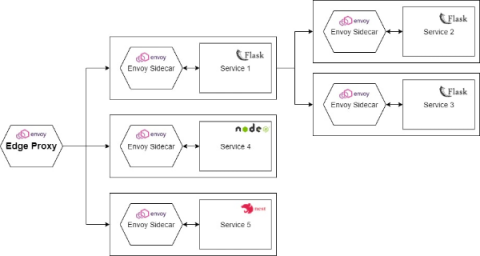
In the CNCF ecosystem, Envoy, an open source service proxy developed by Lyft, is a very common choice in service mesh networking. In a previous post we discussed that both Consul and Istio leverage Envoy. Were you aware that you can extend Envoy’s capabilities with WebAssembly? What is WebAssembly? WebAssembly, or Wasm as it is often abbreviated, is not so much of a programming language as it is a specification for a binary instruction format that can be run in sandboxed virtual machines.