Operations | Monitoring | ITSM | DevOps | Cloud

The latest News and Information on Service Mesh, APIs and related technologies.

Using Hybrid and Multi-Cloud Service Mesh Based Applications for Distributed Deployments

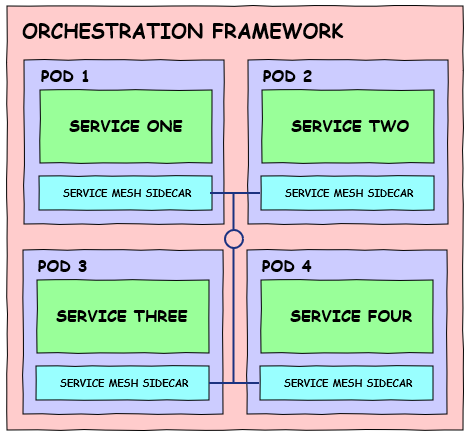
Service Mesh is an emerging architecture pattern gaining traction today. Along with Kubernetes, Service Mesh can form a powerful platform which addresses the technical requirements that arise in a highly distributed environment typically found on a microservices cluster and/or service infrastructure. A Service Mesh is a dedicated infrastructure layer for facilitating service-to-service communications between microservices.

Kubernetes Master Class - Service Mesh with Istio in Rancher 2.5

The release of Rancher 2.5 introduced some significant changes to the Istio Service Mesh integration. In addition to those changes, the Istio project has also undergone some significant redesign in recent versions. Staying current in this fast moving space can be a challenge. Fear not! In this Master Class, Rancher Field Engineer Jason Skrzypek will summarize the notable changes, discuss the rationale behind some of them, and demonstrate the possibilities that this new implementation unlocks.

How to monitor istiod

Istio is a service mesh that enables teams to manage traffic in distributed workloads without modifying the workloads themselves, making it easier to implement load balancing, canarying, circuit breakers, and other design choices. Versions of Istio prior to 1.5 adopted a microservices architecture and deployed each Istio component as an independently scalable Kubernetes pod. Version 1.5 signalled a change in course, moving all of its components into a single binary, istiod.

Deploying Citrix ADC with Service Mesh on Rancher

As a network of microservices changes and grows, the interactions between them can be difficult to manage and understand. That’s why it’s handy to have a service mesh as a separate infrastructure layer. A service mesh is an approach to solving microservices at scale. It handles routing and terminating traffic, monitoring and tracing, service delivery and routing, load balancing, circuit breaking and mutual authentication.

Service Mesh Comparison: Istio vs. Linkerd

As service architectures have transitioned from the monolith to microservices, one of the tougher problems that organizations have had to solve is service discovery and load balancing. The advent of service mesh technologies seeks to solve these and other problems exacerbated by the number of hosts that has grown exponentially. In this article, we’re going to explore what a service mesh is.

KMC - Running a Multi-Cluster Service Mesh in Rancher

If you are or your organization is running Kubernetes, then it's likely that you are running more than one cluster. This model works well for most, but starts to break down when microservices and service mesh enter the discussion. However, with some additional configuration and tooling , a multicluster mesh can take advantage of distributed Kubernetes environments and the services therein. In this Master Class, recorded on June 20, 2020, Rancher Field Engineer Jason Skrzypek discusses and demos a multi-cluster service mesh running Istio.

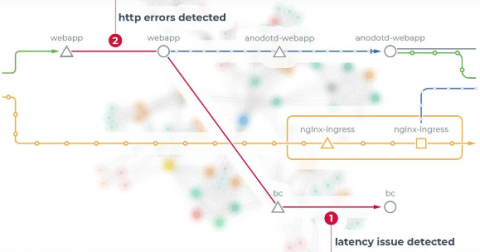
The Missing Functionalities of Service Mesh Technologies - Native Anomaly Detection and Incident Correlation

Rapid software release is the new norm – and that has pushed many companies to ditch their monolithic software development approach in favor of SOA. More companies are embracing microservices – an SOA-style approach for developing and deploying business logic as small, independently deployed services – for a number of reasons: it reduces risk, is faster to deploy and it easily scales.