Operations | Monitoring | ITSM | DevOps | Cloud

The latest News and Information on Observabilty for complex systems and related technologies.

Uptrace MCP Server: Auto-Generate Dashboards with AI in Minutes

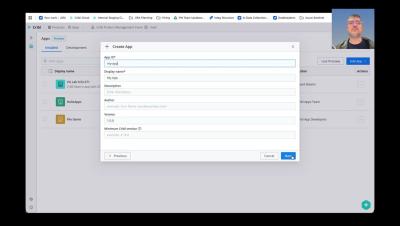
Tired of clicking through menus to build observability dashboards? In this video I walk through how to configure the Uptrace MCP (Model Context Protocol) server and connect it to an AI assistant so your dashboards get created automatically from natural-language prompts. You'll learn how to: By the end you'll have a working setup where describing what you want to monitor is enough to get a real, shareable dashboard in Uptrace.

Observability is a design problem: Live Laugh Logs ep. 1 - KubeCon Amsterdam 2026

What happens when 20,000 engineers descend on Amsterdam to talk about Kubernetes and AI? Welcome to Episode 1 of Live Laugh Logs, the podcast from Annie, Lewis and Andre from the Coralogix Developer Relations team where we will get together and recap everything going on in our worlds! We had an amazing time at KubeCon in Amsterdam and had loads of insights from the talks we went to around designing observability systems, all the AI tools being created and how to observe them, and using agent-generated code.

Building Audit-Ready Observability for Digital Banking

Most observability platforms are built to answer one question: what’s broken right now. Regulators are asking a different one: what happened, exactly, and can you prove it? Digital banking operates under constant regulatory scrutiny, where frameworks like DORA, PCI-DSS, and GDPR require every incident to be fully reconstructed across systems, timelines, and access. Systems can recover quickly, but the ability to explain what happened often remains fragmented across tools and teams.

Centralize observability management with Datadog Governance Console

As organizations grow, they face increasing difficulty in managing their observability efforts. More teams mean more dashboards, monitors, API keys, pipelines, and custom configurations. Without a centralized view, administrators spend hours chasing down untagged resources, investigating surprise bills, and revoking dormant credentials. Governance becomes a reactive effort to reduce waste and address issues, falling short of its potential to proactively create standards and optimize observability.

You Don't Need Three Pillars, You Need Single Threads

Last week was a great reminder for me about the challenges of the traditional model of observability defined by the “three pillars” of metrics, logs, and traces. One of the customers I’m currently working with is a large financial institution that has a robust three pillar implementation. Every critical application ships their telemetry to either or both their cloud-native tool and a central tool.

Building a Unified Enterprise Observability Strategy Webinar

Join Graham Davies, Technical Product Manager at SquaredUp as he provides a practical guide to breaking down data silos between IT, operations and the business. In this session, Graham digs into why dashboard and tool sprawl is making decisions harder, not easier, and shows you a practical framework for building a single source of truth your whole organisation can rely on.

The End of Manual Instrumentation: Scaling Observability with OTel OBI & Coralogix

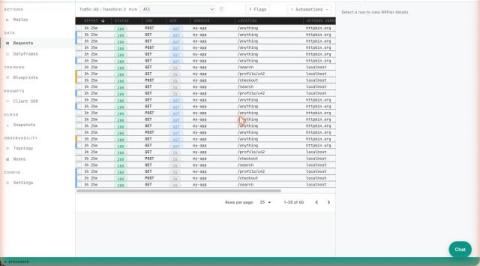
Traditionally, achieving deep visibility into distributed systems required significant trade-offs in engineering time. Collecting meaningful application metrics and traces required teams to embed language-specific agents, modify source code, or manage complex library dependencies across every service.

What Is an AI SRE? And Why Do They Need Live Runtime Evidence?

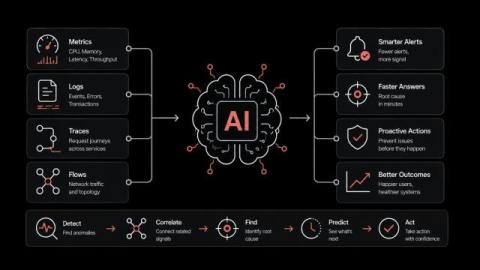
AI SREs are autonomous systems that handle incident triage, root cause analysis, and remediation by correlating logs, metrics, traces, and code signals. However, as they rely on pre-configured telemetry, the critical execution details of a specific failure, such as variable state and code paths, can often be missed. As a result, they either force users into manual redeploy loops or make inferences from partial data, diagnosing issues using probability rather than proof.