Operations | Monitoring | ITSM | DevOps | Cloud

The latest News and Information on Observabilty for complex systems and related technologies.

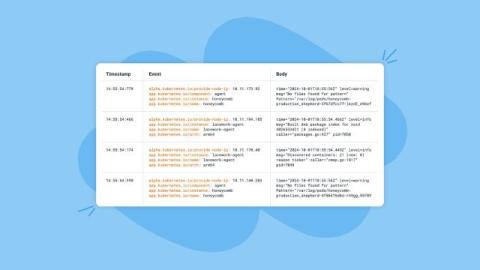
Driving Multi-Region Observability Excellence at Lansweeper

Since its inception in 2004, Lansweeper has been at the forefront of helping businesses understand, manage, and protect their IT devices and networks through a powerful IT asset management platform. As the platform grew from an on-premises solution to a cloud-based SaaS offering, Lansweeper expanded its reach to a global, multi-region customer base.

Consolidation and Modernization in Enterprise Observability

Organizations are seeing measurable benefits from investing in observability, including faster issue resolution, cost reduction, and improved business outcomes. However, challenges still remain, including rising costs, tool fragmentation, and the need for more comprehensive monitoring of internet dependencies and user experience. Let’s explore these challenges and the best practices organizations are adopting to address them.

Introducing the Logz.io AI Agent, Accelerating the Future of Observability

Logz.io introduces its AI Agent in Beta, using GenAI to revolutionize observability. The AI Agent simplifies monitoring with automated data analysis and root cause detection, accelerating issue resolution by 3-5x for beta users—marking a critical step toward fully autonomous observability.

Tame Your Telemetry: Introducing the Honeycomb Telemetry Pipeline

Observability means you know what’s happening in your software systems, because they tell you. They tell you with telemetry: data emitted just for the people developing and operating the software. You already have telemetry–every log is a data point about something that happened. Structured logs or trace spans are even better, containing many pieces of data correlated in the same record. But you want to start from what you have, then improve it as you improve the software.

The Path to Autonomous Observability

Autonomous observability for system monitoring and management aims to use GenAI and machine learning to automatically detect, diagnose and resolve issues. In conversations about cloud observability today, discussions often shift from “what’s possible” to “what’s practical.” Too often, these conversations highlight the shortcomings of current observability processes, tools and financial models.

How to scale observability for AWS hybrid and multi-cloud environments

Managing observability across hybrid and multi-cloud environments is like flying a fleet of planes, each with different routes, altitudes, and destinations. You’re not just piloting a single aircraft; you’re coordinating across multiple clouds, on-premises systems, and services while ensuring performance, availability, and cost-efficiency. AWS customers, in particular, face challenges with workloads spanning multiple regions, data centers, and cloud providers.

Understanding Jaeger - From Basics to Advanced Distributed Tracing

Jaeger has emerged as a crucial tool in the modern distributed systems landscape, offering powerful tracing capabilities that help organizations understand and optimize their microservices architectures. This comprehensive guide explores everything from basic concepts to advanced implementations, providing you with the knowledge needed to effectively implement and utilize Jaeger in your environment.

Comprehensive Observability: Key User Experience Metrics to Monitor in Cloud Environments

As we conclude our three-part series on key observability metrics ScienceLogic monitors, this blog focuses on the analysis and impact of user experience (UX) metrics to shed light on their business impact. Whether it’s an internal business application or a customer-facing platform, a seamless and efficient user experience can significantly impact satisfaction, productivity, and loyalty.