Operations | Monitoring | ITSM | DevOps | Cloud

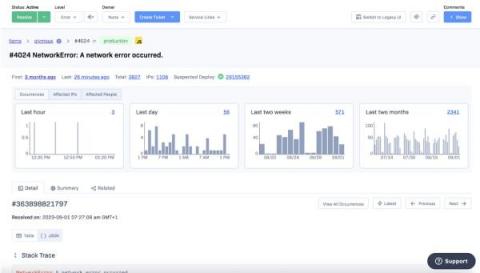
Item Detail Page Updates

We’ve been listening to all the great feedback we’ve received on the new item detail page, and we’re pushing changes to help make investigating and understanding Rollbar items easier, quicker, and more efficient. The most visible change is that the context graphs have been moved to a single full-width view on the desktop so that you can immediately see the patterns of when occurrences happened, helping to spot patterns in behavior that can give insights into causes.
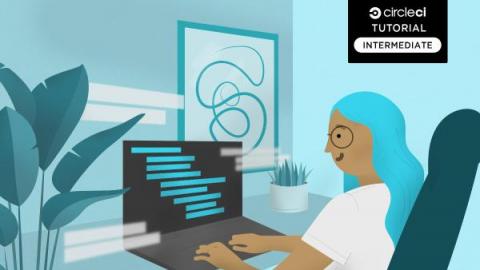
Helm deployments to a Kubernetes cluster with CI/CD

Containers and microservices have revolutionized the way applications are deployed on the cloud. Since its launch in 2014, Kubernetes has become a de-facto standard as a container orchestration tool. Helm is a package manager for Kubernetes that makes it easy to install and manage applications on your Kubernetes cluster. One of the benefits of using Helm is that it allows you to package all of the components required to run an application into a single, versioned artifact called a Helm chart.

Building Organizational Trust for Cloud Optimization Software

You’ve loaded data into Densify and after reviewing recommendations your developers don’t want to take the recommended action – they aren’t trusting, yet. This is one of the top issues identified by the FinOps Foundation and many of our customers of Densify – but not all. Let’s explore what some customers do differently to build organizational trust in taking optimization recommendations.

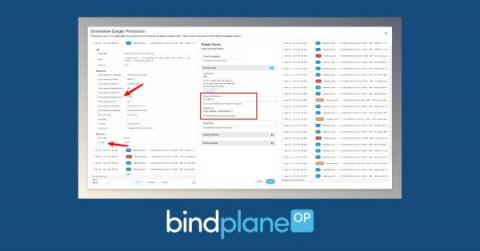
Deleting Fields from Logs: Why Less is Often More

Logs serve as an invaluable resource for monitoring system health, debugging issues, and maintaining security. But as our applications grow more complex, the volume of logs they generate is increasing exponentially. While logs are crucial, not all log data is equally valuable. With the surge in volume, costs associated with storing and analyzing logs are skyrocketing, impacting both performance and cost. The need for effective log management is more urgent than ever.

The Fatal Unconnectedness of Incumbents from Customers: The Tale of a Race Against the Clock

This tale is based on an actual event that happened to one of our Cribl Search customers. It highlights a massive gap between the urgent needs of modern businesses and the outdated, draconian terms dictated by traditional SIEM vendors. While the events are real, a touch of dramatization was added for the fun of it. Why not?

How to Track and Enforce Snyk Scans Across Your Production Environments

If you’re delivering software in a regulated environment, or deploying to a critical application or device, ensuring the security of your software code and dependencies is essential. One of the most popular tools for achieving this is Snyk, which gives developers the ability to find and fix vulnerabilities as part of their development workflow.

Breaking Through the Threshold: Leveling up ITSI Adaptive Thresholding with Splunk AI

Adaptive thresholding is a key capability in Splunk IT Service Intelligence (ITSI) that enables customers to dynamically monitor the status of their key performance indicators (KPIs) and derive meaningful service insights and alerts.

How to Restart a Service with PowerShell: A Step-by-Step Guide

As IT professionals and Managed Service Providers (MSPs), the task of managing and optimizing system services is an integral part of our roles. PowerShell, a robust scripting language, provides an efficient way to perform these tasks. It enables task automation, simplifies complex operations with just a few lines of code, and facilitates services management on multiple machines simultaneously.

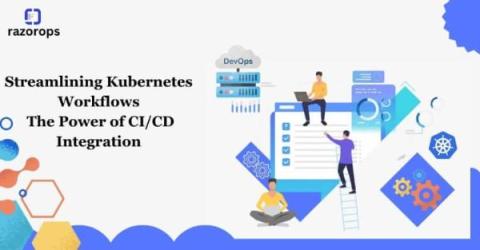
Streamlining Kubernetes Workflows The Power of CI/CD Integration

In the ever-evolving landscape of software development, where agility and reliability are paramount, Kubernetes has emerged as a game-changer with its container orchestration capabilities. However, as applications become more complex and distributed, managing Kubernetes workflows presents a unique set of challenges.