Anomaly detection can be defined by data points or events that deviate away from its normal behavior. If you think of this in the context of time-series continuous datasets, the normal or expected value is going to be the baseline, and the limits around it represent the tolerance associated with the variance. If a new value deviates above or below these limits, then that data point can be considered anomalous.
Network performance monitoring (NPM) and application performance monitoring (APM) are both key pillars of an overall performance and reliability management strategy, especially when dealing with complex, distributed infrastructure across cloud-native environments. NPM and APM also complement each other, in the sense that NPM can serve as an additional source of truth and observability for application performance.
According to recent surveys and reports on the industry, Kubernetes and containers are more popular than ever. Containers and serverless functions are being mainstream and ubiquitous – with a more than 300% increase in container production usage in the past 5 years. This trend is especially true for large organizations, which are often using managed platforms and services.
The Splunk Threat Research Team (STRT) has continued focusing development on the Splunk Attack Range project and is thrilled to announce its v2.0 release with a host of new features. Since the v1.0 release 6 months ago the team has been focused on developments to make the attack range a more fully-featured development testbed out of the box. This blog post will share these additions as well as some of the project’s future directions.
NOC (Network Operations Center) is responsible for monitoring and managing the entire IT infrastructure 24/7. It manages servers, routers, firewalls, VPN gateways, switches and any devices used by an organization. The staff working at a NOC alerts the IT staff when it observes anything untoward or out of place with all this equipment. They perform routine maintenance tasks like updating software patches, rebooting systems and installing new firmware.
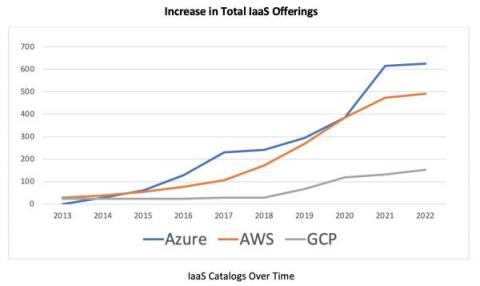
So, you’re looking for the right instance type for your public cloud workload, but how do you decide? Major cloud providers such as Amazon Web Services (AWS), Microsoft Azure Cloud and Google Cloud Platform (GCP) now offer such a large catalog of IaaS instances that it can become difficult to make sense of it all.
According to the 2021 test automation report, more than 40% of companies want to expand and invest their resources in test automation. While this doesn’t mean manual testing is going away, there is an increased interest in automation from an ROI perspective – both in terms of money and time. After all, we can agree that writing and running those unit test cases are boring.
Has it happened to you that with the release of a new version of your favorite application some feature disappeared? Or it works but unexpected things happen when you execute it? Or does it just crash? Today we will see what the possible tests that guarantee to avoid all of this are: regression tests.
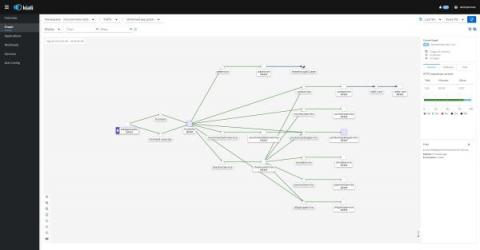
API Observability isn't exactly new, however it's popularity has seen rapid growth in the past few years in terms of popularity. API Observability using open source is different from regular API monitoring, as it allows you to get deeper and extract more valuable insights. Although it takes a bit more effort to set up, once you've got an observability infrastructure running it can be immensely helpful not only in catching errors and making debugging easier, but also in finding areas that can be optimized.