Operations | Monitoring | ITSM | DevOps | Cloud

Can an Application Exist Today Without a Database?

As a data professional, I often think about all the things around me generating data and consider where this data is ultimately being used. Have you ever taken a minute to consider exactly how much data is being generated at any point in time? I love collecting data and looking at ways it can be used and living in a “smart” home with appliances logging and reporting usage patterns certainly provides a lot of opportunities.
4 Common Obstacles To Managing Microsoft Azure Costs (And How To Overcome Them)

Microsoft Azure was a relative latecomer to the public cloud market: AWS preempted everyone in 2006, and Google GCP came next, in 2008. By the time Azure launched in 2010, the public cloud market had already grown to more than $24 billion. Despite being third to the party, Azure had a key advantage: The Microsoft Office Suite was (and is) a go-to choice for corporate collaboration.

Optimizing the AWS CloudWatch Log Process

Amazon’s native monitoring and management service AWS CloudWatch is great for basic monitoring and alerts. However, on its own, it may not be the best solution for analyzing log data at scale — especially if you need to analyze data outside of AWS. Many teams may find themselves restricted by retention issues and basic analytic features with Amazon CloudWatch logs for troubleshooting use cases.

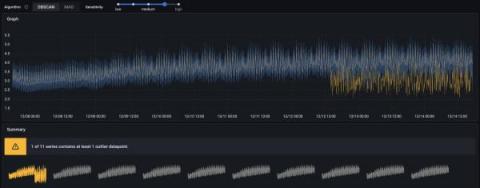
Introducing Outlier Detection in Grafana Machine Learning for Grafana Cloud

Outlier Detection is now available as part of the Grafana Machine Learning toolkit in Grafana Cloud for Pro and Advanced users. With this feature, you can monitor a group of similar things, such as load-balanced pods in Kubernetes, and get alerted when some of them start behaving differently than their peers. There’s supposed to be a video here, but for some reason there isn’t. Either we entered the id wrong (oops!), or Vimeo is down.

Epinio End of Year Wrap

This 2022 was an incredible year for Epinio, SUSE’s application development engine for Kubernetes, enabling developers to go from Code to URL in one push. We removed many dependencies in the first few months, increasing the deployment speed and shortening the development feedback loop. We standardized the installation process with Helm, dropping the original installer. We added many new features, such as Services, allowing developers to provision custom resources autonomously.

Automation Seasons Freezings Wrap Up and New Year's Resolutions

It’s that time of year where you may feel pressured to pick your New Year’s resolutions. Well, we went ahead and tried to give you a head start. 2023 is the year we tame toil so we can focus on the fun stuff like engineering and innovation. Hopefully you have had the chance to follow along with us for the month of December for Seasons Freezings, the time of year you are locked out of production, so you have time to explore new ideas like automation 🙂.

5 Ways to Ensure Success With Your Kubernetes Platform

Moving towards a Kubernetes platform might seem a simple move. You’ll ask your smartest engineers to get started. They will love a move towards cloud and container technology. However, if you want to realize maximum benefit as you start using a platform like Kubernetes, there is more to it.