Cyberattack prevention involves proactive steps organizations take to protect their digital assets, networks, and systems from potential cyber threats. Preventive measures, such as a combination of best practices, policies, and technologies, are employed to identify and mitigate security breaches before they can cause significant damage.
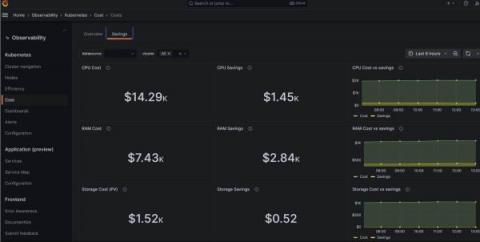
As your Kubernetes infrastructure — and your business — grows, so too does the headache of managing your stack. And since controlling costs is crucial for your organization’s well-being, you need visibility into your complex system to ensure you’re spending your money wisely. That’s why we’re excited to introduce Kubernetes cost monitoring as a new feature in Grafana Cloud.
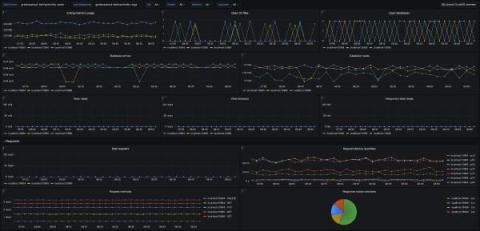
We’re excited to introduce a dedicated Grafana Cloud integration for Apache CouchDB, a NoSQL document database that stores data in a JSON-based document format. Known for its scalability, availability, and easy replication of data across multiple servers, Apache CouchDB comes with a whole host of features designed to make it easy to run resilient distributed systems, with built-in bi-direcitonal replication allowing for simple replication across multiple servers and data centers.
As we are now 6 months into the year, I thought this would be a great time to sit and reflect on everything that has happened at Civo so far (and some of the plans we have in the pipeline). If you’re interested in taking a look at our previous roadmaps.
Reviewing the Current State of Infrastructure as Code (IaC), its Challenges, the Emergence of Crossplane, Adoption Difficulties, and the Road Ahead! Infrastructure as code (IaC) has become an indispensable practice for managing and deploying cloud-native applications. By defining infrastructure through code, developers can efficiently and consistently manage their infrastructure. In this post, we’ll delve into the state of IaC, the problems it poses, and the new approach offered by Crossplane.
Delivering seamless digital experiences is a top priority for every business today. However, the IT infrastructures that fuel these experiences are getting increasingly complex. The rapid adoption of technologies like containerization, microservices, and cloud and serverless computing, along with traditional infrastructure, is creating increasingly hybrid and distributed IT ecosystems, making it a challenge for organizations to manage them effectively.
You may be thinking of investing in multiple cloud vendors to increase redundancy and deal with the complexity of your enterprise requirements. You are not alone. Many enterprises are moving in this direction to take advantage of the options offered by competing cloud vendors. Adopting one major cloud vendor is a complex project that can consume a company for months if not years.
The old saying goes, “practice what you preach.” When Ivanti started its "Customer Zero" initiative, Bob Grazioli, Chief Information Officer, saw it as a perfect opportunity to test the products and services consumed by customers. For example, during Ivanti’s move to the cloud, Grazioli and the team experienced the same issues that customers would’ve experienced in their migration process. This first-hand experience allowed them to make improvements along the way.