Operations | Monitoring | ITSM | DevOps | Cloud

Software bill of materials: What it is and why you need one

Most organizations that make software — from small startups to multi-billion-dollar behemoths — use third-party libraries and tools to develop their applications. Modern apps depend on many external components to build and deliver software to customers. These libraries and tools are collectively called the software supply chain. A software supply chain for a typical web app may include components like these.
Qovery Demo Day Summary - May 2022

Our last Qovery Demo Day took place on a live on the first Thursday of May. This event aims to give you some insights into what we did during the past month and what’s next and showcase some of our new features. During this demo day, Bilel (Software Engineer at Qovery) and Romain (Software Engineer at Qovery) joined me to talk about Terraform Improvements demo and Docker Build Improvements demo.

Now Available on AWS Marketplace: PagerDuty Runbook Automation and PagerDuty Process Automation On Prem

We are excited to announce that PagerDuty® Runbook Automation and PagerDuty® Process Automation On Prem are now available on the AWS Marketplace, the leading global cloud provider. With more than 200 different cloud services, AWS makes it simple and attractive to build and grow your cloud-native business and/or migrate your existing infrastructure to the cloud, so you can begin to take advantage of the unlimited scale, agility, and flexibility the cloud offers.

How Elastic powers speed, security, and connectivity in capital markets

Speed is everything in capital markets. Success in the front and back office is dependent on the ability to provide accurate, fast responses to challenging questions. Over the past several decades, there has been a tremendous increase in the amount of information available to market participants, and trade transactions are now being carried out at a very rapid pace. In parallel, the technology which capital markets firms are developing is becoming increasingly complex.

Making HTTP requests with Axios

Axios is a promise-based HTTP library that lets developers make requests to either their own or a third-party server to fetch data. It offers different ways of making requests such as GET, POST, PUT/PATCH, and DELETE. In this tutorial, I will explain how Axios interacts with applications, describe the structure of Axios requests and responses, how to make requests to an API, and how to write tests for your requests using CircleCI.

AWS Service Observability using OpenTelemetry

Efficient use of observability statistics is essential to any microservice architecture. OpenTelemetry is a project supported by the Cloud Native Computing Foundation (CNCF) to enhance the observability of microservice projects. AWS Distro for OpenTelemetry (ADOT) is an AWS-supported distribution of the OpenTelemetry project specifically designed to improve the observability of AWS projects.

Thinking smarter about M&A-how automation makes a difference

As a business, we talk a lot about automation as one of the key ways to drive efficiency and growth within an individual MSP. By automating the response to and remediation of some of the more common IT issues customers face, technicians are freed up to spend more time dealing with bigger issues. Ultimately, this means the business is able to handle more customers without having to invest in growing its technician base.

Observing Chaos: Is It Possible?

Most Series A and B companies are born in the cloud. Instead of the traditional mainframe architecture, they use AWS, Kubernetes and the likes to run their production environments. While striving to do things faster and better, we must address the other side of the coin: How do you support the constant shifts inherent in these environments? Chaos engineering allows you to observe your environment continuously and reliably.

What is Continuous Integration and Continuous Delivery?

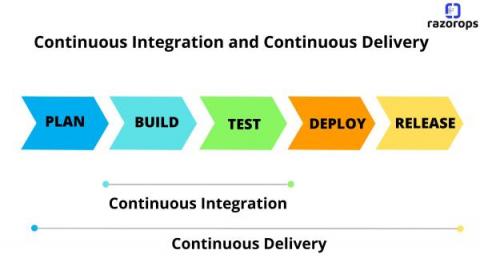
Continuous integration is a DevOps practice, where developers continuously integrate the code changes into a central repository. It most often refers to the build or the integration stage of the software release process. A continuous integration service helps to automatically build and run unit tests on the new code changes to find any errors instantly.