Operations | Monitoring | ITSM | DevOps | Cloud

Top Things To Consider When Connecting IoT Devices To The Cloud

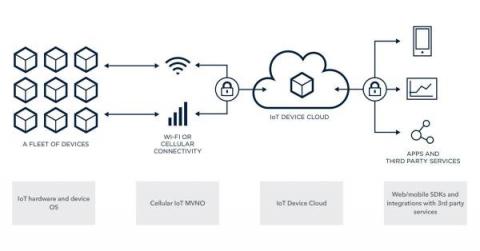
Use cases for the Internet of Things (IoT) range from trucks, to shipping containers, to people, to cows. An organisation’s assets can be mobile, autonomous, even sentient - and the applications for tracking these assets are as limitless as the assets themselves. Analysts have identified asset tracking as the fastest growing industrial IoT market and it is expected that most connected devices will be location aware within the next decade.


5 Reasons Why Manufacturing Industry Must Utilize CMMS Software

All assets used in manufacturing are complex and huge. They work continuously for long hours, and it impacts the performance of an asset. It is important that they are always in good condition. If you do not keep them maintained, you can suffer huge losses due to sudden equipment failure. Manufacturing assets are costly, they cannot be replaced easily, and they are not easy to sell as well. But you can easily maintain them with CMMS Software.

Kubernetes Health Checks: Everything You Need to Know

When you’re using an application or tool, it’s very important to make sure things are working as they should. For this reason, health checks are critical. A health check is when an application or tool checks its own components and dependencies, then either publishes or exposes a notification method if there is a problem.

How to Automate Intune Device Reports with Torq

Whether for managing remote teams, supporting ‘bring your own device’ (BYOD) policies, or simply another layer in a data protection strategy, services like Microsoft Intune offer greater control over the devices on your network. But using the data from these services often requires tedious prep work, and this process is likely repeated multiple times a week, if not daily. Tedious, repetitive, structured: these are all signs that a process can and should be automated.

How FinOps Can Work With Engineering To Achieve Cost Intelligence Maturity

The FinOps position, for most SaaS companies, is a relatively recent addition to the team. FinOps acts as a liaison between the Finance and Engineering teams, with the goal of getting everyone on the same page (and speaking the same language) when it comes to setting, optimizing, and sticking to budgets. FinOps and engineering have a special relationship, because engineers are the ones who ultimately make major infrastructure, development, and design choices that impact the cloud bill.

Winning Over the Skeptics: How SD-WAN Is Transforming Government Networks

Are software-defined wide area networks (SD-WANs) worth the hype? Read below as our own Brandon Shopp details the value of this fast up-and-coming technology and how it can help. Public sector wide-area networks (WANs) are undergoing a transformation. The pressing need to support remote workers and a surge in demand for video conferencing, secure remote access, and cloud applications has seen public sector IT teams shift gears away from traditional, often multi-protocol label switching (MPLS)-based WANs.

Particle's Fleet Health Feature, Powered by InfluxDB, Delivers Device-Specific Data for IoT Deployments

The Particle platform enables companies to manage and program their IoT devices, bringing them to market quicker. To accomplish this, Particle developers needed to be able to collect telemetry data from a large number of edge IoT devices to measure performance. A key benefit of the Particle platform is its ability to scale from prototype to enterprise. Developers often prototype IoT devices using microcontrollers like Arduino or Raspberry Pi.

The Value of Employee Engagement

There was an IT Salary Report 2022 that was recently completed by a Facebook group that our #HeadNerds team is a part of called “This Is an IT Support Group”. Although the survey asked for salary information for IT personnel, there was also a section in the survey where the respondents were asked, “What is the biggest pain point you have working in IT?”

Using Brotli Compression in NGINX

Brotli is gaining steam as the compression algorithm du jour for high performance websites. Created back in 2013 by Google to decrease the size of WOFF files, Brotli was standardized in 2016 as part of RFC 7932. The sales pitch for Brotli is better compression than Gzip - with similar CPU usage. Better compression leads to faster performance, but how much better is it?