Operations | Monitoring | ITSM | DevOps | Cloud

How the unicorn got its horn: a tale of market opportunity and technical innovation

Insight Partners is a leader in working with scale-up companies that have existing product/market fit and can use our help establishing best practices for their businesses. But my specific focus is in developer-driven companies. I look for the best technical teams that are building products that developers love and adore.


Follina Zero-Day Vulnerability: Overview and Alert Upon Detection for CVE-2022-30190

On May 27, 2022, an interesting Microsoft Word doc was uploaded to VirusTotal by an independent security research team called nao_sec. The Word doc contains built-in code that calls an HTML file from a remote source that in-turn executes more (malicious) code and Microsoft Defender for Endpoint misses detection. Two days later, May 29, Kevin Beaumont publishes an article describing the behavior of this Word doc, and deems this a new 0-day vulnerability in Office/Windows products.

Build vs Buy: What's The Best Route for Observability Pipelines?

If there was a question on if an enterprise needed an observability pipeline in 2019 or 2020, we now know the answer is: yes. The observability data management methods of the 2010s aren’t going to work in the 2020s. Data is growing too fast for us to ignore, and the need to gain intelligence from said data continues to grow in importance. Data (and access to it) is becoming a competitive edge for many enterprises today.

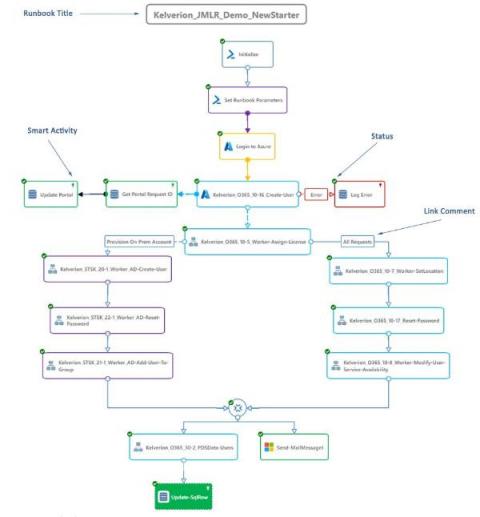
Improved Design Interface. Less Code. Runbook Studio 5.0 Makes Runbook Automation a Cinch

Kelverion Runbook Studio V5.0 makes it even easier for organizations to automate IT service desk requests and reduce IT burden. In its fifth iteration, The Runbook Studio has undergone a significant design overhaul. The Studio’s technical capabilities have always been exceptional and now it has a user interface to match. On top of that, this version takes Kelverion’s low code/no-code design environment to the next level.

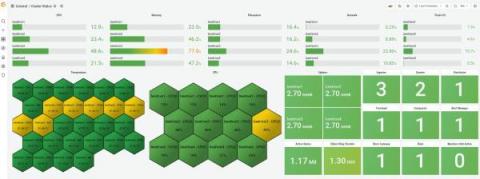
How I installed Grafana Mimir on my homelab cluster

When I started at Grafana in January, I was accustomed to working with private clouds and on-prem infrastructure, so nearly everything in my role here as a senior software engineer for the Grafana Mimir customer squad was new to me. I was new to Golang, Docker, Kubernetes, gRPC, public cloud services, etc. Kubernetes has been especially challenging. In my work on Grafana Mimir and Grafana Enterprise Metrics, I experience k8s in one of two extremes.

What's new in Calico Enterprise 3.14: WAF, Calico CNI on AKS, and support for RKE2

At Tigera, we strive to innovate at every opportunity thrown at us and deliver what you need! We have listened to what users ask and today we are excited to announce the early preview of Calico Enterprise 3.14. From new capabilities to product supportability and extending partnerships with our trusted partners, let’s take a look at some of the new features in this release.

How Companies Are Using InfluxDB and Kafka in Production

Hulu, the entertainment streaming platform, needed a solution to scale up its internal application and infrastructure monitoring platform as it grew beyond 1 million metrics per second. The solution it created combines two open source tools— InfluxDB, a time series database, and Kafka, an event-streaming platform. It’s not just global enterprises like Hulu that have access to world-class tools and infrastructure to achieve their business goals.

Business Application Monitoring: Why Your Company Needs APM

Imagine this scenario. Your company has been laboring for months on an application and is finally releasing it. Your team has worked out all the potential issues and has created an all-encompassing project, but something is not right. There is an issue, and your team is getting some much-needed R&R. You come the next day and see a ton of irate emails. You have to go back to the drawing boards to figure out what went wrong before you release a fix. What I explained was a nightmare.

Kubernetes Security 101 For Developers - More Than Locking You Out Of Kubectl

Security can certainly be a broad brush topic. As a software engineer, you design and build to the best of your ability. In delivery methodologies of years gone by, sometimes security can be viewed as an afterthought e.g running security testing last before deploying. Today with the DevSecOps movement, one more set of concerns moves left towards the developer which is now security.

The Kubernetes Autoscaler Charm

Managing a Kubernetes cluster is a complex endeavor. As demands on a cluster grow, increasing the number of deployed pods can help ease the load on the system. But what do you do when you run out of nodes to host those pods, or when the load decreases and some nodes are no longer needed? Manually adding or removing nodes is possible, but wouldn’t it be better if there was a way to automate that task? Fortunately, that’s exactly what the Kubernetes Autoscaler charm is for!