Operations | Monitoring | ITSM | DevOps | Cloud

Fleet Introduces OCI Support for Helm Charts

Rancher, the open source container management platform, uses Fleet to enable its continuous deployment features. Fleet brings GitOps functionality to Rancher. Fleet in Rancher 2.7.0 can fetch Helm charts from OCI registries. Using OCI registries to store Helm charts is an increasingly popular storage method. It allows storing your charts in a registry alongside your container images. This unifies the storage options for charts and reduces friction. Using a chart in an OCI registry is fairly simple.

When Stream Meets Lake: Cribl Integrates With New Amazon Security Lake to Help Customers Address Data Interoperability

We’re excited to announce that Cribl integrates with Amazon Security Lake. Amazon Security Lake allows customers to build a security data lake from integrated cloud and on-premises data sources as well as from their private applications using the Open Cybersecurity Schema Framework (OSCF).

Using SWIG to generate bindings between C and Lua

Lua is one of the many great interpreters that can be run on embedded devices. It’s fast, uses little memory, is written in ANSI C, and is known by plenty of developers. These are a few of the many reasons why the team at Panic chose to include a Lua interpreter on their Playdate device and allow games to be written in it. You can think of Lua as an alternative to the MicroPython (Python) or JerryScript (Javascript) interpreters. However, there’s a problem.

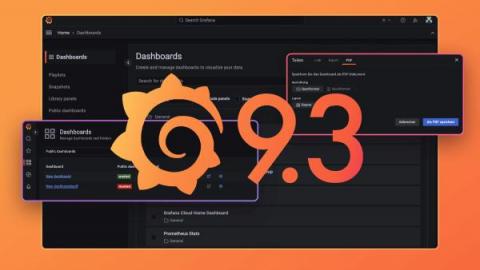
Grafana 9.3 release: Enhanced navigation, Grafana localization, Grafana Alerting updates, and more!

Welcome to Grafana 9.3! Get Grafana 9.3 In our continued efforts to make Grafana more accessible and easier to use, we are excited to showcase new updates to improve navigation, introduce localization, and much more. Read our What’s New documentation to learn all about the latest release and for more details, refer to the changelog.

The Top 3 Data Applications to Drive Your Customer Experience (CX)

The data and analytics space is booming and changing how we analyze and use data across industries. According to Fortune Business Insights, the global big data analytics market is projected to grow from $271.83 billion in 2022 to $655.53 billion by 2029 (at a CAGR of 13.4%). This boom has only been further accelerated by the recent pandemic as industries are shifting to digital solutions to address expanded market opportunities.

Installing and Running Kubewarden In Air-Gapped Environments

We are excited to announce that deploying Kubewarden in air gap environments has been simplified and documented! For that, you will need a private OCI registry accessible by your Kubernetes cluster. If you’re unfamiliar with Kubewarden, it’s a policy engine for Kubernetes. Its mission is to simplify the adoption of policy-as-code. Kubewarden policies are WebAssembly modules; therefore they can be stored inside an OCI-compliant registry as OCI artifacts.

Everything I Wanted To Know About Kubernetes Autoscaling

Kubernetes is today the most well-known container scheduler used by thousands of companies. Being able to quickly and automatically scale your application is something standard nowadays. However, knowing how to do it well is another topic. In this article, we'll cover how pod autoscaling works, how it can be used, when it's exciting and not, and finally, we'll cover it with a Qovery usage we have internally.

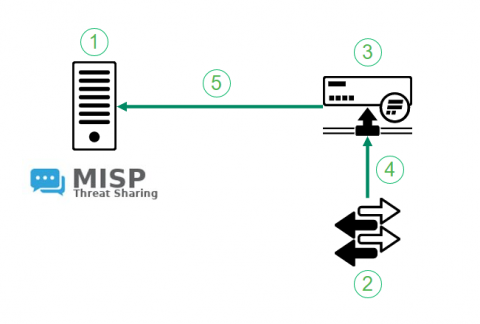
Flowmon Anomaly Detection & MISP

Back in 2021 we have introduced the integration between MISP, a community threat intelligence sharing platform and Flowmon ADS. The integration turns indicators of compromise shared through MISP to actionable intelligence. Flowmon ADS will automatically pick up on latest indicators of compromise using MISP API and leverage those indicators of compromise to detect adversary activities in the target network. The integration is available in Flowmon ADS 11.2 and newer versions.

New AWS services? No problem! How Sumo Logic is evolving to meet your AWS observability needs

Every year, AWS re:Invent demonstrates the pivotal role that AWS plays as companies build their modern applications. Investing in a growing portfolio of AWS services can be key to a business’s ability to compete. But this often means additional complexity: more services, across more regions and accounts. Organizations need a way to ensure their applications running on AWS services are reliable and secure. Enter Sumo Logic.

A Complete Guide to PostgreSQL Performance Tuning: Key Optimization Tips DBAs Should Know

PostgreSQL is an open-source relational database that is highly flexible and reliable and offers a varied set of features. Even though it is a complex database, it provides great integrity and performance. Also, you can deploy it on multiple platforms, including a light version for websites and smartphones. Because you can deploy Postgres in different ways, it comes out of the box with only some basic performance tuning based on the environment you’re deploying on.