Operations | Monitoring | ITSM | DevOps | Cloud

Why Evidence-Backed RCA in Edwin AI Starts With Logs

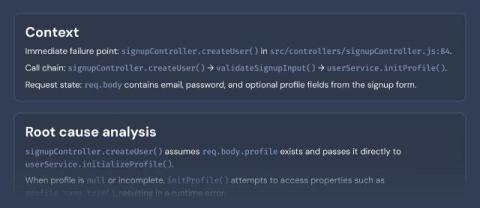
A step-by-step look at how Edwin AI uses native LogicMonitor logs, topology, and context to turn root cause analysis from alert-driven inference into evidence-backed investigation. Most root cause analysis today starts with alerts and ends with explanations that sound reasonable but can’t be verified. An alert is fed into a language model, and the output looks like an answer. It often isn’t.

8 Years of Building Obkio: From Network Monitoring to Observability & Network Diagnostics

In 2016, Obkio was just an idea, but it was an idea born from a real problem. Before writing a single line of code, we conducted a market audit to understand why Network Performance Monitoring solutions weren't more mature. We interviewed banks, manufacturing companies, and service providers, and the answer was unanimous: the NPM tools on the market were too complex, and most businesses simply didn't have the internal resources to dedicate full-time to managing them.

From Chaos Engineering to Resilience Testing: Why We're Expanding How Teams Validate Reliability | Harness Blog

At Harness, we’re committed to helping teams build and deliver software that doesn’t just work – it thrives under pressure, scales reliably, and recovers swiftly from the unexpected. Today, we’re taking the next step in that mission by evolving our Chaos Engineering module into Resilience Testing. This evolution reflects how reliability is tested in practice today.

On-Demand Vs. Spot Instances: What's The Difference?

Whether you’re in finance or engineering, you know keeping your customers happy is the key to success. That means, your SaaS product or service needs to be available, reliable, and cost-effective virtually all the time. On that note, you can determine how stable and high-performing your service is depending on whether you use On-Demand or Spot Instances. Pricing, capacity, and flexibility will also vary depending on which of the two instances you choose.

Your Data is Whispering and Needs a Human to Listen

If you have ever owned, operated, or supported a piece of technology, you have probably built a dashboard. Maybe it started as a quick chart to answer a simple question, then quietly grew into something more important. Dashboards are often created by the people who know the systems best, the ones who can wire together data sources and click all the right buttons. But those same builders are rarely trained in how humans actually interpret data.

Canonical and Ubuntu RISC-V: a 2025 retro and looking forward to 2026

2025 was the year that RISC-V readiness gave way to RISC-V adoption. It’s been quite a journey. What began years ago as early architectural exploration and enablement has matured into real silicon, systems, and deployments. In particular, RVA23 provides a stable and predictable baseline we can align on with our wider ecosystem of partners. At Canonical, we’re committed to making RISC-V a viable option for anyone who wishes to adopt it.

Understanding L1, L2, L3 escalation policy

L1, L2, L3 is one of the most common ways to structure an escalation policy. The idea is simple: an incident triggers and lands with a first responder. If it needs more attention, it moves up the chain to someone with more expertise. This guide explains how each tier works, when this structure makes sense, and what to keep in mind when setting one up.