Operations | Monitoring | ITSM | DevOps | Cloud

Monitor your mobile apps with Embrace's offering in the Datadog Marketplace

Embrace is a mobile application monitoring solution that helps you track and troubleshoot mobile app performance by combining data analytics, real user monitoring, network performance monitoring, and hardware monitoring in a single platform. We’re pleased to partner with Embrace to offer an out-of-the-box Embrace Datadog app and software license in the Datadog Marketplace.

Announcing TISAX-compliant observability for the automotive industry and its suppliers

Many organizations face complex regulatory requirements when it comes to monitoring the health and performance of their service and application infrastructure. As part of our ongoing commitment to providing a comprehensive monitoring solution for all customers, we’re pleased to announce that Datadog has achieved TISAX Assessment Level 2 (AL2) certification.

Improve your EC2 rightsizing recommendations with Datadog and AWS Compute Optimizer

While cloud solutions can give you greater flexibility as you scale your infrastructure, limited visibility into resource utilization makes provisioning the right amount of compute resources challenging. To ensure that every workload is fully supported, many organizations may opt to over-provision, which leads to overspending. Or, in an attempt to maximize cost savings, organizations may under-provision, leaving workloads unsupported and risking serious performance impacts.

Make use of your service data with the Query Builder

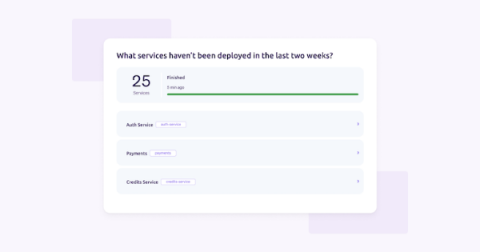
The service catalog is an indispensable component of a team’s software development infrastructure. Anything you need to know about your microservice architecture - whether it is knowing who owns a particular service or what another service’s dependencies are - lives inside this repository. Its potential, however, is not limited to being a storehouse for all the data about your microservices.

Visualizing Time Series Data with Chart.js and InfluxDB

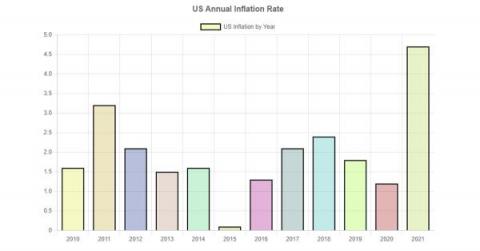
Time series data is a sequence of data points generated through repeated measurements indexed over time. The data points originate from the same source and track changes at different points in time. Times series data includes data like stock exchange data, monthly inflation data, quarterly gross domestic product (GDP) data, and logs from IoT sensors.

What is Azure Blob?

Today, data is invaluable. Many businesses store large amounts of it for everyday operations. Some information is stored in a hierarchical form, but companies must often hold significant amounts of data without any organization. The solution? Microsoft Azure’s Blob Storage. In this article, we’ll consider the key elements of Blob Storage, how it works, and why it’s important.

Asset Location Tracking: Keeping a Detailed Record of your Asset's Placement

Asset location tracking is an essential part of IT Asset Management since it allows organizations to track their IT assets’ location. Thanks to the digital workplace, organizations are used to having part of their staff in remote places or even traveling for different reasons. And as a consequence, these employees usually have IT assets filled with company information (often times confidential) that travel with them across the globe.

Fleet Introduces OCI Support for Helm Charts

Rancher, the open source container management platform, uses Fleet to enable its continuous deployment features. Fleet brings GitOps functionality to Rancher. Fleet in Rancher 2.7.0 can fetch Helm charts from OCI registries. Using OCI registries to store Helm charts is an increasingly popular storage method. It allows storing your charts in a registry alongside your container images. This unifies the storage options for charts and reduces friction. Using a chart in an OCI registry is fairly simple.

When Stream Meets Lake: Cribl Integrates With New Amazon Security Lake to Help Customers Address Data Interoperability

We’re excited to announce that Cribl integrates with Amazon Security Lake. Amazon Security Lake allows customers to build a security data lake from integrated cloud and on-premises data sources as well as from their private applications using the Open Cybersecurity Schema Framework (OSCF).

Using SWIG to generate bindings between C and Lua

Lua is one of the many great interpreters that can be run on embedded devices. It’s fast, uses little memory, is written in ANSI C, and is known by plenty of developers. These are a few of the many reasons why the team at Panic chose to include a Lua interpreter on their Playdate device and allow games to be written in it. You can think of Lua as an alternative to the MicroPython (Python) or JerryScript (Javascript) interpreters. However, there’s a problem.