Operations | Monitoring | ITSM | DevOps | Cloud

The Quirky World of Anomaly Detection

Hey there, data detectives and server sleuths! Ever find yourself staring at a screen full of numbers and graphs, only to have one data point wave at you like a tourist lost in Times Square? Yup, you’ve stumbled upon the cheeky world of Anomaly Detection—where data points act more mysterious than your cat when it suddenly decides to sprint around the house at 2 AM. So buckle up!

Why you should monitor Kubernetes in SCOM

Why you should monitor Kubernetes in SCOM Kubernetes is one of the most prominent container orchestration platforms available today. As cloud-native and container solutions gain attention, so does Kubernetes. With the new incline towards cloud-native application development, there is a big focus on software development and how to migrate to the cloud. What cannot be forgotten is what needs to be taken care of once the applications are up and running – monitoring.

2023 Cloud Cost Management Platforms: A FinOps Tools Competitive Analysis

Managing cloud costs has become a must for FinOps-focused businesses. Gotta keep a close eye on those expenses! So, what is the best way to do it? Find a platform that can help you get cost visibility and catch any cloud costs anomalies before they turn into a money waste! With tons of FinOps tools, how do you figure out which one suits your needs? And what exactly should you be looking at? We get it! There’s much to consider when picking the best platform to get those cloud cost insights.

Grafana Pyroscope 1.0 release: continuous profiling for a modern open source observability stack

When we launched Pyroscope in 2021, we had one clear goal: Give developers a powerful open source continuous profiling tool for collecting, storing, and analyzing profiling data. Grafana Labs had a similar goal when they released Grafana Phlare, a horizontally scalable, highly available open source profiling solution inspired by databases like Grafana Loki, Grafana Mimir, and Grafana Tempo.

Centralize AWS observability with Grafana Cloud

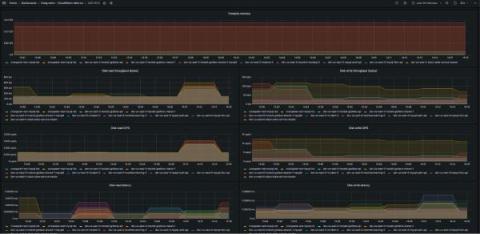
If you’re using AWS, you’re almost certainly using Amazon CloudWatch to collect and analyze observability data from your favorite AWS services. And while AWS remains the most broadly adopted cloud platform, not every company uses it exclusively, which means you need a tool that gives a centralized view across all your environments. With Grafana Cloud, you can do just that.

Infrastructure Monitoring Basics with Telegraf, InfluxDB, and Grafana

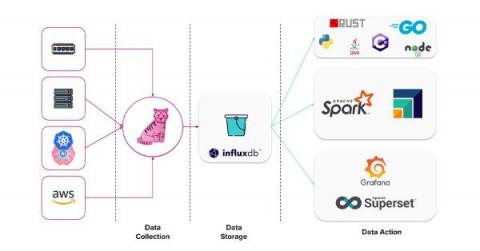
Earlier this year, I had the pleasure of speaking at the Open Source Summit North America. When choosing a topic, I felt it was time to return to our roots and discuss the subject that originally put InfluxDB on the map: infrastructure monitoring. What was especially exciting was the opportunity to showcase the new capabilities of InfluxDB 3.0 to the open source community and explain their significance for the future of infrastructure monitoring use cases.

Unlocking the Power of Hosted Graphite and Machine Learning

Monitoring and optimizing IT infrastructure, applications, and networks is crucial for businesses in today's digital landscape. It allows them to proactively identify issues, ensure optimal performance, and deliver a seamless user experience. However, traditional monitoring methods often fall short when it comes to handling the increasing complexity and scale of modern systems. That's where hosted graphite and machine learning come into play.

Making your JavaScript projects less noisy

If you’re using Sentry for JavaScript error monitoring, you may be familiar with a common challenge: sifting through noisy, low-value errors that hinder identifying high-priority issues for you and your team. Capturing errors in JavaScript browser project can be tricky. Why? Well, it’s not just a single environment.

Platform Engineers: Applied Best Practices Are Baked-in to Kubernetes Monitoring

Operating Kubernetes reliably and efficiently involves adhering to a set of best practices. These practices help ensure the stability, scalability and maintainability of your Kubernetes clusters and their applications. It's crucial for platform teams (responsible for the infrastructure) and software development teams (responsible for deploying applications) to work together in applying these practices.