Operations | Monitoring | ITSM | DevOps | Cloud

Five worthy reads: Understanding low-code/no-code AI: App development simplified

Five worthy reads is a regular column on five noteworthy items we’ve discovered while researching trending and timeless topics. This week, we will delve into low-code/no-code AI, its potential, and how it can facilitate application development. In a world that is advancing technologically, AI could be one of the greatest things the internet industry has ever witnessed. We have heard so much about AI over the past decade as it has increasingly been deployed in various sectors.
5 key SLA metrics for improved SLA monitoring using Applications Manager

Ensuring top-notch service delivery to end users is vital for every organization to produce world-class products and establish a successful business empire. No matter how big or small the organization is, setting up quality service expectations and bringing them into reality within the minimal delivery time limit is the key to thrive in today’s hyper-competitive market. But how do you guarantee that the services you provide are meeting the quality expectations of your customers?

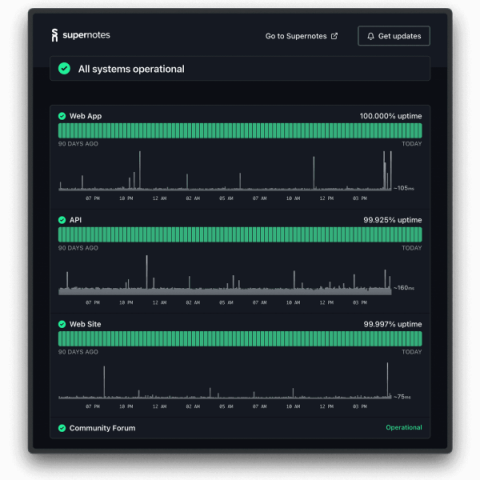
The 4 Best Status Page Software for 2024

As someone tasked with handling the pitfalls and consequences of unwanted downtime, it can be difficult to keep up to date with the latest software developments working to address these undesirable yet inevitable situations. And yet, whilst recognizing this fact is a necessary condition of overcoming such challenges, it is not in itself sufficient to meet the task.

Visually replay user-facing issues with Zendesk and Datadog Session Replay

Zendesk provides support teams with an integrated solution for processing all types of customer inquiries and feedback. But as organizations scale, support tickets can multiply, making it difficult to parse customer feedback and investigate issues promptly and thoroughly. Customers often report problems without providing the detailed context needed for effective troubleshooting.

How Much Does Cloud Monitoring Software Cost?

The goal of any great cloud monitoring tool is to give you a bird’s eye view of your system and its digital assets so that you can potentially improve user experiences. Unfortunately, many organizations struggle to realize the extent of functionality of their tools, leading to a bloated budget with many unused applications.

How Much Does Network Monitoring Cost? Software Pricing

In this increasingly digital world, advanced network monitoring software that can address possible networking issues, provide real-time polling performance assessments, and offer remote management functions has become even more necessary. Given these varied capabilities, you may wonder, “How much does network monitoring cost?” and what are the factors contributing to it?

Unlocking Revenue Potential: Mastering Teams Performance for Seamless Business Communication

In today’s digital age, seamless communication is the lifeblood of every successful business. For revenue-driven teams, mastering Teams performance is central to collaboration, client interaction, and overall operational efficiency. In fact, a recent report published by research firm EMA found that sales personnel use Microsoft Teams more than 5 hours per day on average, and 49% said that Teams has a direct impact on customer service & revenue.

eBPF: Revolutionizing Observability for DevOps and SRE Teams

Whether you're a system administrator, a developer, or any other DevOps or Site Reliability Engineering (SRE) professional, you know that staying ahead in cloud-native computing is crucial. One way to keep your competitive edge in the technology game is to embrace the benefits of eBPF (Extended Berkeley Packet Filter). On top of advances in security and networking, eBPF-based tools are particularly impacting the observability landscape.

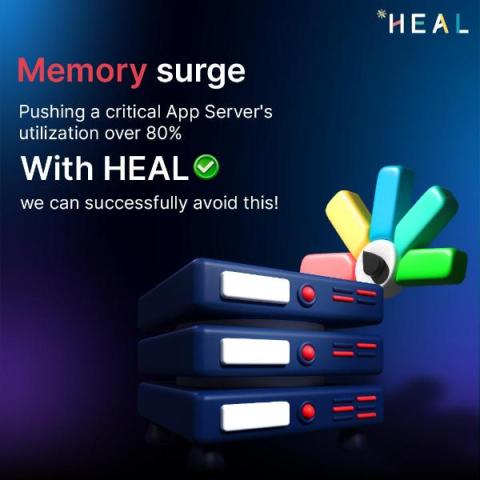
How We Fixed a Big Memory Problem on an App Server written in C++

In server management, high memory utilization is more than just a metric; it’s like a lighthouse signaling potential performance degradation, service disruption, and, in severe cases, complete system downtimes. Here we delve into a recent incident involving an App Server for one of our customers, which underscores the criticality of proactive monitoring, swift incident response, and strategic problem resolution.

A Beginner's Guide to Structured Logging

Structured logging is a methodical approach to log management in software development, often utilizing JSON or key-value pairs. This method enhances the comprehensibility and analytical efficiency of log data, particularly in complex and distributed system environments. Unlike unstructured logs, which lack a defined format, structured logs adhere to a standardized layout, facilitating streamlined analysis and troubleshooting.