Operations | Monitoring | ITSM | DevOps | Cloud

Ensuring network reliability: A deep dive into OpManager's failover capabilities

Business continuity is a vital aspect of modern business operations. It is the ability to maintain essential business functions during and after unexpected disruptions or disasters. Downtime, in the context of business continuity, refers to periods when critical systems are unavailable. When such a catastrophe happens, the repercussions can be significant. For one, it can be costly—every moment of system unavailability can result in financial losses.

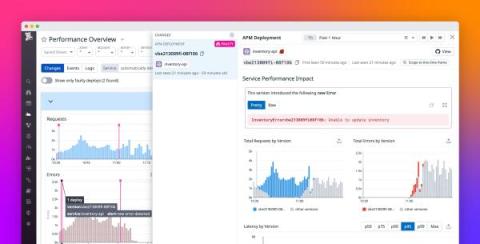
Quickly spot and revert faulty deployments with Change Overlays

Faulty deployments and other types of erroneous changes may account for around 70% of all application outages. With the prevalence of CI/CD workflows, engineering teams make changes to their applications, services, and infrastructure all the time, which can make it difficult to trace issues to specific changes.

Your Practical Guide to Reducing MTTR

Let’s face it. Incidents will always happen. We simply can’t prevent them. But we can strive to mitigate the impact incidents have on our product and customers. Ensuring high reliability depends on quickly and effectively finding and fixing problems. This is where the metric MTTR, standing for “mean time to restore” or “mean time to resolve,” becomes valuable for organizations.

5 Steps to Optimizing Microsoft Teams Performance

In the fast-paced landscape of modern workplaces, efficient communication and collaboration are paramount for success. Microsoft Teams has emerged as a cornerstone tool for many organizations. However, persistent and often unseen performance issues such as poor audio or video quality can stifle productivity and have a negative impact on the customer experience. Optimizing Microsoft Teams will allow you to use the platform to its peak performance for maximum productivity.

Streamlining Cloud Operations by Unifying Security & Observability

Many companies are using cloud technologies to become more agile, scalable, and cost-effective during their digital transformation. However, this change brings new challenges in maintaining the security and performance of applications and infrastructure in the cloud. Security and observability go hand-in-hand.

Building resilience in cloud: Strategies, advantages, and considerations

Cloud resilience When it comes to cloud computing, resilience is an infrastructure's ability to bounce back from setbacks seamlessly, ensuring uninterrupted operations in the face of outages, malfunctions, software bugs, and even natural disasters. We'll explore measures you can take to enhance resilience in your cloud, plus discuss the advantages and limitations of building a resilient cloud system.

Unlocking the Power of IIoT with Time Series Databases

This article was originally published on IIoT World and is reprinted here with permission. In the rapidly evolving world of Industrial Internet of Things (IIoT), organizations face numerous challenges when it comes to managing and analyzing the vast amounts of data generated by their industrial processes. Data generated by instrumented industrial equipment is consistent, predictable, and inherently time-stamped.

Resolving a Critical Incident in Core Banking: A Deep Dive into Application Patch Malfunction

In the dynamic environment of core banking systems, maintaining seamless operations is crucial. However, unforeseen complications can arise, leading to critical incidents that demand immediate and effective resolution. A recent incident involving an application patch malfunction presents a compelling study on the intricacies of managing and resolving system anomalies in real-time.