Jupyter Notebooks are wonderful because they provide a way to share code, explanations, and visualizations in the same place. Notebooks add narrative to computation. The cells compartmentalize steps and reduce the fear or hesitation associated with editing code. In this way, notebooks act as an invitation for experimentation. Today, I want to extend that invitation and apply it to InfluxDB. In this post, we’ll learn how to query our system stats data from InfluxDB v2.0 using Flux.
CIOs eat business challenges for breakfast. Everyone wants to know what the CIO is thinking and doing. After all, these brave men and women are leading the charge of marketplace innovation and business productivity. They’re being held increasingly accountable to drive revenues. CIOs are therefore focusing more time on identifying opportunities for competitive differentiation over functional tasks like cost control, according to the 2020 State of the CIO Report, by IDG Research.
Performance and security are the lifeblood of an e-commerce website. The moment pages start to slow down, or your customers fear their data may be at risk, is the moment your business starts to fail. This post is the third in a series exploring the key tools every ecommerce site needs running 24/7.
At the end of 2019, we released a new Suricata input plugin with Telegraf 1.13.0. In this blog, I’ll talk about the the powerful combination of these two open source products — the importance of Suricata and why you should use Telegraf to monitor its performance. I wanted to start off first thanking Sascha Steinbiss for submitting this plugin. Here at InfluxData, we can’t tell you how much we value our open source community.
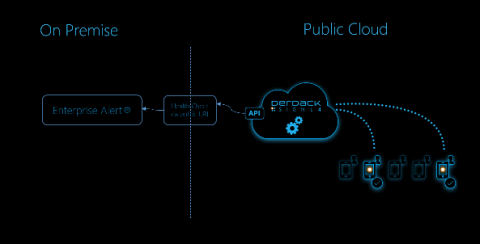
Enterprise Alert is the leading enterprise-class software in automated communication and incident response providing push notifications, SMS text messages, voice calls and emails to deliver instant notifications. With two-way smart connectors, built-in duty scheduling, customizable escalation workflows, and remote actions there is not a worry that critical events are not received and are handled in a timely manner.
As explained in the last post we've spent a few weeks working on small fixes and improvements, focusing on jobs that aren't urgent but shouldn't be overlooked. Here we'll look at how a few simple code changes greatly increased efficiency when serving pages on the Downtime Monkey website. These improvements focus on reducing the server's CPU load and memory use.
I’ve always enjoyed working at tech startups, and the journey which led me to join OpsRamp as the company’s first VP of Sales for EMEA began more than 20 years ago. I’ve learned a lot from working across diverse infrastructure categories, such as security, virtualization, storage, and identity management. Nobody was doing SaaS two decades ago, but there’s no question that today, IT is much more meaningful and powerful with the advent of cloud computing.
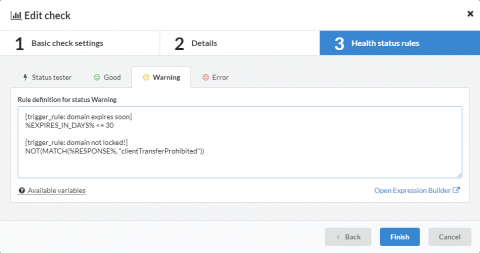
A domain in “Registrar Lock” status means the registrar for that domain has locked the domain to prevent any unauthorized domain transfers / changes. Our domain monitor can check domain expirations but did you now you can also check domain locks?
Breadcrumbs can help you debug client-side JavaScript applications, and are available to all Honeybadger customers as of today. One of the things that makes fixing JavaScript errors so difficult is that everything happens on the client-side. When an obscure error happens in a callback, you often lack the context to reproduce it. If the error is critical, you may even resort to deploying debug code to get more information about the events leading up to it.