Operations | Monitoring | ITSM | DevOps | Cloud

Grafana Tempo 1.3 released: backend datastore search, auto-forget compactors, and more!

Grafana Tempo 1.3 has been released! We are proud to add the capability to search the backend datastore. This feature will also appear soon in Grafana Cloud Traces. If you want to dig through the nitty-gritty details, you can always check out the v1.3 changelog. If that’s too much, this post will cover the big ticket items. You can also register for our upcoming webinar “Distributed tracing in Grafana: From Tempo OSS to Enterprise” on Jan.


What is Observability? Benefits, Use Cases & More

The year is over, and the word ‘Observability’ has been one of the buzzwords that kept everyone checking throughout the year for deserving reasons. The organizations do not want to leave any stone unturned to maintain performance and offer robust services from ‘monitoring’ practices to ‘observability’, ‘telemetry’, and visibility capacities. So let’s get into the meaning of each term and understand how they are vital for business growth.

Best practices for building serverless applications that follow AWS's Well-Architected Framework

In part 1 of this series, we looked at common design principles and patterns for assembling microservices in serverless environments. But when it comes to building serverless applications, designing your architecture is only part of the challenge. You also have to ensure that each of your individual functions and services are secure, reliable, and highly performant—without incurring enormous costs.

Designing production-ready AWS serverless applications

Serverless has become an increasingly popular paradigm among organizations looking to modernize their applications as it allows them to increase agility while reducing their operational overhead and costs. But the highly distributed nature of serverless architectures requires developers to rethink their approach to application design and development. AWS-based serverless applications hinge on AWS Lambda functions, which are stateless and ephemeral by design.

19 Questions To Ask Your Cloud Cost Management Vendor

Not all cloud cost management tools are equal. Whether you’re in the process of evaluating cloud cost management vendors or already have a tool in place, here are 19 questions you should ask to ensure you have all the capabilities needed to maximize performance and minimize cost of your hybrid cloud deployment across the following.

Leveraging AIOps to Enable Greater Customer Experiences

As time progresses and competition grows, being “good enough” means that you may be falling behind. Engineers will discover new ways to solve problems, which will enable rapid increases in availability and scalability. With these increases comes more complexity and the generation of more data. Rather than just monitoring the new data and letting the old data sit there collecting dust, you should consider using it to gain maximum insights into your environment.

Continuous Service Virtualization, Part 1: Introduction and Best Practices

Service virtualization (SV) has evolved as a popular technique and technology over the last decade. Traditionally, SV has primarily been used by testers to simulate other application components that the application under test interacts with. Typically, virtual services have been created and maintained by center of excellence (COE) teams.

Continuous Service Virtualization, Part 2: Steps for Optimizing DevOps

In my prior blog, Continuous Service Virtualization, Part 1: Introduction and Best Practices, we offered an introduction to continuous service virtualization (SV) and discussed some key best practices. In this, the second and final post in the series, we will discuss the continuous SV lifecycle and how it helps to optimize DevOps and the continuous integration/continuous delivery (CI/CD) pipeline.

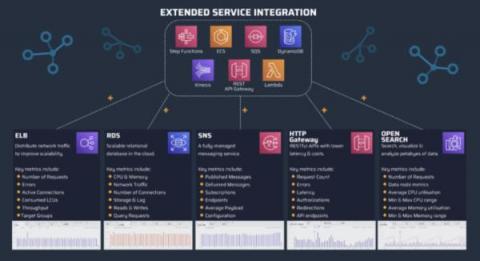
Dashbird now integrates with 5 new AWS services

TL;DR: Dashbird launches observability for five new AWS services (ELB, SNS, RDS, OpenSearch, and HTTP API Gateway) to allow for a faster, more secure, and smoother serverless observability experience. Dashbird, the leading monitoring platform for serverless AWS applications, announces five new AWS integrations.

How Reliability and Product Teams Collaborate at Booking.com

With more than 1.5M room nights booked per day, Booking.com requires a solid infrastructure that’s constantly monitored. And indeed, Booking.com now has a footprint of 50,000+ physical servers running across four data centers and six additional points of presence. The sheer size of this server fleet makes it viable for Booking.com to have dedicated teams specializing into looking only at the reliability of those servers.