Operations | Monitoring | ITSM | DevOps | Cloud

Bring More Reliability and Insights to Your Observability Pipelines with Cribl Stream 3.5

We’ve been busy building more features for Cribl Stream, and are excited to share the new value we offer our users. Cribl Stream 3.5 is now available! This release brings some much-requested features that will help users build more robust observability pipelines, with new sources and destinations. Let’s dive into what’s new!

Collect More Data with Windows Server Support in Cribl Edge 3.5

Cribl Edge is the easiest and most manageable agent for exploring, processing, and collecting Observability data at the edge for Linux servers. Today, we’re excited to announce that it’s not just Linux admins whose lives have been made easier with Edge. With the Cribl Software Suite 3.5.0, Cribl Edge now supports Windows Server 2016, 2019, and 2022, bringing that same intuitive experience for deploying, setting up, and collecting observability events to your Windows infrastructure.

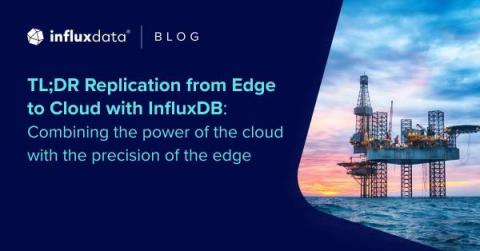
TL;DR Replication from Edge to Cloud with InfluxDB

Depending on your available resources, data analysis can take place at the edge or in the cloud, but businesses don’t need to choose one location over the other. There are benefits to giving the edge autonomy to collect, process, and act on data locally. Data replication helps maintain edge autonomy and makes it easier for users to get the data they need, where they need it.

Authors' Cut-How Observability Differs from Traditional Monitoring

Remember the old days where if you had an uptime of 99.9 you could be fairly confident everyone was having a good experience with your application? That’s not really how it works anymore. Modern, distributed systems are so complex they typically fail unpredictably, making it much harder to diagnose issues. Traditional monitoring grew out of those early days, allowing you to check the health of simpler systems.

On moving over a million uptime checks per week onto fly.io

The other day, a friend told me about fly.io's nice developer experience (DX). For my day job, I work on improving wrangler2's DX, so naturally it had me curious. I went from "I'll just play around with it, maybe give it a toy workload" to "holy shit, what if I quickly rewrite my business's AWS Lambda + SQS stack to fit entirely within their free tier" in about 90 minutes. It wasn't that simple in the end, but I did manage to migrate most of my active workload from AWS Lambda to fly.io.

Implementing Synthetic Monitoring with Telegraf and Logz.io

In my previous blog post, we explored key questions about Synthetic Monitoring, such as what it is, why it’s important, how it works, and how it compares to Real-User monitoring. Synthetic Monitoring is becoming an increasingly-popular method to continuously monitor the uptime of applications and the critical flows within them so that DevOps, IT, and engineering teams are quickly alerted when issues arise. Unfortunately, a good Synthetic Monitoring tool can be expensive.

Monitor your Graviton3-powered EC2 instances with Datadog

AWS’s new Graviton3 EC2 instances are built on its third generation of custom Arm-powered processors. These instances promise up to 25 percent better performance over Graviton2 for compute-intensive workloads. This means that, for applications like distributed data analytics, machine learning, video encoding, gaming, and more, migrating to Graviton3 instances can provide better performance, cost savings, and more energy efficiency.

We're thrilled to be positioned in the 2022 Gartner Magic Quadrant for Application Performance Monitoring and Observability!

We are elated to announce that ManageEngine has been recognized in the Gartner® Magic Quadrant™ for Application Performance Monitoring and Observability for the tenth time! The applications performance monitoring industry has grown tremendously over the past decade and the wide range of vendors highlights this growth.

K-12 and Network Monitoring: Solving IT Mysteries, Meeting Challenges

To say that K-12 school systems have challenges is an understatement. COVID forced schools to make a dramatic turn towards remote learning, which meant the network was anything but insular, forcing IT to efficiently support thousands of new remote endpoints. That is on top of other K-12 network challenges. Issue number one: tight budgets. Most school systems are tight for cash, especially after the financial stresses of COVID and all the millions spent on PPE.