Operations | Monitoring | ITSM | DevOps | Cloud

4 Causes of Website Downtime and How to Monitor Them

A lot of site owners underestimate the consequences of downtime, assuming that a brief outage won’t do much harm to their business. But this can leave them with broken web pages that are either poorly rendered or filled with bugs, frustrating users into hitting the “back” button since they can’t navigate the site. The truth is, keeping outages at bay beats fixing them after the fact, even with a guaranteed backup plan.


Logs vs Metrics: Pros, Cons & When to Use Which

As we at Splunk accelerate our cloud journey, we’re often faced with the decision of when to use logs vs metrics — a decision many in IT face. On the surface, one can do a lot by just observing logs and events. In fact, in the early days of Splunk Cloud, this is exactly how we observed everything. As we continue to grow, however, we find ourselves using a combination of both. This post lays out the overall difference in logs and metrics and when to best utilize each.

3 Website Reliability Metrics Councils Should Be Measuring

There are high expectations from users for council websites to be up and reliable. They are also required to adhere to guidelines set out in the Service Standard to make their website accessible and user friendly. Alongside these challenges, councils are often underfunded and understaffed which can make council web management teams stretched. Here are three key metrics that councils should be measuring to improve website reliability.

Global Health Institute Swiss TPH trusts in Icinga

We’re proud of our many customers and users around the globe that trust Icinga for critical IT infrastructure monitoring. That’s why we’re now showcasing some of these enterprises with their Success stories. It’s stories from companies or organizations just like yours, of any size and different kinds of industries. Some of them are our long-standing customers, others have just recently profited from migrating from another solution to Icinga.

Logging and monitoring Kubernetes

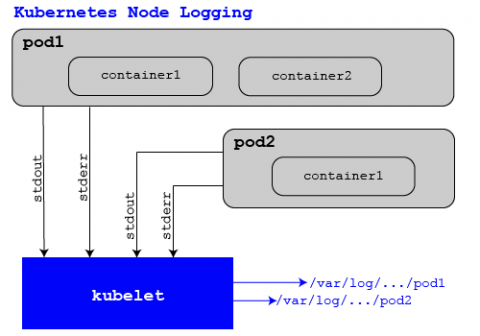
Kubernetes is first and foremost an orchestration engine that has well-defined interfaces that allow for a wide variety of plugins and integrations to make it the industry-leading platform in the battle to run the world's workloads. From machine learning to running the applications a restaurant needs, you can see that just about everything now uses Kubernetes infrastructure. All these workloads, and the Kubernetes operator itself, produce output that is most often in the form of logs.

NiCE Oracle Management Pack 5.3 released

Oracle is a highly performant and reliable multi-model database management system running online transaction processing, data warehousing, and mixed database workloads. Although Oracle environments are reliable and performant, monitoring dedicated Oracle on-premise or cloud deployments is crucial to safeguard business continuity.

All About Solr Replica Placement Plugins

With Solr 9 the Autoscaling Framework was removed – for being too complex and not terribly reliable – and instead we have Replica Placement Plugins. Unlike Autoscaling, replica placement only happens when you create a collection or add a new replica. Hence the name: it’s about where to place these new replicas. In this article, we’ll look at the available replica placement plugins, what you can use them for and how to use them.

Get High-Performance, Enterprise-Class Observability With Sensu Go

Sensu offers a complete solution for infrastructure monitoring and observability, designed to give you visibility into all of your important infrastructure components, including containers, applications, traditional server closets, and the cloud. Sensu Go is a commercial product based on an open source core that is freely available under a permissive MIT License and publicly available on GitHub.