Operations | Monitoring | ITSM | DevOps | Cloud

Elastic 9.3: Chat with your data, build custom AI agents, automate everything

Today, we are pleased to announce the general availability of Elastic 9.3 as the latest version of the Elasticsearch Platform — the world’s most popular open source platform for transforming both structured and unstructured data into trusted answers and outcomes. In addition to including new features that help developers with context engineering and agent building, Elastic 9.3 introduces a broad set of new capabilities to Elastic Search & AI, Elastic Observability, and Elastic Security.
How Prometheus Remote Write v2 can help cut network egress costs by as much as 50%

Back in 2021, Grafana Labs CTO Tom Wilkie (then VP of Products) spoke at PromCON about the need for improvements in Prometheus' remote write capabilities. “We use between 10 and 2 bytes per sample to send via remote write, and Prometheus only uses 1 or 2 bytes per sample on the local disk so there’s big, big room for improvement,” Wilkie said at the time.

Grafana Assistant: Why you can trust our agent-and yourself-in an era of AI hallucinations

Let’s be real: AI can hallucinate. And in observability, that feels risky. No one wants an assistant that sends your SREs chasing ghosts. At best, that burns expensive engineering time. At worst, it slows incident response in production and pushes teams toward the wrong remediation path. So here’s the big question: What makes Grafana Assistant different, and why should you trust it? Let’s start by acknowledging the fear. AI hallucinations are a real issue.

You Need an Advisor. Not an AI Assistant.

Complex environments don’t fail because teams lack data. They fail when teams can’t trust what the data is telling them. There are too many signals, too little time, and too much risk riding on every decision. That’s the reality Skylar Advisor is built for: delivering guidance teams can verify, so they can act faster without gambling on opaque, black-box answers.

How does Coralogix go beyond basic migration?

When a team, division or organization is assessing a new vendor, there are some basic questions that must be answered. At Coralogix, we look at migrations in a different way. It isn’t about transporting the current state of play into a new vendor, often called a “lift and shift”. These are the basics. There is a whole new level of onboarding and support that doesn’t just replicate value across platforms – it expands it.

Tool Consolidation Is Dead. Long Live Agentic AI.

It’s 2026, and developers have more tools at their disposal than at any point in the industry’s history: CI/CD platforms are richer; observability stacks are deeper; security, data, and AI tooling have exploded into crowded, competitive ecosystems. And yet, delivery is still slow, incidents are still noisy, workflows are still brittle. The problem is no longer tool scarcity or feature depth. It’s integration debt.

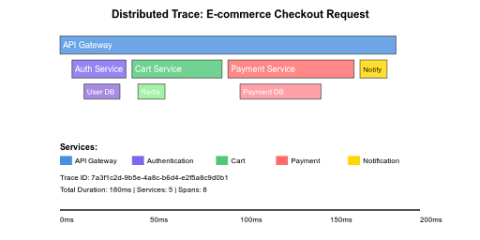
How to Implement Distributed Tracing in Microservices with OpenTelemetry Auto-Instrumentation

This guide shows you how to implement OpenTelemetry’s auto-instrumentation for complete distributed tracing across your microservices, from initial setup through production optimization and troubleshooting.

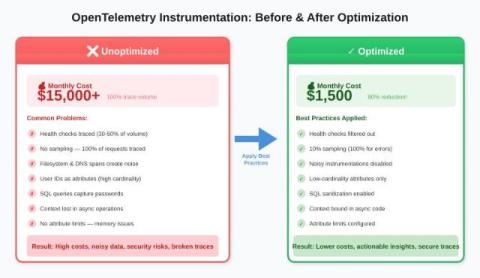
OpenTelemetry Instrumentation Best Practices for Microservices Observability

OpenTelemetry instrumentation is the foundation of modern microservices observability, but getting it right in production requires more than just enabling auto-instrumentation. This guide covers production-tested OpenTelemetry best practices that help engineering teams achieve reliable distributed tracing, control observability costs, and extract maximum value from their telemetry data.