When your system shows a "no healthy upstream" error, it usually means your load balancer can't connect to any of your backend servers. Let's get straight to fixing this problem.
In today’s digital economy, infrastructure has evolved from your organization’s technical foundation to a strategic asset that can make or break your business outcomes. Yet, as companies embrace hybrid environments, many find themselves struggling with a critical challenge: how to maintain control and visibility across increasingly complex infrastructure landscapes and AI workloads.
Choosing between Datadog and New Relic in 2024 represents a critical decision for organizations seeking robust monitoring and observability solutions. Both platforms offer comprehensive capabilities, but their approaches differ significantly. This in-depth comparison will help you make an informed decision based on your specific needs.
Nexthink’s industry-leading Experience 24 Events in Boston and London brought together over 1000 IT professionals dedicated to accelerating the value of strategic adoption of DEX. A hot topic was the growing recognition that traditional Observability solutions (APM’s and other high-cardinality technology monitoring solutions) while necessary, are insufficient to solve the full, end-to-end visibility of how employees are experiencing the totality of their web applications.
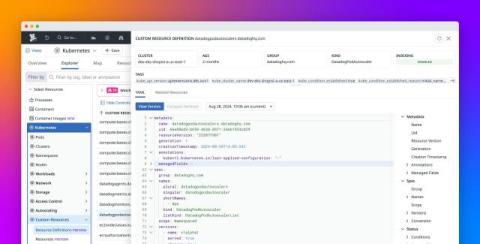
Custom resources are critical components in Kubernetes production environments. They enable users to tailor Kubernetes resources to their specific applications or infrastructure needs, automate processes through operators, simplify the management of complex applications, and integrate with non-native applications such as Kafka and Elasticsearch.
Understanding Splunk pricing is crucial for organizations evaluating SIEM solutions. This guide examines licensing models, actual costs, and essential pricing factors to help you make an informed investment decision for your security and monitoring needs.
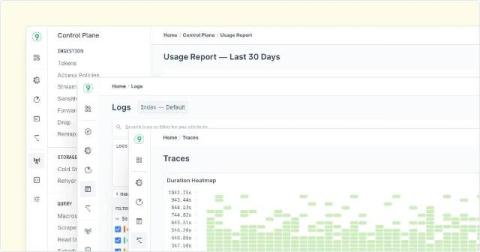
Last9’s Telemetry Warehouse now supports Logs and Traces, offering a unified view for high cardinality observability to simplify monitoring and troubleshooting.
Generative AI (GenAI) is still in its infancy, but its impact is already being felt across industries. Over the past year, production applications leveraging GenAI have gone from proof-of-concept to delivering real-world value. According to the World Economic Forum, 75% of surveyed companies plan to adopt AI technologies by 2027. Leading cloud providers like AWS are making significant investments.
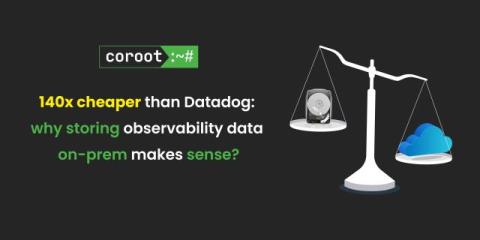
I’ve heard this story many times from production engineers: ‘We use tools like Datadog and NewRelic, but to keep costs from skyrocketing, we’re only monitoring our most critical services. We’re storing just 10% of our logs and traces and only the metrics we consider essential. It’s a frustrating situation. Engineers want full visibility across their systems, but cloud storage costs make it impossible to monitor everything.