The gaming industry is an extensive software market segment, reaching over $225 billion US in 2022. This staggering number represents gaming software sales to users with high expectations of game releases. User acquisition takes up a large part of software budgets, with $14.5 billion US spending globally in 2021. User retention is critical to the success of any game, especially where monetization requires driving in-app purchases and ad revenue.
The transition to distributed applications is in full swing, driven mainly by our need to be “always-on” as consumers and fast-paced businesses. That need is driving deployments to have more complex requirements along with the ability to be globally diverse and rapidly innovate.
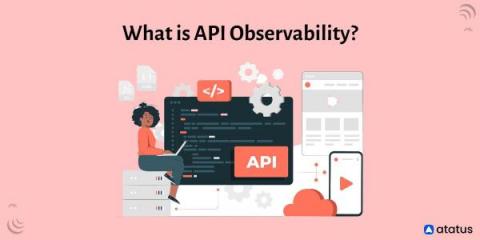
Mission-critical apps that are deployed on the cloud drive today's modern enterprises, which in turn power their businesses. These applications' fundamental units are microservices, which tiny development teams created to enable speedy feature releases to the market. APIs serve as the ties that bring these microservices together so they can cooperate.
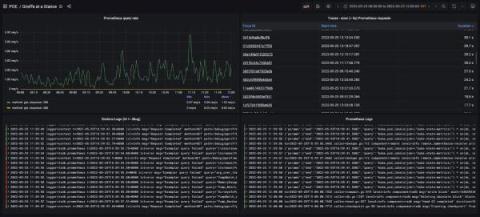
California-based Medallia captures feedback signals — in-person interactions, customer surveys, call centers, social media, etc. — to help businesses improve their customer experience. In much the same way, the company’s Performance and Observability Engineering team captures observability signals to optimize the experience for internal users.
The traditional approach for searching observability data is a tried-and-true: Once all the search staging is accomplished, we can perform high-speed, high-performance, deep-dive analysis of the data. But is this the best way or even the only way to search all that observability data? The answer to the first question is maybe, as it depends on what you are trying to accomplish. The answer to the second question must be a resounding no.
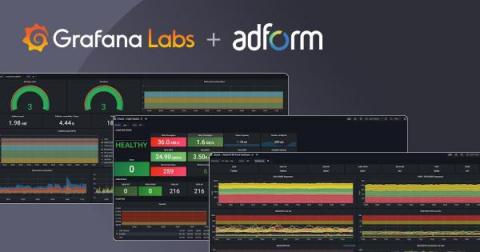
Over the course of two decades, Adform grew from a dream between friends huddled in a basement to a leading advertising tech platform powering more than 25,000 clients worldwide. Success brought external accolades, but it also created the need for internal innovation to support the company’s continued growth. In 2018, Adform was still operating in startup mode, which meant developers and teams cherry-picked the tools that worked best for them.
With the introduction of Environments & Services, we’ve seen a dramatic increase in the creation of new datasets. These new datasets are smaller than ones created with Honeycomb Classic, where customers would typically place all of their services under a single, large dataset. This change has presented some interesting scaling challenges, which I’ll detail in this post, along with the solution we used, and how we leveraged Honeycomb’s own telemetry to scale Honeycomb.
Intercom’s mission is to build better communication between businesses and their customers. With that in mind, they began their journey away from metrics alone and towards complete observability. The first step was tooling, and they learned quickly that trying to work with multiple solutions was not the answer.