Operations | Monitoring | ITSM | DevOps | Cloud

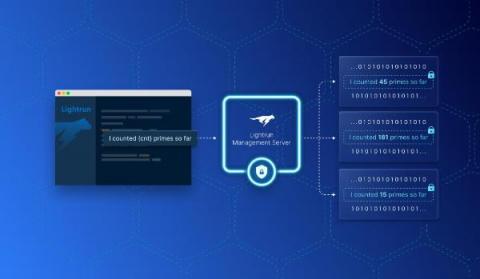
Why You Should Consider Dynamic Repurposing Instrumentation

As a developer, how much time do you actually spend writing code? According to this survey by The New Stack, developers spend less than one-third (32%) of their time writing new or improving existing code. And this is because they get stuck in multiple tasks that aren’t really part of their main responsibilities.
Webinar Recap: What Is An Observability Pipeline?

Observability data is mission-critical for businesses that want to provide stellar customer experiences, remain secure and compliant, and mitigate risk. However, organizations are creating more data as they expand their digital presence. Its increasing volume and complexity have teams looking for solutions that enable them to better control that data, derive more value by making it actionable, and all while keeping their costs under control.

Search Observability Data In-Place: Store Where You Want, Query When You Want

When we created Cribl Search, we wanted to give systems administrators the ability to query data without having to spend resources on collection and processing first — but we didn’t stop there. With Search, we’re also making it possible to query all the data you’ve already collected, processed, and kept in places like object stores, file systems, analytics tools, S3 buckets, or other data stores.

Logz.io's New Features: Easier, Faster, and More Cost-Efficient Observability

Our product strategy this year was relatively simple. Many observability practitioners we spoke with complained that observability was oftentimes slow, heavy, complex, and costly – which can be summed up in our CEO’s recent blog on modern observability challenges. While our customers didn’t report similar challenges, we wanted to further distance ourselves from this typical observability experience.

Golden signals in seconds with Universal Service Monitoring

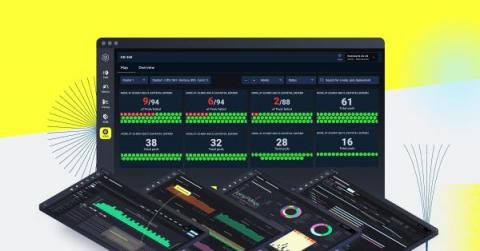
Whether you are a site reliability engineer, DevOps engineer, or application developer, you need visibility into the health and performance of every service you run or support. But in complex, dynamic environments, it can be difficult to ensure that all services are accounted for.

Announcing Logz.io Open 360: One Platform for Open Source Observability

Today, I’m thrilled to announce the introduction of Logz.io Open 360™. This is a major step in our journey. Open 360 is a unified platform for modern engineering teams requiring end-to-end observability across logs, metrics and traces—delivered in an intuitive user interface. Open 360™ is specifically designed to enable engineers to have deep monitoring and insights into distributed systems.

Announcing TISAX-compliant observability for the automotive industry and its suppliers

Many organizations face complex regulatory requirements when it comes to monitoring the health and performance of their service and application infrastructure. As part of our ongoing commitment to providing a comprehensive monitoring solution for all customers, we’re pleased to announce that Datadog has achieved TISAX Assessment Level 2 (AL2) certification.

New Honeycomb Integrations Let You Bubble Up Lurking AWS Issues

Today, we’re announcing the expansion of Honeycomb integrations with various AWS services. This update now covers a much wider swath of AWS services, makes it easier to integrate your AWS stack with Honeycomb, and with our new BubbleUp enhancements, you’ll be identifying and debugging hidden issues in your AWS stack faster than ever.

Going Beyond Infrastructure Observability: Meta's Approach

What’s the ultimate goal of bringing observability into an organization? Is it just to chase down things when they’re broken and not working? Or can it be used to truly enable developers to innovate faster? That’s a topic I recently discussed with David Ostrovsky, a software engineer at Meta, the parent company of social media networks Facebook and Instagram among others. He was my guest on the most recent episode of the OpenObservability Talks podcast.

Observability vs Monitoring: Which is Better?

Distributed architectures are becoming an increasingly important source of application services for organizations. Advances in observability and monitoring are being driven by this trend. But exactly how do observability and monitoring differ from one another? It's essential to know when something goes wrong in the application delivery chain so you can identify the root cause and resolve it before it has an impact on your business. Monitoring and observability offer a two-pronged strategy.