Operations | Monitoring | ITSM | DevOps | Cloud

Splunk Synthetics in Observability Terraform Provider Released

“How do you know your web properties and APIs are up and functioning as expected for users, not just nationally, but across the entire planet?“ Splunk Synthetic Monitoring provides an effective solution to monitor and track the reliability of web properties from locations all over the globe. By generating simulated user or API requests with Splunk Synthetics you’ll quickly be able to measure response times from various locations, devices, and connection types.
Twelve-Factor Apps and Modern Observability

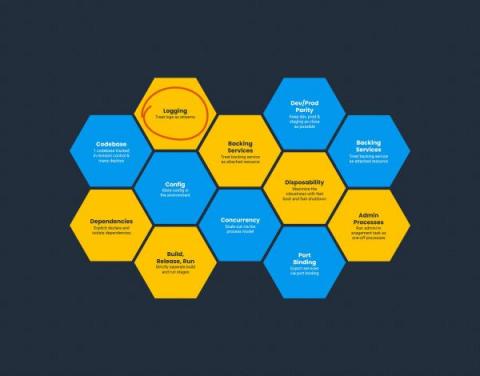
The Twelve-Factor App methodology is a go-to guide for people building microservices. In its time, it presented a step change in how we think about building applications that were built to scale, and be agnostic of their hosting. As applications and hosting have evolved, some of these factors also need to. Specifically, factor 11: Logs (which I’d also argue should be a lot higher up in the ordering).

Elastic Observability: Built for open technologies like Kubernetes, OpenTelemetry, Prometheus, Istio, and more

As an operations engineer (SRE, IT Operations, DevOps), managing technology and data sprawl is an ongoing challenge. Cloud Native Computing Foundation (CNCF) projects are helping minimize sprawl and standardize technology and data, from Kubernetes, OpenTelemetry, Prometheus, Istio, and more. Kubernetes and OpenTelemetry are becoming the de facto standard for deploying and monitoring a cloud native application.

How Much Should Your Observability Stack Cost?

Observability is critical to any software development. It is a term that describes the ability to monitor the performance and health of applications, services, and infrastructure. Observability aims to quickly identify and troubleshoot problems before they become full-blown incidents that can lead to costly downtime. But how much should you invest in an observability stack? Regarding the cost of your observability stack, there is no one-size-fits-all answer.

The future of observability: Trends and predictions business leaders should plan for in 2023 and beyond

If the past year has taught us anything, it’s that the more things change, the more things stay the same. The whiplash and pivot from the go-go economy post-pandemic to a belt-tightening macroeconomic environment induced by higher inflation and interest rates has been seen before, but rarely this quickly. Technology leaders have always had to do more with less, but this slowdown may be unpredictable, longer, and more pronounced than expected.

The Ultimate Guide to Digital Workplace Observability

The digital workplace has evolved dramatically over the past decade, both in terms of the increased reliance on technology for daily operations and the complexity of that technology. In order to manage an improve the digital workplace, service desk teams need more than just a comprehensive view of their IT environments — they need to be able to analyze that data in real-time to make faster, more continuously effective decisions. Enter: digital workplace observability.

Introduction to Kubernetes Observability

Cloud has become the de-facto standard for new application development. Kubernetes solves many problems of modern-day cloud infrastructure. It has made microservices-based distributed software systems possible, enabling organizations to provide on-demand scaling. But at the same time, Kubernetes has also increased operational complexity. In simple terms, Kubernetes is a container orchestration tool. Container environments are dynamic and ephemeral.

Ask Miss O11y: Is There a Beginner's Guide On How to Add Observability to Your Applications?

I want to make my microservices more observable. Currently, I only have logs. I’ll add metrics soon, but I’m not really sure if there is a set path you follow. Is there a beginner's guide to observability of some sort, or best practice, like you have to have x kinds of metrics? I just want to know what all possibilities are out there. I am very new to this space.

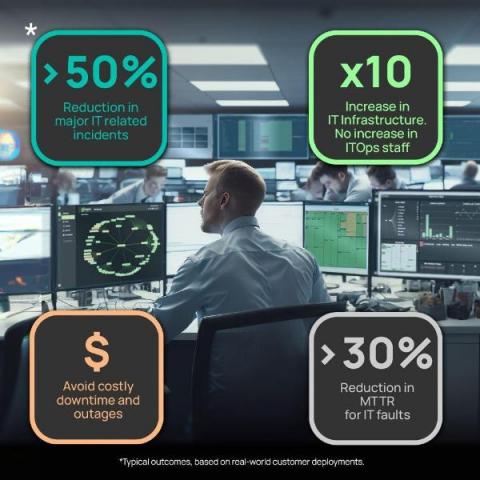
Top 10 AIOps & Observability Capabilities for the Banking and Finance Sector

Maintaining trust in the business services your customers rely on is everything. With ever-increasing customer expectations and the promise of ‘always-on’ services, poor digital experiences and outages can cause significant harm to your business. The Interlink Software AIOps and Observability platform strengthens IT teams’ capability to deliver more reliable, available digital services and reduce the risk of customer impacting disruption.

Sponsored Post

The Risks and Pitfalls of Too Many Monitoring Tools

If you are like most organizations, your technology environment is a complex mixture of tools needed to run your business. In this environment, monitoring and observability are critical to making sure everything is running smoothly. You use monitoring tools to measure server resources, log-parsing tools for troubleshooting, application tools to observe application performance, and audit-request tools to comply with regulations. While these are all valid observability needs, there are risks to overdoing it by introducing too many tools. Here are some ways to avoid monitoring proliferation when developing your observability strategy.