Operations | Monitoring | ITSM | DevOps | Cloud

Confidently Shifting from Logs-centric to a Unified Trace-first Approach: Ritchie Bros. Journey to Modern Observability

Transitioning from a monolithic system to a cloud-native microservices environment, Ritchie Bros. sought to modernize their observability infrastructure to support the transition and fuel future growth. Ritchie Bros. has been a pioneering force in the auctioneering market for nearly 70 years, charting remarkable growth through a strategic mix of organic expansion and acquisitions.

How to Monitor SNMP with OpenTelemetry

With observIQ’s contributions to OpenTelemetry, you can now use free, open-source tools to easily aggregate data across your entire infrastructure to any or multiple analysis tools. The easiest way to use the latest OpenTelemetry tools is with observIQ’s distribution of the OpenTelemetry collector. You can find it here. In this blog, we cover how to use OpenTelemetry to monitor SNMP.

Level up with distributed tracing: Enhancing application performance with Applications Manager

In our modern, digitally connected landscape where software stretches across diverse platforms and settings, trying to track a single request can seem like wandering through a maze with a blindfold on. This is where distributed tracing comes into play. It’s an essential technique that sheds light on the paths of digital transactions through complex systems, making the invisible visible. Distributed tracing offers many advantages for monitoring and fixing complex distributed systems.

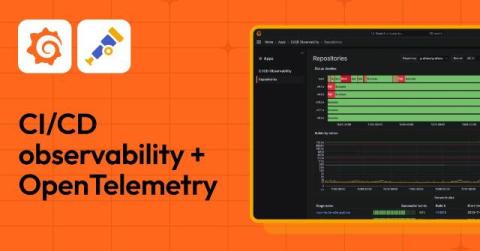
CI/CD observability: A rich, new opportunity for OpenTelemetry

Continuous integration and continuous deployment (CI/CD) are the backbone of modern software delivery, but there’s still limited visibility into their processes. Here’s how that’s changing with OpenTelemetry (OTel), and why those changes are so exciting.

Integrating Distributed Tracing in Node.js Application

This architecture allows Node.js to handle thousands of concurrent connections with low overhead, making it highly efficient for building high-performance web servers and microservices. With many such systems adopting microservices and going for a distributed architecture, the necessity to monitor them has also increased. It is difficult to monitor every transaction and how it interacts with other services, so a distributed tracing system deserves a lot of attention here.

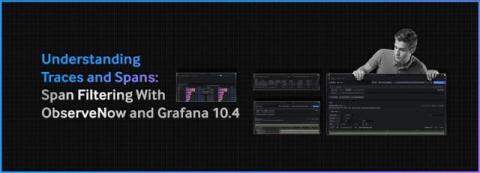
Understanding Traces and Spans: Span Filtering With ObserveNow and Grafana 10.4

ObserveNow, the leading open source-based observability stack, has recently enhanced its capabilities with the introduction of Span Filtering – a key feature in its latest upgrade to Grafana 10.4. This advancement significantly improves the platform’s ability to dissect and analyze traces, which are crucial for understanding the behavior and performance of distributed systems.

Free the data: Why US federal agencies should standardize on OpenTelemetry

In today's digital age, data is the lifeblood of modern organizations — and the US government is no exception. As agencies grapple with the ever-increasing volume and complexity of data, it is imperative to adopt a standardized approach to monitoring, analyzing, and understanding the behavior of complex IT systems. This is where OpenTelemetry, an open-source observability framework, comes into play.

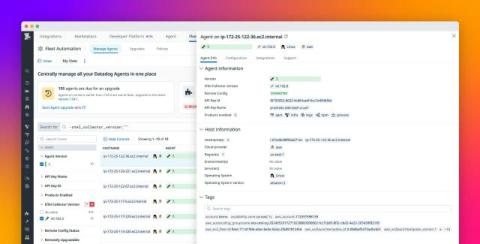
Unify your OpenTelemetry and Datadog experience with the embedded OTel Collector in the Agent

OpenTelemetry (OTel) is an open source, vendor-neutral observability solution that consists of a suite of components—including APIs, SDKs, and the OTel Collector—that allow teams to monitor their applications and services in a standardized format. OTel defines this data via the OpenTelemetry Protocol (OTLP), a standard for the encoding and transfer of telemetry data that organizations can use to collect, process, and export telemetry and route it to observability backends, such as Datadog.

OpenTelemetry Best Practices #3: Data Prep and Cleansing

Having telemetry is all well and good—amazing, in fact. It’s easy to do: add some OpenTelemetry auto-instrumentation libraries to your stack and they’ll fill your disks with data pretty quickly. However, having good telemetry data—data that’s curated into being useful—is something that is both cost-effective and represents good value.