Operations | Monitoring | ITSM | DevOps | Cloud

Datadog automatically surfaces actionable insights into your Lambda functions

Serverless platforms like AWS Lambda have helped accelerate application development by removing the need to provision and manage infrastructure resources. However, serverless architecture presents new monitoring challenges. Because AWS Lambda handles underlying infrastructure for you, you don’t have access to system-level metrics. Instead, you have to monitor your Lambda functions for insight into their performance and resource usage.

Monitor your NVIDIA Jetson IoT devices with Datadog

NVIDIA Jetson is a family of embedded, low-power computing boards designed to support machine learning and AI applications at the edge. Organizations use Jetson boards for complex video and image processing and analysis, automating build processes in factories, and improving city infrastructures. For example, Jetson-based devices enable cities to analyze traffic patterns with their existing traffic cameras in order to find ways to improve their most congested intersections.

Multi-Cloud Archive & Restore: Azure Blob Storage and AWS S3 Support

Logz.io has recently launched its Smart Tiering solution, which gives you the flexibility to place data on different tiers to optimize cost, performance and availability. Our mission has been to make Smart Tiering a multi-cloud and multi-region service. As part of this launch, we are glad to announce that the Historical Tier now supports Microsoft Azure Blob Storage, alongside AWS S3.

Kusto: Table Joins and the Let Statement

In this article I’m going to discuss table joins and the let statement in Log Analytics. Along with custom logs, these are concepts that really had me scratching my head for a long time, and it was a little bit tricky to put all the pieces together from documentation and other people’s blog posts. Hopefully this will help anyone else out there that still has unanswered questions on one of these topics.

Kusto: Custom Logs in Log Analytics

In this article, I’m going to discuss custom logs in Log Analytics. Along with table joins and the let statement that I discuss in another blog, custom logs is a concept that I struggled to wrap my head around for a long time, as there don’t seem to be very many comprehensive guides out there as of yet. Here is a summary of everything I have managed to piece together from documentation and other people’s blog posts.

Best Practices for Incident Management: A Checklist

If productivity is the engine that helps optimize how a business operates then being proactive is the oil and knowing how to effectively maintain productivity is regularly checking and replacing said oil. Whenever a service outage occurs it throws a wrench into the whole process and can put an entire organization in flux, mainly because the outage.

Martello in Motion - Rapid Circle

Rapid Circle has been providing information and communication technology services to organizations since 2008. The company offers cloud workplace and managed cloud services like data center migration, adoption and change management, and other cloud solutions that help organizations cut costs, improve productivity, and contribute to innovation, internal communication, and collaboration.

How Prometheus monitoring mixins can make effective observability strategies accessible to all

Three years ago, Tom Wilkie and Frederic Branczyk sketched out the idea for Prometheus monitoring mixins. This is a jsonnet-based package format for grouping and distributing logically related Grafana dashboards with Prometheus alerts and rules. The premise was that the observability world needed a way for system authors to not only emit metrics, but also provide guidance on how to use those metrics to monitor their systems properly.

Healthcare IT responds to pandemic with increased focus on database monitoring and the cloud

Every year, Redgate’s State of Database Monitoring Report reveals how businesses and organizations are monitoring their database estates. Are they using in-house or third-party monitoring tools? Who has access to the data? What are their biggest challenges? The thousands of responses to the survey behind the report offer the answers, and also provide an opportunity to dive deeper and examine those issues at an industry sector level.

Creating Custom Plugins Using The Snap Framework

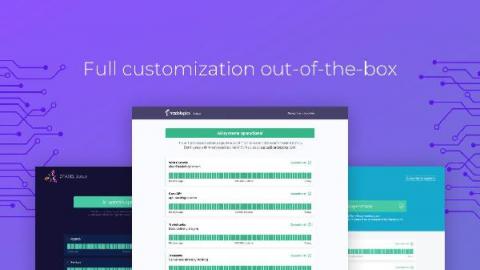
SolarWinds® AppOptics™ was designed from the ground up as a SaaS-based APM tool for cloud-native and traditional IT implementations. It provides out-of-the-box monitoring for applications and infrastructure through simple-to-install APM libraries and host agents. AppOptics makes it easy for multiple teams to quickly assess the health and performance of your applications regardless of how or where they are implemented.