5 Important DevOps Monitoring Metrics
Many engineering organizations embrace the DevOps philosophy as a strategy for speeding software development and delivery while simultaneously improving the overall quality of the end product.


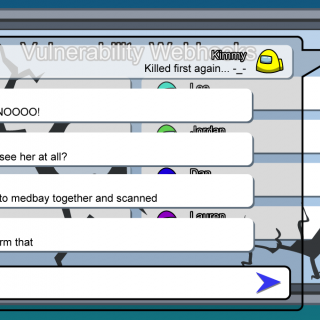
Security scanning provides an opportunity to target, track, and trace vulnerabilities introduced to your packages as soon as Cloudsmith has received a complete package upload. However what happens when you want to intercept the results of a scan immediately. An early warning can make a difference when distributing vulnerable packages to hundreds, thousands, or even millions of developers, devices, or systems globally.
A digital twin is a virtual or digital replica of a physical entity. In the Industrial Internet of Things (IoT) realm, a digital twin is the dynamic virtual copy of a physical framework, a vehicle, a machine, or any device. Most often, a digital twin is developed to carry out simulations before the actual device is manufactured. Today, digital twin is taking the IoT industry by storm and the market is expected to hit $16 billion by 2023.
More and more, we see our clients moving their workloads from clunky on-premise data centers to nimble cloud platforms, orchestrated container environments, such as Kubernetes and Red Hat OpenShift, or a combination of both. The technical aspects of such a migration are typically well-known. Your IT staff does a great job managing these environments: Still, there is one more aspect of managing these environments that is often overlooked — cost.
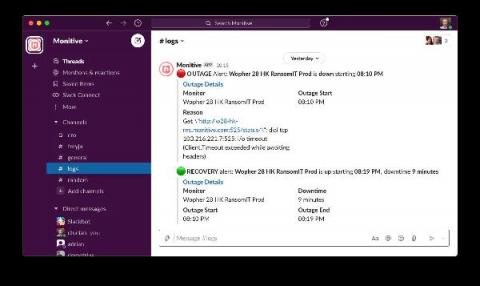
Just launched outage and recovery alerts via Slack, right into your team's workspace and across all your Slack-enabled devices.
It’s important to be able to look at the entirety of your application architecture, not just specific aspects of it, and understand how different parts connect. Observability comes first, followed by monitoring. In this post, we’ll dive into the database part of your architecture to show how you can monitor and optimize your database performance.
Our friends at Buoyant, creators of Linkerd, have just launched the public beta of Buoyant Cloud, the best way to run Linkerd in mission-critical environments. We're happy to announce that Civo users are eligible for $100 in free Buoyant Cloud credits. Read on to learn more!
Microsoft has discovered a new large-scale attack targeting Kubeflow instances to deploy malicious TensorFlow pods, using them to mine Monero cryptocurrency in Kubernetes cluster environments. Kubeflow is a popular open-source framework often used for running machine learning tasks in Kubernetes. TensorFlow, on the other hand, is an open-source machine learning platform used for implementing machine learning in a Kubernetes environment.