Ask Miss O11y: Observability Without Manual Tracing
TL;DR: Use auto-instrumentation from OpenTelemetry. Traces will happen. Then your code can use global library functions to customize those traces with your specific important data.


TL;DR: Use auto-instrumentation from OpenTelemetry. Traces will happen. Then your code can use global library functions to customize those traces with your specific important data.
In today’s highly competitive and volatile business environment, service outages can result in the loss of customers. Because of those high stakes, it’s imperative that companies take action to avoid outages. But how can you prevent them before they happen? Enter artificial intelligence (AI). AI and machine learning can run in the background to monitor systems and detect anomalies before humans can spot them. ServiceNow Predictive AIOps was designed with this purpose in mind.
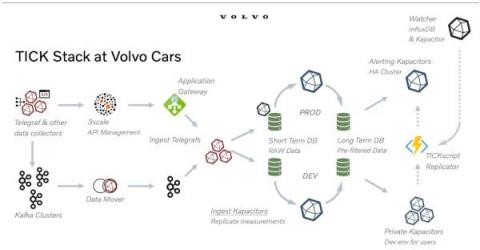
Production delays or stoppages are the bane of any manufacturer. When you’re a global automaker like Volvo, even the smallest delays can have significant ripple effects. But not even global leaders are immune to IT issues. This was the situation Volvo faced several years ago. It had a legacy DevOps monitoring solution in place for the previous 15–20 years, but that system no longer met the company’s needs. On the surface, it seems like a robust system.
Talk about performance — and about how to make website content load faster — has increasingly been centered around optimizing web experiences leading to higher end-user engagement. More specifically, around metrics leading to website speed, greater conversions and ROI. Seeing what slows down your website and taking action will lead to better results overall.
These are heady times to be in the big data business, with big growth predicted for the foreseeable future across several measures, including data generation and storage, market spending, and data analytics hiring. First, the growth of data shows no signs of slowing down. In fact, data creation leaped forward in 2020 thanks to the COVID-19 pandemic, according to IDC’s DataSphere and StorageSphere reports.
With dozens of microservices running on multiple production regions, getting to a point where any error log can be immediately identified and resolved feels like a distant dream. As an observability company, we at Coralogix are pedantic when it comes to any issue in one of our environments. That’s why we are using an internal Coralogix account to monitor our development and production environments.
In this post, we’ll examine a way to create a Workplace Wellness program that can be used within Mattermost. This program consists of four distinct apps which are meant to help companies that are embracing a remote work culture.
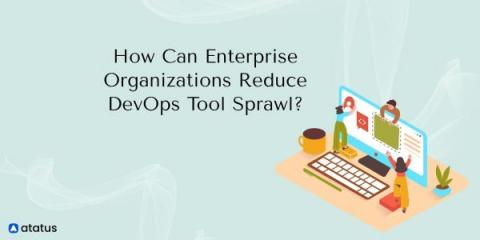
The world revolves around DevOps tools. DevOps engineers go insane when they have too many tools. The first statement is correct. Also, the second one. Tooling that helps in the automation of software development and infrastructure provisioning workflows and pipelines is critical for both the engineers who create the automations and the developers who use the automated workflows on a daily basis.