Operations | Monitoring | ITSM | DevOps | Cloud

Key metrics to track to enable remote work and maintain business continuity

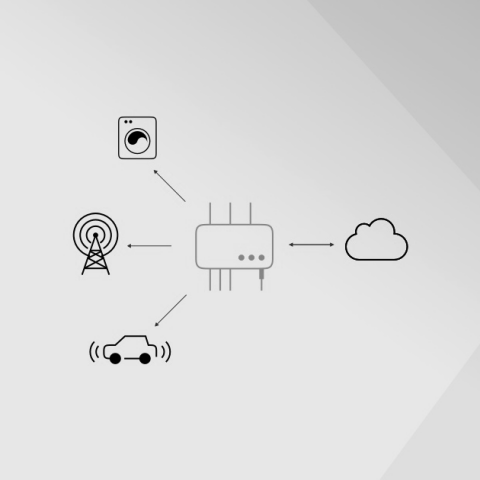
Remote work has become the new norm. Organizations are adapting to the current volatile market conditions by amending their business strategies, drafting new business playbooks, and laying down novel policies, all centered around one theme: remote work. This transition to remote work certainly hasn’t been easy and brings with it a unique set of challenges. Shifting business operations to remote environments profoundly impacts an organization’s IT infrastructure and in-house networks.

GrafanaCONline Day 8: Introducing the new plugins platform in Grafana v7.0

Welcome to the third and last week of GrafanaCONline! We hope you’re able to check out all of our great online sessions. If you didn’t get a chance to watch yesterday’s sessions (or want to see them again), here’s a roundup of day 8 of the conference.

Expanding the IBM & Sysdig Relationship to Manage Cloud Security Risk

Today, we are pleased to announce the expansion of Sysdig’s relationship with IBM to extend cloud security governance with IBM Cloud Pak for Multicloud Management. Through a new OEM agreement, Sysdig Secure and the Sysdig Secure DevOps Platform are now available through IBM and IBM Business Partners. The combined IBM and Sysdig offering delivers centralized cloud visibility, governance and automation with in-depth container security intelligence for Red Hat OpenShift.

Kubernetes Operators for Automated SRE

It can be quite challenging for an SRE team to maintain the well-being of a large-scale Kubernetes based system with hundreds or thousands of services. In this blog post, Gigi Sayfan, author of “Mastering Kubernetes”, outlines the SRE challenge and how we can achieve the ultimate goal of automated SRE with Kubernetes operators.

A Cost Comparison: ELK vs Proprietary Log Analytics

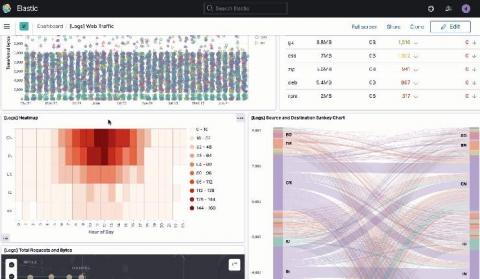
The large volumes of logs, metrics, and traces generated by scaling cloud environments can be overwhelming, but they must be collected to identify and respond to production issues or other signals showing business or application issues. To collect, monitor, and analyze this data, many teams choose between open source or proprietary observability solutions.

Extreme Networks Donates EWC To Linux Foundation

May 27, 2020 By @blag After acquiring the StackStorm product and the amazing StackStorm team in 2017 from Brocade, Extreme Networks has been a large contributor (if not the largest contributor) to the StackStorm project, even donating the code and transferring the StackStorm trademarks to the Linux Foundation last year. Continuing that tradition, Extreme Networks announced today that they were donated their enterprise extensions of StackStorm (previously StackStorm Enterprise) to the Linux Foundation!

Release Notes: Stakeholder Engagement, Uptime Monitoring API, Flexible Periods for Schedules, and more

Nowadays, a working digital infrastructure is the lifeblood of almost any organization. The impact of a major IT incident can go far beyond the IT department, affecting a company’s revenue or incur costs in other areas of the business caused by service disruption. Therefore, in addition to the technical response to a major incident from the IT department, business stakeholders need to be involved as well, so they can prepare the business response.

How we reduced the AWS costs of our streaming data pipeline by 67%

At Taloflow, we are determined not to be the cobbler whose children went barefoot. We approach our own AWS costs as if we are helping one of our customers. The results are striking and worth sharing. And, with zero upfront or reserved commitments required! This post illustrates how a little bit of diligence and a clear cost objective can end up making a large impact on profitability.

HAProxy Go Packages Ecosystem

Under the hood, the HAProxy Data Plane API and the HAProxy Kubernetes Ingress Controller are powered by a shared set of Go libraries that apply changes to an HAProxy configuration file. In this talk, Marko Juraga describes how these libraries are developed and invites you to use them in your own projects when you need to integrate with HAProxy. Watch Marko’s presentation video or read the transcript below. Explore more HAProxyConf 2019 talks in our User Spotlight Series.