Operations | Monitoring | ITSM | DevOps | Cloud

Site Reliability Engineering (SRE) 101: Everything You Need to Know | Harness Blog

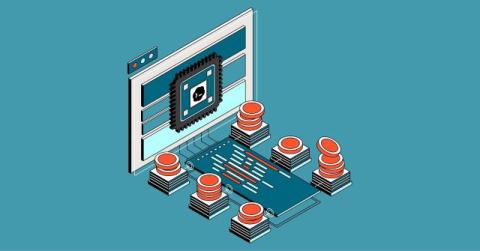
A single second of latency can cost e-commerce sites millions in revenue, while just minutes of downtime trigger customer churn that takes months to recover. Modern users expect instant responses and seamless experiences, making reliability a competitive feature that directly impacts business outcomes. Site Reliability Engineering treats operations as a software problem rather than a manual discipline. SRE applies engineering principles to achieve measurable reliability through automation.

The Shift Toward Autonomous Enterprises

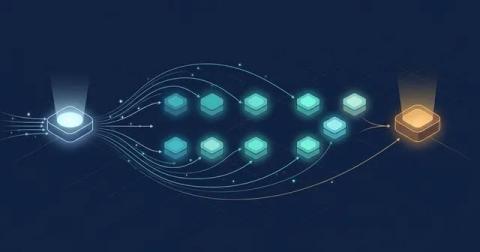
In our previous post, Navigating the Complexities of Scaling AI in Enterprise Operations, we explored the “cost–human conundrum”, balancing the promise of automation and the realities of economics, skills, and governance. That discussion highlighted a critical inflection point: scaling AI is not just a technical challenge, but an organizational one.

Merge Queues for Bitbucket Cloud, now in open beta

Teams are shipping more code, faster than ever, as they increasingly automate their processes with CI/CD and AI. But high-velocity pull-request workflows and large monorepos, where many PRs are merged continuously, are feeling the pain as they grow: pull requests race to merge before the branch changes again, “green” builds still break due to semantic merge conflicts, and developers are stuck babysitting merges instead of building features.

When AWS us-east-1 Fails, Much of the Internet Fails With It

There are cloud outages, and then there are us-east-1 outages. That distinction matters because failures in AWS’s Northern Virginia region rarely feel like ordinary regional incidents. They tend instead to expose something larger and more uncomfortable: too much of the modern internet still behaves as though one place is an acceptable concentration point for infrastructure, control, recovery, and communication. When us-east-1 goes wrong, the problem is not only that workloads fail.

Change in behavior: findfiles() and directory trailing slashes

CFEngine 3.24.4+, 3.27.1+, and 3.28.0+ include a change to how findfiles() handles trailing slashes on directory paths. This change restores trailing slashes to directory results, but with improved consistency compared to earlier versions. The new behavior ensures that directory paths always include a trailing slash, making them reliably distinguishable from file paths regardless of the glob pattern used.

Why IncidentHub's Alerting is Better than Other Status Page Aggregators'

IncidentHub tracked 48000 SaaS and Cloud outages in 2025. The average organization depends on 100+ SaaS apps, making third-party vendor monitoring a crucial aspect of risk management and business continuity for almost all modern organizations. Better SaaS outage alerting is about monitoring the right parts of your third-party services, and routing alerts to the right people at the right time.

AppSignal MCP Now Supports OAuth - and GitHub Copilot

When we launched AppSignal MCP in beta, OAuth was on the roadmap but not yet shipped. We were issuing static bearer tokens — enough to connect Claude Desktop, Cursor, and Windsurf, but not the one-click install path in the MCP Registry, and not GitHub Copilot's recommended setup. That's fixed.

The 9 Application Performance Metrics You Need to Measure and Why

The tension between shipping speed and application performance has not changed much since this post was first published in 2020. What has changed is how quickly a team can detect, diagnose, and fix a problem. That difference is significant enough to warrant a revisit. The scenario from the original still plays out every week. Sales brings a priority feature that might degrade performance for some customers. The developer ships it and watches what happens.

Learning by Doing: How Summer Tech Programs Prepare Students for Future Careers

Every curious kid who's ever taken apart a remote control, just to see what's inside, deserves more than a textbook answer. Summer tech programs are changing that dynamic entirely, turning passive learners into builders, coders, and genuine problem-solvers. STEM offerings now account for 45% of all camps, with robotics featured in 32% of programs, and that number keeps climbing. That trajectory tells you something important about what young learners actually need right now, and what well-designed learning by doing summer tech experiences genuinely deliver.

Smart Home Care: How to Prevent Structural Damage Before It Costs You Everything

Your home is quietly working against you, sometimes for years, before the damage becomes impossible to ignore. Water finds its way behind drywall. Mold colonies establish themselves in crawlspaces you never visit. Foundations shift incrementally until one day, they don't shift back. For homeowners who genuinely care about smart home structural damage prevention, early action isn't a luxury; it's the foundation of everything else.