Operations | Monitoring | ITSM | DevOps | Cloud

The latest News and Information on Monitoring for Websites, Applications, APIs, Infrastructure, and other technologies.

Difference Between Elasticity and Scalability in Cloud Computing

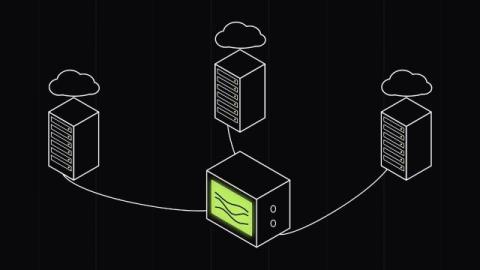
In cloud computing, teams use elasticity and scalability as if they mean the same thing. In reality, the two describe different ways a system handles load, and they solve different problems. Mixing them up can be very expensive. You either pay for capacity that sits idle, or your app buckles the moment traffic spikes, and the bill and the incident report both feel it.

What Customers Are Doing With AI and Honeycomb

At O11yCon, we talked to engineering teams across the industry, and the numbers are starting to get genuinely wild: Mixpanel DevOps Engineer Eddie Bracho told us their engineering team is generating 50% more PRs than before AI came into the mix (sorry). That kind of velocity is exciting, but it's also a pressure test for every part of your stack that isn't writing code, including your observability practice. Here's what we're hearing from customers about how that's playing out.

Full-stack observability in Grafana Cloud: How to investigate issues across services and infrastructure

Many times, the hardest part of troubleshooting isn’t fixing the actual problem. It’s figuring out where to start. As engineers, it’s easy to lose count of how many times we’ve opened logs, then 10 metrics tabs, and another 10 tabs with trace queries, only to end up back in the logs trying to find a root cause.

New in Skylar One - Kyoto: Helping IT and Business Teams Focus on What Matters Most

When technology works, businesses thrive. Employees stay productive, customers stay connected, and critical services keep running. But when something goes wrong, the real challenge is not only detecting the issue. It is understanding what it affects, who may fell the impact, and how urgently the business needs to respond. That is the value behind the Kyoto release. The latest Skylar One update helps teams better connect IT health to business impact.

Introducing Atatus MCP Server: Connect AI Agents to Your Observability Data

AI coding assistants like Claude, Cursor, Codex, GitHub Copilot have become standard tools in the modern engineering workflow. Developers use them to write code, generate tests, and review pull requests. But when something breaks in production, these assistants hit a wall: they have no access to your actual system state. They can reason about logs, traces, and metrics. They just can't see yours.

6 Ways to Use the Hyperping MCP Server

When something goes down, the last thing you want is to alt-tab between a monitoring dashboard, your on-call tool, and three Slack threads to figure out what is happening and who owns it. That context is usually all there. It is just scattered. The Hyperping MCP server fixes that by putting your monitoring data inside the AI tools you already work in. Your agent can read monitor state, outage timelines, SLAs, and on-call schedules, and answer the questions you would normally chase across tabs.

Coralogix vs New Relic: Comparison Guide (2026)

Coralogix and New Relic both cover the full observability surface, but they charge for it and store it in different ways. One prices purely on data ingested and writes telemetry to a bucket you own, while the other combines ingest pricing with per-user licensing and retains data in its own backend. This guide covers how the two platforms compare on core features, pricing structure, AI observability, archiving and retention, security coverage, and support, then shows when each one is the stronger choice.

Coralogix vs Sumo Logic: Support, Pricing, Features & More

Coralogix and Sumo Logic are two different answers to the same observability platform decision. Where Coralogix processes telemetry in flight, stores it in your own Amazon Simple Storage Service (S3) bucket, and prices on data ingested, Sumo Logic keeps data in vendor-managed storage and, under its Flex model, bills for data scanned at query time. Both platforms have introduced pricing and artificial intelligence (AI) changes in the past year, and those changes have widened the difference between them.

Configuration drift in enterprise networks: Causes, impact, and management

Network admins want all devices with the same role to behave the same way. But in real environments, that consistency rarely lasts. Imagine two core switches in the same data center. They serve the same function and run the same OS version. One handles traffic without issue, while the other drops packets during peak hours. Logs show nothing obvious. Routing looks correct. The team spends hours checking links, hardware, and traffic paths.

Connecting Ticketing Systems to Microsoft SCOM

Microsoft SCOM (System Center Operations Manager) remains a widely used enterprise monitoring platform due to its deep integration with Windows, hybrid-cloud support, and extensible management packs. However, the value of SCOM is fully realized only when its alerts seamlessly flow into ITSM or ticketing systems. This ensures incidents are created, routed, and resolved efficiently.