Operations | Monitoring | ITSM | DevOps | Cloud

The latest News and Information on DevOps, CI/CD, Automation and related technologies.

Report: Lambda use among Blue Matador users in 2020

It’s no secret that AWS Lambda adoption has grown steadily since AWS first released it in 2015—and for good reason. The benefits of adopting Lambda are many: leveraging Lambda eliminates the need to provision and manage servers, enabling teams to just focus on their code without the mental and operational overhead of worrying about the underlying infrastructure.

OpenTracing for Go projects

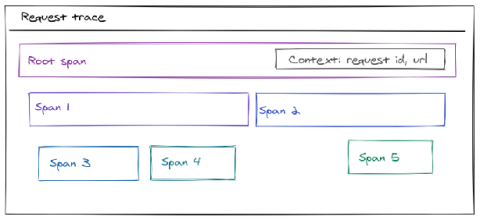
Large-scale cloud applications are usually built using interconnected services that can be rather hard to troubleshoot. When a service is scaled, simple logging doesn’t cut it anymore and a more in-depth view into system’s flow is required. That’s where distributed tracing comes into play; it allows developers and SREs to get a detailed view of a request as it travels through the system of services.

Panel: The Future of IT Service Management

IT service management (ITSM) has evolved into a much broader discipline than just delivering IT services to the business. It’s grown beyond the IT department and become an integral part of how every employee in almost every business unit performs and completes tasks. In a recent webcast, SolarWinds Sr. Solutions Engineer Liz Beavers, ITSM experts Valence Howden and Julie Mohr, and HDI’s Group Principal Analyst Roy Atkinson paint a picture of what can be expected for the future of ITSM.

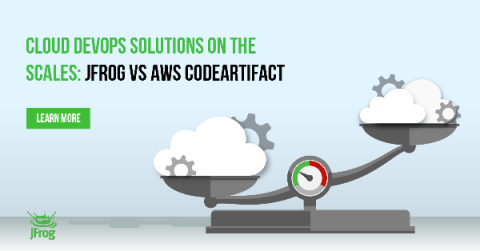
AWS CodeArtifact vs. Artifactory: Which Should You Choose for Binary Management?

Since the inception of JFrog – with OSS Artifactory – we’ve been adamant that you simply cannot deliver software with any type of scale, speed, or reliability without a robust artifact management solution. Now, over a decade later, other vendors in the industry are finally starting to catch on. AWS recently announced its CodeArtifact service for binary management.

Testcontainers for Containerized Integration Testing at Moogsoft

Here at Moogsoft, we take quality seriously and one of the most important goals for our test suites is to catch issues early on in the development process. A lot of our automated tests are integrated into our CI/CD (Continuous Integration/Continuous Deployment) pipeline as gates that can block a merge request with quality issues. Therefore, to ensure stable CI/CD pipelines as well as quick and quality releases to production, it is important to have tests that are stable and lightweight.

Official JFrog Ansible Collection for Artifactory & Xray

Ansible has become one of the most popular tools used by operations teams to automate their IT tasks. It allows them to quickly, and at the largest enterprise scale, manage the configuration of their IT systems. This includes software and infrastructure on-premise and in the cloud. Its open-source roots has allowed it to grow a large global community with an equally expansive ecosystem of integrations.

Launching JFrog ChartCenter: The Helm Chart Central Repository for the Community

The number of publicly available Helm charts is continuously growing and while this is great for the community, it can be challenging to navigate the vast sea of Helm charts and Helm chart repositories. Like a ship’s captain, you need more than just a list of where you can go, but the details to ensure those under your charge arrive certainly and safely. Not just what can be seen on the surface, but what lies underneath, and the hazards that await.

Catchpoint's SRE Report 2020 - The Highlights

Our 2020 SRE Report is ready! We launched the SRE survey 2020 this January with the goal of understanding the current state of SRE. The survey covered a range of topics including: As we neared the end of the survey period, the SRE community was in the midst of a sudden change. SRE teams were forced to migrate to all-remote IT. We realized we would not be able to provide an accurate analysis without considering this shift in how SRE teams were operating in this new environment.

Data science workflows on Kubernetes with Kubeflow pipelines: Part 1

Kubeflow Pipelines are a great way to build portable, scalable machine learning workflows. It is one part of a larger Kubeflow ecosystem that aims to reduce the complexity and time involved with training and deploying machine learning models at scale. In this blog series, we demystify Kubeflow pipelines and showcase this method to produce reusable and reproducible data science.