Operations | Monitoring | ITSM | DevOps | Cloud

The latest News and Information on DevOps, CI/CD, Automation and related technologies.

Announcing the Open Beta for Linux Shell Runners in Bitbucket Pipelines

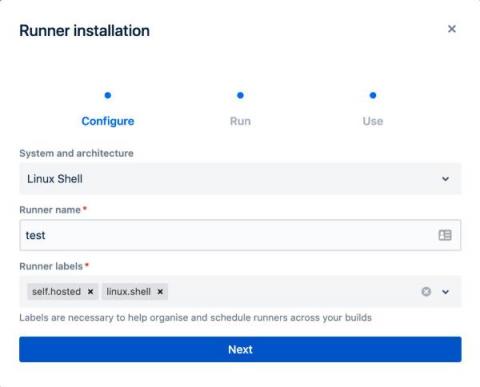
We are happy to announce that Bitbucket Pipelines now supports non-containerized Linux Shell self-hosted runners. This is currently in beta. You can now create a self-hosted runner and run it on your Linux infrastructure without container restrictions. Since it is your infrastructure, you will not be charged for the build minutes used by your self-hosted runner.

Self-hosted versus cloud-based mobile app testing

Testing is a vital part of the mobile app development process. Your team can use testing to evaluate the quality, security, and reliability of mobile apps before releasing them to your users. Users who expect their applications to be highly performant and intuitive. There are two ways DevOps teams can perform testing for mobile apps: on-premise (also called self-hosted) or in the cloud. But which of these is the best option for your team?

Assessing your apps for migration using the Cloud Migration Assistants | Atlassian

In this demo, you’ll learn how to assess your Server or Data Center apps in preparation for a migration to Cloud, using the Jira and Confluence Cloud Migration Assistants. We recommend that migrating customers assess their apps early on in migration planning.

Resiliency As the Next Step in the DevOps Transformation

We’ve reached the point in the DevOps transformation where efficiency and automation are no longer the highest objectives. The next step is engineering past automation and towards fully autonomous, self-healing systems. If you aren’t conversing about building this type of resilience into your systems and applications, there’s never been a better time than now to start.

Strategies to Align AI Data Collection and Management with DevOps Practices

DevOps is characterized by the acceleration of processes to ensure continuous delivery without compromising high software quality. Balancing speed and quality is quite a challenging task, though. Data issues are among the most significant problems encountered by DevOps teams. These can be worse in the context of AI development, where massive amounts of data play a crucial role in machine learning.

SRE Signals: 3 Types of Metrics for Site Reliability Engineering

Site Reliability Engineering, or SRE, is a widely-used set of interdisciplinary practices that help increase the efficiency of software development. But, aside from that, its purpose is to create scalable, connected, reliable, communicated systems that keep providing better, more reliable results. SRE leads to more connected, efficient organizations that can build resilient, iterable, and scalable software. To do this, SRE engineers leverage their coding expertise.