Operations | Monitoring | ITSM | DevOps | Cloud

The latest News and Information on DevOps, CI/CD, Automation and related technologies.

Trust no one: Why businesses should adopt zero trust deployment

Businesses want to earn the trust of their customers. This explains why every brand dreams of ranking on the surveys that ask consumers for their most trusted brands. People, after all, trust their friends, family, and loved ones. If a brand can enjoy the same type of relationship with their customers, they will keep them for the long haul. Unfortunately, trust is easily broken. One of the quickest ways to do so as a digital business is to fall victim to a security breach.

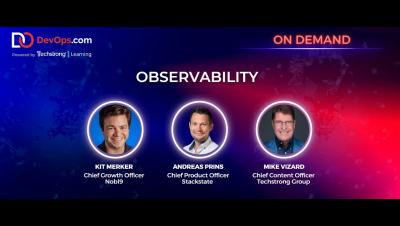
Panel Discussion: Observability

Watch the Observability Panel discussion to learn how observability takes monitoring to the next level by making it simpler to discover the root cause of IT issues before services are disrupted. There is no shortage of observability platforms today; the challenge is determining the best practices that should be put in place to employ them most effectively.

How Data Center Experts are Integrating DCIM with ServiceNow

Managing a data center traditionally requires entering the same information multiple times into disparate tools. This is a manual effort that is time-consuming and error-prone. Leading data center professionals don’t waste time swiveling between different tools. Instead, they implement “automation via integration” that saves time and increases the accuracy of data.

Oracle Database monitoring: An administrator's guide

Oracle Database is known for its reliability, scalability, and outstanding performance. An enterprise-friendly feature catalogue makes it a go-to for companies that need data to be available across their disparate IT infrastructure. Large-scale enterprises relying on huge database systems like Oracle need to make sure that data transactions are hassle-free and demand is met with the resources available.

Sponsored Post

How to Create a Kubernetes Preview Environment

A Kubernetes preview environment is an isolated environment that allows developers to test their code at any time without worrying about how others may be affected. While implementations and use cases may vary, simulating a production environment as closely as possible is the main goal. Imagine you're part of a team developing a complex API, and you've been tasked with adding a new endpoint that relies on features within the codebase currently being optimized by one of your team members. Although your team has a development environment with seeded databases and dev versions of dependencies, you run into issues when team members want to test their optimizations at the same time as you.

Functional safety in automotive: contributing to ISO 26262 and ISO 21434 standards

If you’ve been reading our recent automotive blogs and white papers, you know that the automotive industry is highly complex and regulated, especially when it comes to functional safety and cybersecurity. Standards and consortiums help ensure that companies provide a common framework and follow compatibility and interoperability approaches. Usually, these standards define constraints in how specific components and systems are designed or how they should work together.

Deploys Are the WRONG Way to Change User Experience

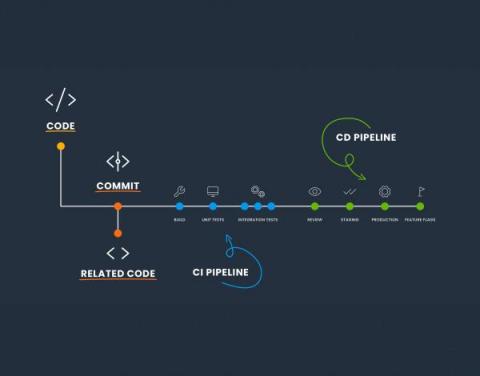
I'm no stranger to ranting about deploys. But there's one thing I haven't sufficiently ranted about yet, which is this: Deploying software is a terrible, horrible, no good, very bad way to go about the process of changing user-facing code. It sucks even if you have excellent, fast, fully automated deploys (which most of you do not). Relying on deploys to change user experience is a problem because it fundamentally confuses and scrambles up two very different actions: Deploys and releases.

Deploy PostgreSQL services to multiple clouds and regions using Terraform

In this video, you will learn how to deploy PostgreSQL services across different cloud providers and across geographies using Aiven Terraform Provider. You will also learn the benefits of using termination protection functionality to prevent accidental deletion of your cloud resources.