
Operations | Monitoring | ITSM | DevOps | Cloud

How SigNoz MCP Helped MSI Find 20 Unnecessary Operations

Taylor Mattison explains how SigNoz MCP helped surface wasted work inside MSI's sales-order workflow. Warning checks were firing on user actions that had nothing to do with any warning they could raise. By comparing telemetry across the workflow, Taylor could point to unnecessary operations that were wasting API calls, database time, and server capacity. This clip is part of our MSI customer story on using SigNoz MCP with Claude to debug slow sales orders across the stack.


Running LLM Workloads in Production: An Operations Playbook for Teams That Did Not Sign Up for This

Somewhere in the past two years, AI quietly became an operations problem. The proof of concept your product team shipped - a support-ticket summarizer, a natural-language search box, a code-review assistant - graduated into a production dependency, and now it pages you. The failure modes are unfamiliar: latency distributions with tails measured in tens of seconds, upstream providers that throttle without warning, costs that scale with user enthusiasm rather than infrastructure size, and outputs that can be wrong in ways a health check will never catch.

Why Responsible Technology Use Matters

Technology plays an integral role in our lives today. Technology is applied in communications, education, business, shopping, and various other tasks we undertake daily. The emergence of new forms of technology such as Artificial Intelligence, Cloud Computing, and IoT has made life more comfortable, but at the same time, they present challenges including privacy concerns, cyberattacks, and the spread of misinformation, among others.

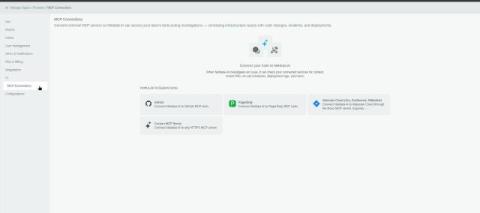
Introducing MCP Connections: Netdata AI Now Reads From the Tools You Already Run

Netdata AI can now connect outward to the tools your team already runs, like GitHub, PagerDuty, Atlassian, or any custom MCP server, and read from them during an investigation. We call this MCP Connections. It’s the missing piece in the middle of every root-cause investigation: the alert tells you what changed, but the why is usually somewhere else entirely.

Your AI agents don't need better models. They need the same context.

Everyone on the team has good coding agents. That is not what made the team fast. The shared repo, the shared docs, and a glossary nobody is allowed to drift from did more than any model choice. In this Product Highlights conversation, Patrick Dawkins, a principal engineer at Upsun who is building Upsun Dispatch under a hard deadline, explains what his team changed to sustain that pace. His take: "As well as the team all having access to the same things and the same vocabulary, all the agents also have access to those docs.".

Spend More Time Talking to Humans

A few months ago, I noticed something happening. I would spend all day working with LLMs—prompting them, reviewing their work, and correcting them—and when I wasn’t working on my own code, I was reviewing LLM-generated code. By the end of the day, I was exhausted. This was a very unusual thing for me: I’ve been a software developer at startups for 30 years, and while sometimes I might have gotten stressed out, I had never been exhausted by the actual act of writing code.

Institutional knowledge doesn't scale: Building an agentic data analyst

We’ve previously written about how deeply embedded data is in people’s day-to-day work at incident.io, and I’d have it no other way — demand for data is undoubtedly a good thing. What risks breaking at scale, however, is everything downstream of that demand: data-team capacity gets stretched thin, dashboard sprawl outpaces anyone's ability to maintain it, and stakeholders can't reach an answer without going through the data team.

Straight from Support: AI credits, student plans, and why your Mac fans are so loud

Every so often we sit down with someone from our support team and turn their week into a blog post. First up: Roberto Vizcarra, on four things generating tickets lately, AI credits, student plans, integrations, and Mac performance. Here’s what changed and what to do about it.

AI cost reduction: tactics that preserve performance

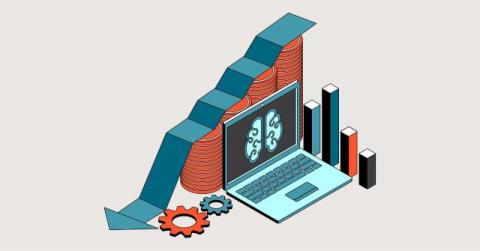
AI cost reduction means lowering what you spend to run AI (tokens, inference, and compute) without sacrificing quality. The highest-leverage tactics, prompt caching, batching, and routing easy work to smaller models, cut spend 50 to 90% by removing waste, not capability. Somewhere right now, a finance leader is opening an AI bill that has quietly tripled, with no new product to show for it. Nobody approved it. No single decision caused it.

Shipped: Put every AI task on the cheapest model that can actually do it

If your team builds with AI, someone is defaulting to the biggest model available (say, Fable) because it feels like the safe pick, and the safe pick is almost always the most expensive one. One over-powered choice looks harmless on its own, but multiplied across every prompt, agent, and workflow, and you get a big number on the P&L. All that, yet nobody chose which model on purpose. As we like to say, using a default is not a decision.