Operations | Monitoring | ITSM | DevOps | Cloud

An Agent Is Only as Good as the Baseline It Reasons Against

Every vendor in networking has an agent story right now. The useful question for an operations leader is which of those agents can plan, act, and verify against a trustworthy model of the network, and which are assistants that retrieve and suggest, then leave the decision to a person. The direction of travel is settled.
Open Models Are Closing the Gap

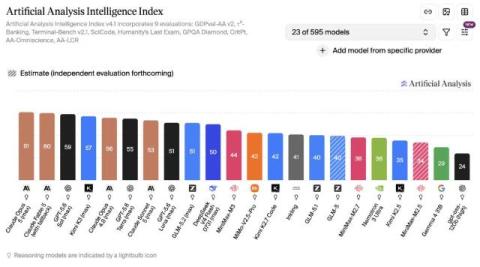
The frontier models have led the pack for a while now. It seems like the big players of Anthropic and OpenAI keep leapfrogging each other by a couple points in benchmark scores every other month. But, a trend we are starting to see is that open weight models are improving by leaps and bounds. They don’t hold the lead and probably won’t for a while, but the fact that open models are scaring the leaders is something to think about.

Open Source AI Agent for SRE: Why AURA Is Free

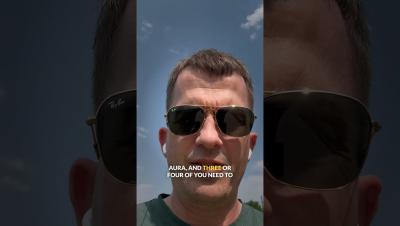
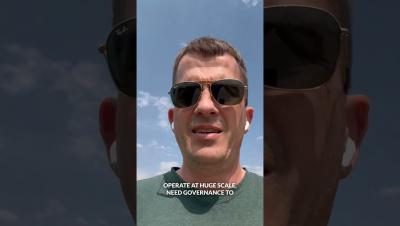
The most common question since we started 31 Days of AURA: how do you plan to make money? The short answer is the control plane, not the agent. Mezmo sells an enterprise-grade control plane for running large numbers of agents across large environments, where coordinating across environments, governance, access control, and the efficiency of preprocessing MCP data start to matter. If a hundred people run AURA and three or four of them need that, the model works. The more people running AI agents in production, the bigger the market for the tooling underneath them.

Free Open Source AI Agent for SRE and More: Why We Give AURA Away

Wondering what the catch is on a free, vendor-backed agent? There is not one in the license. AURA stays Apache 2, fully capable, and free to run. If you are weighing an open source tool with a company behind it, the first question is what the catch is. You have seen the project that turns out to be open core, or that is quietly hindered in one key way. This is Mezmo's answer for AURA.

Install an AI SRE Agent in Kubernetes with AURA and Helm

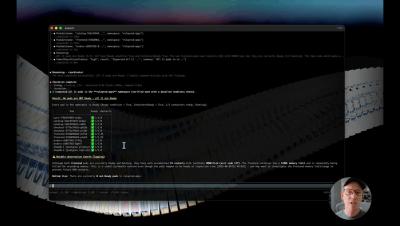
AURA does not have to live on your laptop. Install it into the cluster with Helm and it is still there the next time something breaks. AURA is a fully open source AI agent built specifically for SRE work. Rather than one general assistant, you configure workers: separate agent roles, each scoped to a job like inspecting the cluster.

The New MCP Headers Are a Gift to Gateways

In short, buried in the transport section of the MCP 2026-07-28 release candidate are three changes that matter more to infrastructure teams than to anyone else: mandatory Mcp-Method and Mcp-Name headers, cache-control-style ttlMs and cacheScope fields, and standardized W3C Trace Context propagation. Together with the stateless core, they turn MCP from a protocol that gateways had to fight into one that meets them halfway.

Enterprise Data Lineage for LoRA Policy Fleets

Enterprise reinforcement learning creates more than a training-data problem. It produces a chain of sensitive artifacts: task interactions, tool responses, evaluator judgments, rewards, checkpoints, LoRA weights, reports, and serving traces. When many policies share one foundation model, those artifacts may belong to different customers, workflows, or authorization boundaries even though they depend on the same base deployment.

Why Every YouTuber Needs an AI Grammar Checker in Their Workflow (Not Just Their English Teacher)

I've been making videos for six years now, and if you'd asked me back then whether grammar mattered for a YouTube channel, I probably would've laughed. Grammar felt like something for essays and cover letters - not for a guy talking into a camera about tech reviews. Then I started writing scripts. And thumbnails. And pinned comments that thousands of people would read before they even hit play. Suddenly, a misplaced apostrophe wasn't just embarrassing - it was a small dent in credibility, repeated across every single upload.