Operations | Monitoring | ITSM | DevOps | Cloud

Deployment strategies explained: types, trade-offs, and what each one actually costs

A deployment strategy is the method an engineering team uses to release new software to production. The six core deployment strategies are recreate (big bang), rolling update, blue-green, canary, A/B testing, and shadow deployment. Each trades off between downtime risk, rollback speed, infrastructure cost, and complexity. This guide covers all six along with what each strategy actually costs in cloud and AI infrastructure spend.

Monitor your .NET MAUI apps with Datadog RUM

As.NET Multi-platform App UI (MAUI) becomes the default cross-platform UI framework in the Microsoft ecosystem, many teams are standardizing on it to build mobile applications for iOS and Android. However, observability has not kept pace with the shift in adoption. Developers often rely on unsupported community bindings or maintain their own wrappers around native iOS and Android SDKs, which introduces instability and ongoing maintenance.

The Aiven MCP in Practice: From Dev Environment to App Deploy

I spend a good amount of my time deploying Aiven services for demos and examples. Traditionally the tools I reach for are: If I’m writing a program, I may also look to the Aiven API, perhaps using curl at the command line or in a shell script, or perhaps with direct HTTP requests in a Python program. The API is how the console and the CLI tool talk to Aiven, but I generally find that too low level to be comfortable, and I always have to look up how to pass in the Aiven user token.

Best IT Help Desk Software in 2026: 10 Tools Compared

How do you pick the right IT help desk software when every vendor calls itself the best? It comes down to three things. Your team size, your deployment rules, and whether you need full ITSM or plain ticketing. A five-person startup can run support from a shared inbox. A 200-person IT team cannot. Add asset tracking, SLAs, and change control, and that inbox falls apart. The right IT support software routes tickets on its own, links every request to the asset behind it, and shows you where time goes.

Make Public Peering More Resilient with BFD and BGP Add-Path on MegaIX

Standard BGP can be slow to react. See how BFD and BGP Add-Path help improve uptime and path diversity on MegaIX. When peering on a public Internet Exchange (IX), standard BGP behavior can introduce delays during topology changes. But if you use MegaIX, there are workarounds. In this blog, we explain two lesser-used features available on MegaIX which maximize uptime and path diversity: Bidirectional Forwarding Detection (BFD) and BGP Add-Path.

The Cost of Survival Mode

The day-to-day strain on resources in IT can cause teams to miss out on key opportunities due to the need to keep putting out fires instead of strategically planning for the future. And when you finally get the chance to hire new people, there’s no bandwidth to properly train them, which means that the ticket backlogs never shrink and senior staff is constantly being pulled into basic tasks that are beneath their skill level.

From IT Asset Discovery to Automated Action: Closing the IT Operations Loop

Organizations today invest heavily in discovery tools, expecting that increased visibility will solve their IT challenges. Yet when an incident hits, a patch fails or an audit looms, many teams must pause to reconcile spreadsheets, validate inventories and confirm ownership before they can act. Visibility alone doesn’t close the gap between insight and execution.

Multi-Agent Collaboration on a Shared Canvas

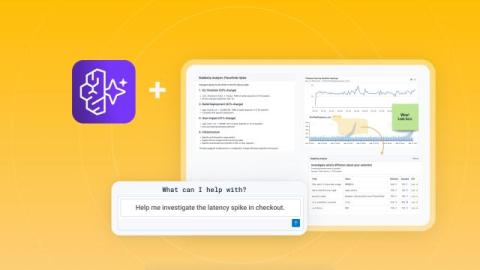
This post was co-written with Staff Software Engineer Martin Holman. Honeycomb Canvas is a collaborative investigation environment. When something goes wrong in production, multiple engineers might join the same Canvas to debug it together. Each person has their own AI agent, so they can pursue their own conversation thread and line of inquiry. This creates an opportunity for coordination.

The future of governing AI agents

How to build governance into autonomous security agents from the architecture up The industry has moved fast on capabilities. Agents now triage alerts, investigate endpoints, create detection rules, and enrich indicators, and they are even capable of performing most actions we as security operators can perform. The architecture patterns are maturing, as are the models, but governance is not keeping pace.