Operations | Monitoring | ITSM | DevOps | Cloud

The latest News and Information on CyberSecurity for Applications, Services and Infrastructure, and related technologies.

7 Features Growing Businesses Should Prioritize in Coworking Spaces

Choosing a coworking space in Frankfurt isn't just about finding a desk. For a growing business, it's a strategic decision that affects how your team works, how clients perceive you, and how quickly you can scale. The wrong space can quietly hold you back. The right one genuinely supports your next stage of growth. With hundreds of options available across major business hubs, knowing what to look for matters. This guide walks through the seven features that should be non-negotiable for any business that's serious about growing.

What Key Features Matter Most When Evaluating Business Software

Selecting new software feels like a massive chore for growing companies. Your team spends hours looking at features and watching complex demonstrations. You want a tool that actually helps your business grow without adding confusion. The wrong choice wastes money and causes immense frustration for everyone. Finding the perfect fit requires a clear strategy from the very start. Focus on specific capabilities to make the best choice for your unique workflows.

We won't train on your data is not a security architecture

Every enterprise contract I’ve signed in the last two years has the same clause. “Vendor will not use Customer Data to train machine learning models.” Sometimes it’s a paragraph. Sometimes it’s a whole section. The language varies but the intent is identical: don’t feed our production data into your AI. I get it. I sign the same clause as a vendor. But here’s what’s been bothering me: that clause is a promise, not an architecture.

Secret Manager Integration: One Source of Truth for Humans and Agents.

Production secrets should live in one place and stay there, whether your next deployment is triggered by a developer or an AI agent. The Secret Manager integration connects AWS Secrets Manager, AWS SSM, or GCP Secret Manager to Qovery so secrets are referenced, never copied, and enterprise governance holds regardless of who deploys. Alessandro leads product at Qovery. He drives the changelog, roadmap, and product strategy - turning customer feedback into platform capabilities.

A field guide to the agents in your cluster

You know every service in your cluster by name. You know which team owns each one, what it talks to, how it scales, where its logs go. The agents are a different story. That’s not a criticism, it’s an observation, and it’s one we keep running into. Every company we talk to is shipping agents of some kind, from scales of 10s to 1000s. Customer service bots that field tier-one tickets. Internal copilots that draft emails and summarise meetings and write the boring half of every PR.

Five Principles of an Accountable AI Agent Network: How to Evaluate Any Governance Platform

The first post in this series argued that AI agent governance hasn’t kept pace with deployment. The second laid out the five pillars of accountability, and what is required. The third walked through why network policies, API gateways, MCP/A2A protocols, DIY security patterns, and Role-based Access Control (RBAC) each leave critical accountability gaps. So what does good look like? The five pillars define what AI agent accountability requires.

Kubernetes Operational Maturity: Why You Should Modernize Your Ingress with Gateway API

SIG Network introduced Ingress in 2015 as a minimal way to expose HTTP services from a cluster. That simplicity was an advantage at a time when most workloads were HTTP, clusters were single-tenant, and the occasional gap could be papered over with a vendor annotation.

Stop Building AI Agents That Can't Be Audited

AI agents have moved beyond experimentation. Today, they schedule meetings, process invoices, respond to customers, analyze contracts, update records, and make decisions that directly affect business operations. As organizations race to automate more workflows, one critical question is often overlooked: Can you explain exactly what your AI agent did, why it did it, and how it reached that decision?

Why Your Vendor Monitoring Strategy Has a Blind Spot: The Case for Continuous TPRM

You monitor everything. Network traffic, application performance, authentication events, infrastructure health. If something meaningful changes in your environment, you have a signal for it. That discipline is foundational to how modern IT and security operations work. But there is one part of your stack you almost certainly cannot see in real time: your vendors.

Why Critical Vulnerabilities Often Get Stuck in Remediation Queues

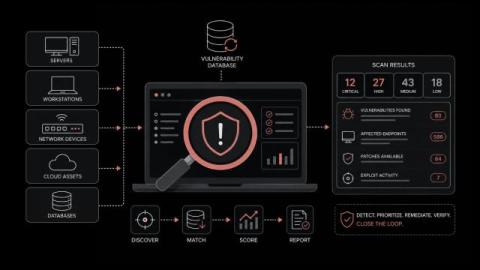
Critical vulnerabilities rarely fail because engineers can't patch. They fail because organizations can't decide. That sounds like an insult. It's a diagnosis. A queue forms when work competes, when ownership blurs, when risk turns into an abstract noun that nobody can put on a calendar. Security teams shout in numbers, CVSS, exploitability, and blast radius. Product teams answer in dates, revenue, and churn. Operations teams answer with uptime and the bitter memory of the last "quick fix" that took down production at 2 a.m. The queue becomes a diplomatic zone where everyone stays polite, and the bug stays alive.