Release Webinar: SCOM Connector for ServiceNow 1.5
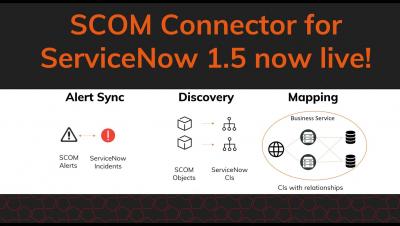
We are excited to announce our SCOM Connector for ServiceNow 1.5 is now live. With some awesome new features.


The latest News and Information on Monitoring for Websites, Applications, APIs, Infrastructure, and other technologies.
Consider for a moment which fundamental pieces of technology enable the modern web. Odds are, you’re thinking about things like Javascript and HTTP—and yes, they are fundamental parts of the modern web. But, the often-overlooked component of this ecosystem that has truly enabled the web to scale to billions of users and transactions is load balancers.
When discussing monitoring with IT and technical operations teams, it comes as no surprise that every team has its own parameters and requirements for their particular environment. Some teams just need an up-down of specific devices or interfaces, and others need more granular metrics like JVM or database performance. At the end of the day though, everyone is responsible for a service.
If you thought the fishmonger’s hair net was the only kind of net you’re wrong. From Pandora FMS we will show you some more, so that you do not get lost without them. The term “network” is used in computing to name a set of computers connected to each other in such a way that they can share resources, services, and information. There are several ways to classify these networks, based on their scope, relationship, or connection method.
The current days of remote work and “IT Ops from home” may or may not be here to stay, but they definitely reinforce the need for consolidating and modernizing our monitoring. The challenges which multiple siloed tools create for understanding the big picture are only exacerbated by having just one screen to look at when monitoring our IT from our kitchen table.
SOLID is one of the most popular sets of design principles in object-oriented software development. All of them are broadly used and worth knowing. But in this first post of my series about the SOLID principles, I will focus on the first one: the Single Responsibility Principle.
Welcome to the new world, my friends. Now that working from home is our new reality, we've found that many of our customers are taking a much closer look at the technology that binds us all together and allows us to access corporate resources: the humble VPN. In the spirit of enablement, I’ve put together a quick list of dashboards that can help add that extra bit of visibility for our faithful Splunk Enterprise Security customers.
For those of us already using Microsoft Teams, the benefits couldn’t be clearer: Microsoft Teams provides everyone with one place to chat, meet, call, and collaborate, no matter where you are. IT professionals who support modern workplace tools like Office 365, and remote meeting platforms like Zoom and WebEx, can greatly benefit from connecting critical applications like Exoprise, directly into the Teams Channels they are already using.