Lucene Queries Tutorial | observIQ
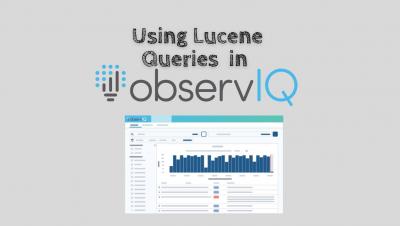
An in-depth review of how to use Lucene Queries to filter logs in observIQ, the log management tool that's fast, affordable, and easy to use.


The latest News and Information on Log Management, Log Analytics and related technologies.
This is a personal story from before I worked at observIQ. I am not a technical person in any professional sense. I have no direct training and my coding experience is limited to front-end web design and some indie game development. Before observIQ, all I knew about log management was that it has something to do with tracking computer performance and behavior, and I associated it mostly with DevOps and the cloud. I never imagined it would play any valuable role in my professional endeavors.
What do an airline, the world’s largest retailer, the French government, Adobe, and NASA’s JPL have in common? They use the Elastic Stack to empower customers, communities, and, even, interplanetary exploration. With the Elastic Stack’s ability to take data from any source and in any format, and then search, analyze, and visualize it in real time, organizations can act quickly to improve customer experience and power critical systems.
Splunk Cloud Architect Paul Davies recently authored and released the GCP Application Template, a blueprint of visualizations, reports, and searches focused on Google Cloud use cases. Many of the reports included in his application require Google Cloud asset inventory data to be periodically generated and sent into Splunk. But HOW exactly do you craft that inventory generation pipeline so you can "light-up" Paul's application dashboards and reports?
There’s an insidious disease increasingly afflicting DevOps teams. It begins innocuously. A team member suggests adding a new logging tool. The senior dev decides to upgrade the tooling. Then it bites. You’re spending more time navigating between windows than writing code. You’re scared to make an upgrade because it might break the toolchain. The disease is tool sprawl.
Running and troubleshooting production services requires deep visibility into your applications and infrastructure. While basic logs and metrics are available out of the box with Google Cloud Compute Engine (GCE), capturing advanced data used to require the installation of both a metrics agent and a logging agent.