Operations | Monitoring | ITSM | DevOps | Cloud

The latest News and Information on DevOps, CI/CD, Automation and related technologies.

Your next internal developer platform is a library of agent skills

What happens when AI agents become direct users of your infrastructure? Michael Kutsch, Staff SRE and Team Lead for Cloud Foundations at PostHog, argues that the next internal developer platform may be a library of agent skills. Instead of forcing every task through a portal, his team is giving agents structured context, reusable workflows, and deterministic scripts they can call when reliability and governance matter.
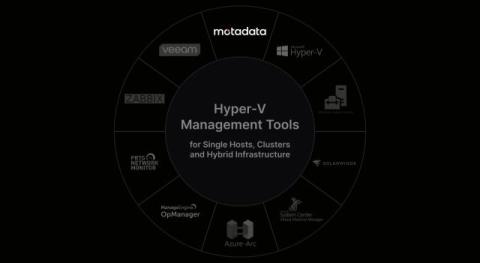
10 Top Hyper-V Management Tools for Single Hosts, Clusters and Hybrid Infrastructure

An application slows down every month-end. You open Hyper-V Manager, the virtual machine looks healthy, and the ticket closes without a cause. Next month it happens again. Native consoles show live state and keep no history behind it, so nobody can prove whether the fault was the guest, the host, or a storage path shared with nine other workloads. That gap sets what a Hyper-V deployment costs to run, measured in unplanned downtime and in engineering hours spent guessing. This guide covers.

How we made vulnerability fixes review-ready with Agentic Pipelines

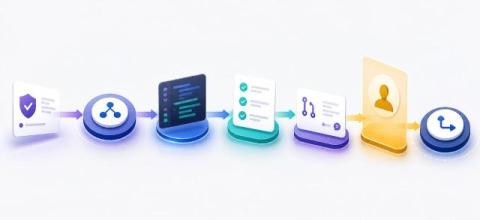
Routine vulnerability fixes are rarely difficult in isolation. The interruption that they cause is the problem: pick up the ticket, trace the dependency, update the package or image, regenerate files, run the checks, open the pull request, then return after deployment to close the loop. That repeated handoff was a good candidate for automation with agentic pipelines. The goal was simple: start the day with a tested pull request instead of another ticket to pick up.

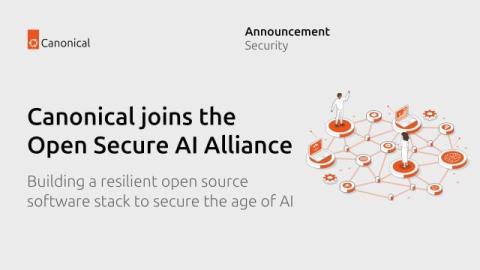
Canonical joins the Open Secure AI Alliance

Canonical is now part of the Open Secure AI Alliance, announced by NVIDIA with partners across cloud computing, cybersecurity, enterprise software, open source foundations, and AI research. The alliance aims to develop and share open technologies, techniques, and tools to safeguard software and agents in the age of AI.

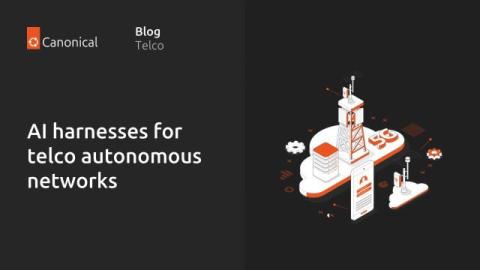
AI harnesses for telco autonomous networks

Across the global landscape, telecommunications operators have already deployed machine learning for predictive maintenance, customer care chatbots, and anomaly detection. However, as the industry transitions toward Autonomous Networks Level 4 (AN L4), where networks can make intent-driven, predictive decisions and perform closed-loop management with minimal human intervention, a fundamental architectural challenge has emerged.

Shipped: Allocate AI spend by the tags on your IAM roles

The tags you put on the IAM users and roles that call your models now come through as dimensions you can group and filter on. Tag a role with costCenter, department, email, or name, group by that key, and the model spend those callers drove shows up underneath. That gives you the human-readable half of caller identity. A caller ARN like assumed-role/inference-gateway/session-8842 names a role.

Database monitoring: what to track, which tools to use, and what it all costs

Database monitoring is the continuous tracking of a database's health, performance, and resource consumption, covering metrics like query latency, throughput, connections, and replication lag. In the AI era, it has expanded to include a fifth dimension: spend. Modern teams monitor not just whether the database is fast, but whether the workload it serves is worth what it costs to run. In May 2025, an engineer named Bohan Zhang stood up at PGConf.dev in Montreal and broke every scaling rule in the book.