Operations | Monitoring | ITSM | DevOps | Cloud

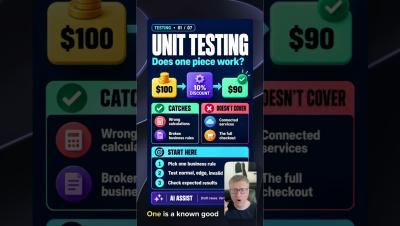
The Truth About End-to-End Testing Explained #softwaretesting #endtoendtesting #devops #qualitytest

End-to-end (E2E) testing brings your entire system together in a staging or UAT environment to test real user paths and ensure core functions work as expected. However, because E2E tests are non-comprehensive and miss edge cases, they must be combined with other testing methodologies. Learn more: speedscale.com.

What Is the Harness Software Delivery Agent? | AI-Powered CI/CD Explained

What is the Harness Software Delivery Agent? Harness Software Delivery Agent is an AI-powered software delivery solution that helps teams automate CI/CD pipelines, infrastructure workflows, deployments, and troubleshooting, moving code from commit to production while enforcing existing policies and approvals. In this video, we explain how Harness Software Delivery Agent works and how it helps DevOps teams, platform engineers, and developers automate software delivery.

How dedicated database monitoring protects customer experience and reduces operational risk

Many outages, slowdowns and failed transactions start in the database, often well before anyone outside the data team knows something’s wrong. By the time they do, customers are already affected: payments fail, services stall and people can’t do what they came to do. The organisations that keep this risk under control close three gaps. They stop problems before they disrupt customers and the services they depend on. They find the cause in minutes, and fix it quickly.

The Evaluation Factory: How We Make Agents Measurably Better, Run After Run

Ask a team running an agent in production whether last week’s change made it better. Most can’t say. They swapped a model or rewrote a skill, eyeballed a few runs, and moved on. That works for a demo. It doesn’t work for an agent that touches production, where customers want two things that pull against each other: precision where a mistake is expensive, and low cost where the work is routine. A root cause someone acts on has to be right.

CVE-2026-109518 APT vulnerability fixes available

Max Justicz discovered and responsibly disclosed a vulnerability in APT, the package manager used in Debian, Ubuntu, and derivative Linux distributions. The vulnerability has been assigned the identifier CVE-2026-109518 and has a severity of High. An on-path attacker who can manipulate the HTTP traffic between a system and an archive server can trigger the installation of an attacker-controlled.deb package file and obtain root privileges on the target system.

Introducing CircleCI Functions: Reusable CI steps built for coding agents

CircleCI Functions are now available in beta, giving developers and coding agents a faster, more reliable way to set up CI pipelines using reusable, tested steps. Functions are the next evolution of CircleCI orbs. They make common CI tasks, like installing programming languages, configuring AWS credentials, and setting up Docker, available as ready-to-use programs that agents can discover, configure, and validate before running a pipeline.
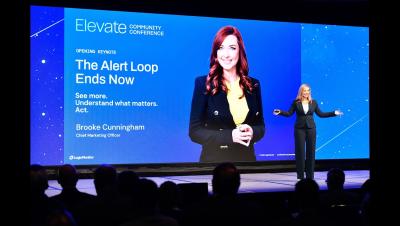
LogicMonitor Elevate 2026 Keynote: Trusting AI to Act

LogicMonitor Elevate 2026 keynote: what it takes to trust AI to act in IT operations. Built for IT ops leaders, SREs, and MSPs. The Chicago opening keynote covers moving beyond the alert loop, where people have acted as the integration layer between tools. IT teams are automating incident response by giving AI context, clear guardrails, and governance, with people accountable and in control. @globalfoundries CIO Vishal Mehra shares how his team's doing it.

Property-based testing: How to find bugs your unit tests miss

Property-based testing is a software testing technique that checks whether a program satisfies general rules, called properties, across many automatically generated inputs. Instead of writing tests for individual examples, developers define how their code should behave and let a testing framework search for inputs that break those rules.

AI Agent Security: Applying the OWASP Top 10 Across the Software Development Lifecycle

Learn how to secure AI agents across development, testing, deployment, and runtime using the OWASP Top 10 for Agentic Applications. A single poisoned web page can be enough to hijack an AI agent. As organizations move from AI assistants that generate responses to autonomous agents that take action, the security risks are changing. An agent can access sensitive data, execute code, modify configurations, and interact with external systems.

Data Residency in Observability: A Security Review for Your Own Cloud

A data residency security review for observability in your own cloud account: vendor access, connection direction, PII redaction and egress, with what Last9 documents. Last9 is an observability platform built for high-cardinality telemetry. It unifies logs, metrics, and traces with native OpenTelemetry and Prometheus support, real-time alerting, and long-term retention.

Wide Events vs Metrics, Logs and Traces: What Observability 2.0 Costs

Wide events move observability cost instead of removing it. See what each signal is billed in, which question each answers cheapest, and how to size spend against cloud spend. Sejal Pandey works on content and growth at Last9, writing about observability, reliability, and SRE practices.

Automated Alert Triage: Route Alerts to the Root-Cause Team

Rule-based routing pages the service that errored. Build a small triage service that reads the alert webhook, finds the origin span in your traces and pages the team that owns it. Last9 is an observability platform built for high-cardinality telemetry. It unifies logs, metrics, and traces with native OpenTelemetry and Prometheus support, real-time alerting, and long-term retention.

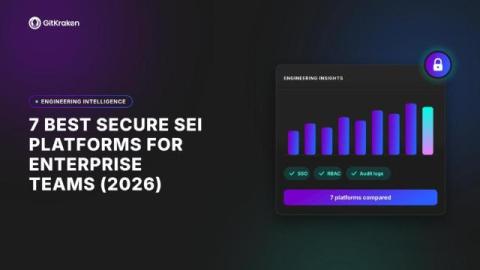
7 Best Secure SEI Platforms for Enterprise Teams (2026)

Choosing a software engineering intelligence platform for an enterprise team means weighing SOC 2 compliance, data privacy controls, and the ability to scale across hundreds or thousands of contributors. You need visibility into DORA metrics, AI coding tool impact, and delivery velocity without compromising how your repositories and developer data are protected.

Kubex Included in Forrester's Cloud Cost Management and Optimization Solutions Landscape, Q3 2026

A vendor saying it plays in a market is one thing. A respected independent research firm saying so is another. That’s why I’m pleased to share that Kubex has been included in Forrester’s The Cloud Cost Management And Optimization Solutions Landscape, Q3 2026.

Kubex Agentic AI Platform: Secure Context at the Edge

Table of Contents In Part 1: Agentic AI at Scale – Building the Kubex Agentic AI Platform of this series, we laid the foundation for scaling agentic AI across cloud infrastructure. We examined why traditional ops workflows get stuck in reactive loops of dashboard watching, why static context limits intelligence, and how the Kubex platform uses context engineering and a distributed nervous system to bridge the gap between telemetry and deterministic actions.

Automate the Work, Elevate the People

In this episode, Fran Fernandez and Zack Austin invite Tali Shushan, IT Automation Manager at First International Bank of Israel, to the studio to explore how automation can give time back to IT teams and fundamentally transform the way work gets done. Tali explains why successful automation starts small, why teams should measure outcomes in time rather than tasks eliminated, and how AI and automation can work together without removing humans from the equation.

It was the best of times, it was the worst of times, for software security

Microsoft fixed more than 1,400 vulnerabilities in its October Patch Tuesday. That’s one month, and it’s more than in all of 2025. Two weeks later, Anthropic said an unreleased Claude model had found and exploited serious vulnerabilities in Chrome, Safari, Android, Windows, and Linux. AI is finding bugs faster than anyone can fix them. Inside CertKit, we’ve been quoting Dickens, “It the worst of times.” AI makes our small team fast.

Running Production with Agents w/ Rootly AI, NVIDIA, Replit, PostHog, & WorkOS

AI agents are writing code, investigating incidents, and changing how infrastructure teams work. For SREs, that brings new questions about reliability: when to trust an agent, how to catch its mistakes, and who owns the outcome. ​The panel ​Tim Glaser - Co-founder and CEO at PostHog​Michael Grinich - CEO and Founder at WorkOS​Vishakha Sadhwani - Sr. Solutions Architect at NVIDIA​Niall O’Higgins - Engineering Lead at Replit​Sylvain Kalache (Moderator) - Head of AI Labs at Rootly AI.

PostgreSQL in Redgate Monitor: configuration advice, backup monitoring, Windows support and AlloyDB

This release brings PostgreSQL monitoring in Redgate Monitor closer to what you already get for SQL Server. It adds backup monitoring and support for PostgreSQL on Windows, and AlloyDB joins the managed services we already cover.

Notion AI pricing: the real per-seat math for an organization-wide rollout

Notion AI comes with the Business plan at $20 per member per month and with Enterprise at custom pricing, per Notion's pricing page; the standalone $10 add-on was retired in May 2025, and Free and Plus get a limited AI trial. Custom Agents add metered Notion credits at $10 per 1,000 monthly. Yearly billing saves up to 20%.

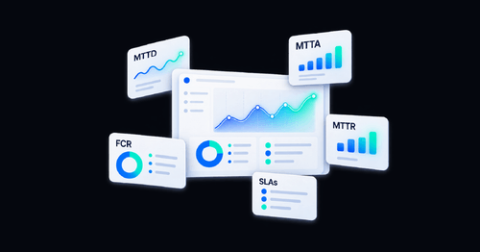
Incident Management KPIs: The Metrics Your IT Ops Team Should Track

Incidents are inevitable. Spending three meetings arguing over whether your incident management process is actually improving is slightly more avoidable. Either way, avoiding adverse conditions begins with one element: consistent measurement. For most teams, a handful of incident management KPIs provide a reliable picture of performance from the moment something goes wrong through to final resolution.

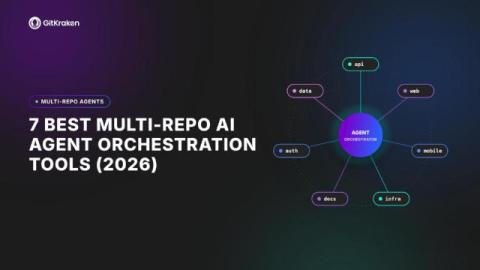
7 Best Multi-Repo AI Agent Orchestration Tools (2026)

Running multiple AI coding agents in parallel across repositories sounds like a productivity multiplier. In practice, it creates a coordination problem: conflicting file edits, orphaned branches, and zero visibility into which agent finished what. AI coding agent orchestration tools exist to solve exactly this, and Kepler by GitKraken gives you one surface to direct every agent from backlog to merged pull request. This guide compares seven tools built for multi-repo, multi-agent development workflows.

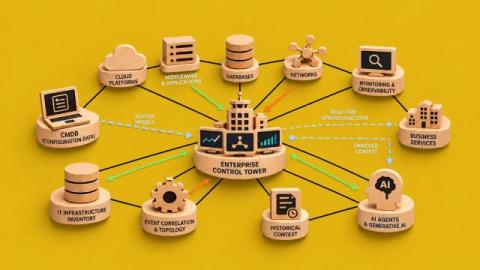
Why AI-Ready IT Operations Need More Than a Traditional CMDB Now?

Configuration Management Databases (CMDBs) have long played an important role in IT Service Management, providing a structured record of technology assets, their configurations and relationships. For enterprises managing complex IT environments, they remain a valuable foundation for understanding infrastructure and supporting operational processes.

From Bottleneck to Breakthrough: Gain Control and Confidence in Your Monolithic Database Changes

This webinar explains how development teams can speed up database changes in a monolithic database without rewriting or replacing it, using Redgate Flyway for version control, automated code review, undo scripts, drift detection, and auditable deployments across SQL Server, Oracle, PostgreSQL, and MySQL.

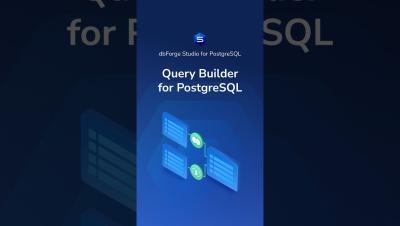
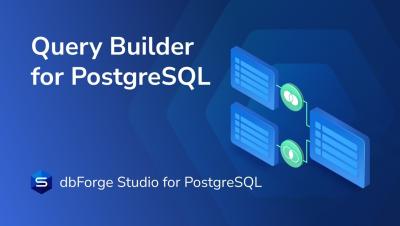
PostgreSQL Query Builder: Build Complex SQL Queries Visually

Build complex PostgreSQL queries visually without manual SQL coding with dbForge Studio for PostgreSQL. Whether you are a developer, DBA, data analyst, or manager, creating complex SQL statements shouldn't be a tedious manual chore. dbForge Studio for PostgreSQL provides an intuitive visual Query Builder that lets you construct, edit, and optimize SELECT, INSERT, UPDATE, and DELETE queries through interactive diagrams.

Never lose robot data again: automatic ROS 2 bag recording and upload

If you work with robots, perhaps you’ve come up against a common, but annoying situation: the one field run that mattered is the one nobody recorded. Or it was recorded but the ROS 2 bag (a recording of ROS 2 topics) is sitting in the robot’s storage, at a customer site, three time zones away. This issue is commonly caused by manually starting ros2 bag record and using scp to copy gigabytes off the robot after every test, which just does not scale.

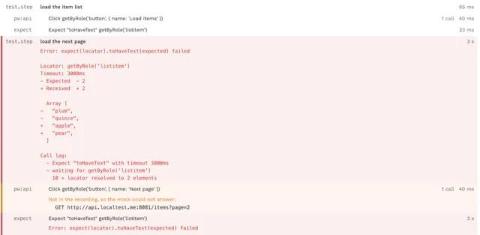
Playwright End-to-End Testing with Recorded API Mocks

Your Playwright test clicks Next page, waits for the item list, and times out. Now you’re digging through a trace to find out whether the page broke or an API call failed. Traditional browser-testing workflows focus on clicks, page state and UI assertions. Those checks tell you whether a user journey works, but investigating a failure also means understanding the APIs behind the page.

The $600 AI Cap That Sent Employees Golfing

In this video, Brady Lenahan, VP of Sales at CloudZero, shares what he’s hearing from customers when the cap hits before the month ends: employees who’ve built their workflows around AI stop working productively and wait for next month. Some go golfing, some clean the garage. Either way, finance loses both the productivity and the visibility. There’s a better option than capping AI spend you can’t see.

How to Capitalize AI Spend Without the Gray Area

In this video, Emily Allen, Director, Finance & Accounting at CloudZero, explains why AI capitalization is still unclear for most finance teams, and how CloudZero gives them a repeatable approach. As AI writes more of the code, finance needs to know which AI spend went to qualifying development work and which should be expensed. CloudZero records which project each AI coding session served, what kind of work it was, and what it cost, so finance has the evidence behind every decision.

How long does it take to replace every certificate after a CA distrust?

Last week we moved every certificate in one of our products to a new CA in 10 minutes. It was six certificates and 18 deployments. I said issuance was the part that slows down, because most CAs limit how fast you can order, and then I waved it off. A reader did the math for me. Some organizations run 30,000 certificates, they claimed, and that’s common at MSPs, telcos, and government agencies. Google Trust Services takes 100 orders an hour by default.

The Binance Breach Wasn't a Crypto Failure: It Was a Trust Failure

Explore how the $6.36B Binance breach exposed critical gaps in identity, DevOps, and signing security - and what engineering teams can learn from it. The October 29, 2026 theft from Binance is best read as a failure of identity and release-path trust, not a failure of cryptography. Binance's early findings point to a compromised DevOps engineer's laptop that gave an attacker a route into a service container and the ability to submit unauthorized withdrawals.

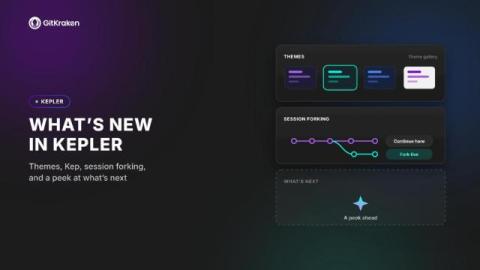
What's new in Kepler: themes, Kep, session forking, and a peek at what's next

Kepler has picked up a lot over the last few releases. So much, in fact, that Gyo, GitKraken’s Director of Engineering, had to trim his list before walking us through it. We sat down with Gyo and Jonathan, our Product Advocate, to go through the highlights. Gyo explained what shipped and why. Jonathan put the features to work live, building themes, cleaning up tasks, and forking a session from Claude to Codex. Here’s what we learned.

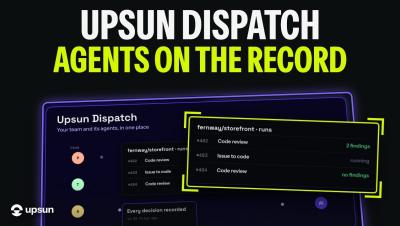
What is Upsun Dispatch? AI agents that ship with your team

Your engineers are writing more code than ever with AI, but your team isn't shipping more product. The code waits for review, agents run on personal laptops and accounts, and nobody can say what any of it costs. In this overview, we show what Upsun Dispatch is: where your team and its agents ship together, with every decision recorded and every dollar tracked. We get into.

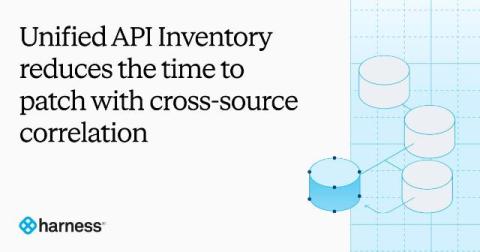
Unified API Inventory reduces the time to patch with cross-source correlation

Cross-source API correlation connects runtime findings to their code, documentation, and fixes for improved defense against machine-speed attacks. It's late on a Thursday, and a runtime alert fires on POST /api/v2/payments in production. The finding is clear. What happens next is not. In fact, it creates a host of questions to be answered: Every AppSec team knows this hunt. And every day spent hunting for the right repo and owner is a day the attacker can still exploit a vulnerability.

Get Ship Done: Everything We Shipped in October 2026

Harness October 2026 Updates: 150+ Features, Cosmos, FedRAMP 20x This Month's Biggest Ships: The shipping velocity at Harness skyrocketed. Harness shipped 150+ features in October, one about every 5 hours across 31 days! October's list covers both ends: code creation and software delivery. The biggest ship is Cosmos, a new agent that takes engineering work from ticket to pull request. The rest carries that pull request to production and keeps it safe.

AI budget season: 87% are raising it, 61% can't justify it

87% of finance leaders are raising their AI budget for FY2027, 45% of them by more than 20%, even though 61% already spend more on AI than they can justify. Most can't see where it goes: 54% can't break AI spend below a rough category, so budgets default to the total and keep climbing. The teams that allocate spend, tying each AI dollar to the team, product, or outcome behind it, are the ones who can defend the number to a board.

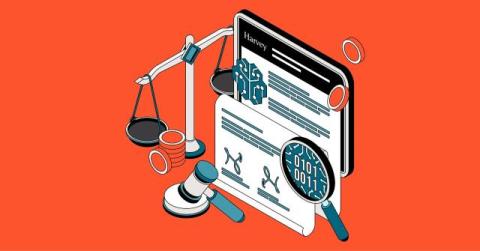
Harvey AI pricing in 2026: every reported number, and how to build the business case without a rate card

Harvey AI pricing is not published: every deal is sales-negotiated. Reported figures across procurement research converge on roughly $1,200 per lawyer per month at the base, 20-to-25-seat minimums, and 12-month terms, putting reported entry floors near $290,000 to $360,000 a year. Premium bundles run higher. No free tier, no monthly plan, no self-serve. Every figure on this page is labeled for what it is: disclosed by Harvey, reported by named research and journalists, or computed from those reports.

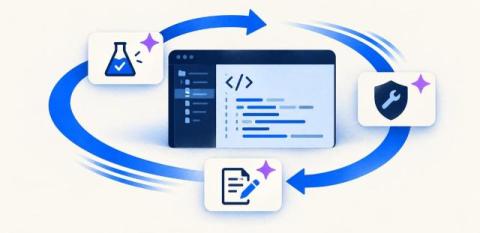
Agentic Pipelines is generally available: run agents in Cloud or on your own Linux runners

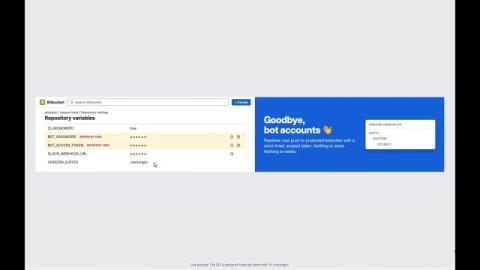
We’re excited to announce that Agentic Pipelines is now generally available across all paid Cloud Bitbucket plans. You can run agents on our cloud runners or on self-hosted Linux Docker runners, with support for more runner types coming soon. With this launch, Bitbucket Pipelines evolves from a CI/CD tool into an intelligent workflow engine that increases developer productivity by letting agents handle routine engineering tasks.

Cyber Security is escalating on both sides

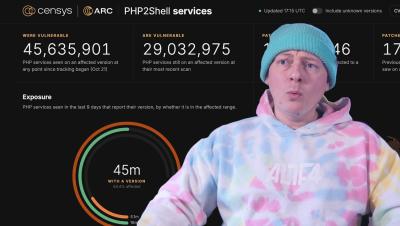
The nature of cyber security is changing. In this video, I do a brief recap of a few of the compromises of the past couple weeks as well as highlight how our role as engineers is changing. Attackers have an easier time than ever in watching repos for changes to exploit 0-day vulnerabilities. But, it isn't all doom and gloom as long as we put in the effort. AI is creating a bit of an arms race between attackers and maintainers of sites and services, but there are actually more powerful tools available to defenders through exclusive programs like Daybreak, Glasswing, etc.

AI Is Forcing Finance to Redefine KPIs

AI Budgeting for Finance: Last Year vs. Now In this video, Emily Allen, Director, Finance & Accounting at CloudZero, explains how AI planning changed in a single year. Instead of starting from a vendor commit or the current run rate, she’s treating AI spend as its own category and analyzing it bottom-up. That opens a new question for finance: “What does good look like?” With a year of data, finance teams can start benchmarking AI spend over time and check whether what they approved actually paid off.