The latest News and Information on DevOps, CI/CD, Automation and related technologies.
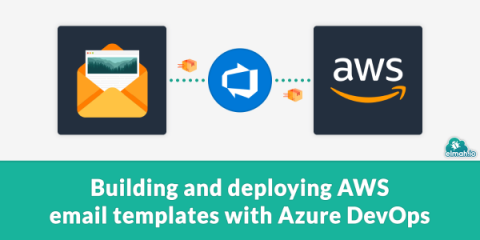
This is the third and final post (for now) in the series about developing email templates with MJML and deploying them to AWS. In the previous post, we developed a Gulp script to automatically build HTML from the MJML file and insert it in a template file for AWS. In this post, we will set up an automated build and deployment of the email template using Azure DevOps. A quick recap.
Kubernetes is now the de-facto standard for container orchestration. With more and more organizations adopting Kubernetes, it is essential that we get our fundamental ops-infra in place before any migration. In this post, we will learn about leveraging Jenkins and Spinnaker to roll out new versions of your application across different Kubernetes clusters.
This blog dives into detail about one of StackState’s most unique and powerful features, Kubernetes dependency maps. Dependency maps are Kubernetes service and infrastructure maps, enhanced with real-time topology, that show dependencies between all components at any moment in time.
How does Netdata's machine learning (ML) based anomaly detection actually work? Read on to find out!
Container technologies have revolutionized the field of software development. By using containers, you can bundle together an application's source code with its libraries, dependencies, and configurations, ensuring that it runs predictably and reliably on different machines. But how can you be sure that your containers are running smoothly once deployed? That's where container monitoring tools like cAdvisor come in. Below, we'll go over what cAdvisor is and the different use cases for cAdvisor.
Azure Blob Storage is a scalable, cost-effective, and durable cloud storage solution provided by Microsoft Azure. Serving as the backbone for many Azure services, it enables businesses to store a colossal amount of unstructured data ranging from documents, images, backup data, to log files, etc. Azure Blob Storage can handle all your static data that’s stored and read but not changed frequently, making it an indispensable part of any cloud data management strategy.