Operations | Monitoring | ITSM | DevOps | Cloud

GLM-5.2 Review (2026): Zhipu AI's Open-Weight Coding Model, Honestly Assessed

Zhipu AI (now operating internationally as Z.ai) shipped GLM-5.2 in mid-June 2026, and the claim that grabbed attention was blunt: an open-weight model that beats GPT-5.5 on several long-horizon coding benchmarks for roughly one-sixth of the cost. It's an MoE model with 753 billion total parameters released under an unrestricted MIT license, which means you can self-host it or call it through a managed endpoint.
How One AI-Localized String Broke Our Build and Cost Me $6,000 (And What I Do Differently Now)

The string that broke our last release was four words long. It passed review, went green in the build, and shipped to our German locale with a corrupted placeholder that turned the checkout button into a runtime error. Customers there could not complete an order for most of a Saturday before a screenshot reached me. The broken button cost us roughly $6,000 in lost orders that weekend; the fix itself took ten minutes. What I do differently now started with understanding why it happened.

Making Testing Smarter: How AI in testing automation Supports Continuous Change

Selecting a freight forwarder in 2026 is no longer just about getting goods from point A to point B. You now need a partner that can handle customs clearance, protect delivery timelines, provide transparent shipment updates, and help you understand how sustainable your supply chain is. It matters when disruption to supplies, expectations of customers, and reporting on the environmental impact of operations all sit with one team managing operations.

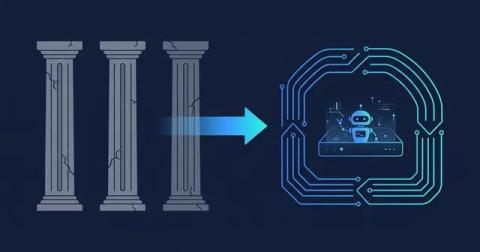
The Three Pillars Were Built for Humans

It was 2am and I was paying for the privilege. Something was on fire in production, and I’d done the modern thing: I pointed an AI agent at it. It ingested the dashboards. It read the logs. It walked the traces. Then it handed me back a beautifully formatted paragraph that said, in effect, “latency is elevated on the checkout path.” I knew that. The page told me that.

The hard part of AI root cause analysis is no longer the model

Every few weeks someone tells me root cause analysis is a solved problem now: pipe your telemetry into an LLM, let it tell you what broke. I wish it were that easy. After years on this, I think "can AI do RCA?" is the wrong question, because doing RCA with an LLM is really two separate jobs, and the answer is different for each. They break in completely different ways, so it's worth pulling them apart.

Transform Endpoint Management with AIDriven Automation

In just two minutes, learn how our AI-powered platform unifies control across Windows, Mac, Linux, Mobile, and even VR/XR headsets. Discover how to eliminate tedious tasks with automated patching, zero-touch onboarding, and self-healing capabilities—allowing your team to focus on strategy instead of firefighting. What you’ll see in this video.

Autonomous Worker Agents: AI Agents in Your Pipelines | Harness Blog

AI is writing more of the code. Software delivery, the work between writing code and running it in production, is where most of the day still goes. Building, testing, scanning, deploying, remediating, and operating still require the same, if not more, effort as before AI. Today, we're introducing Autonomous Worker Agents for software delivery: the platform for enterprises to build and safely run AI agents that handle the work between writing code and shipping it to production.

6 Ways to Use the Hyperping MCP Server

When something goes down, the last thing you want is to alt-tab between a monitoring dashboard, your on-call tool, and three Slack threads to figure out what is happening and who owns it. That context is usually all there. It is just scattered. The Hyperping MCP server fixes that by putting your monitoring data inside the AI tools you already work in. Your agent can read monitor state, outage timelines, SLAs, and on-call schedules, and answer the questions you would normally chase across tabs.

How IT Teams Can Cut AI Token Costs with Deterministic Workflows

In our previous post on AI tokenomics, we looked at the rising cost challenge behind token-based AI systems. When enterprise IT teams rely on AI to reason through the same repeatable work over and over again, the costs to resolve those tasks may increase to an unreasonable level. That is where a deterministic IT automation platform becomes essential. A deterministic workflow follows predefined logic, meaning that given the same inputs and conditions, it produces the same expected result.