

Operations | Monitoring | ITSM | DevOps | Cloud

Introducing Harness AgentTrace: An Observability and Guardrail Framework for AI Agents | Harness Blog

AI agents fail differently from the software we spent the last two decades learning to monitor. We hear some version of the same story from teams shipping agents to production: an agent starts producing wrong answers. Not obviously broken: confident, well-formatted, plausible wrong. The logs are clean, latency looks healthy, and error rates sit at zero. Nothing flags a problem. A user eventually does.
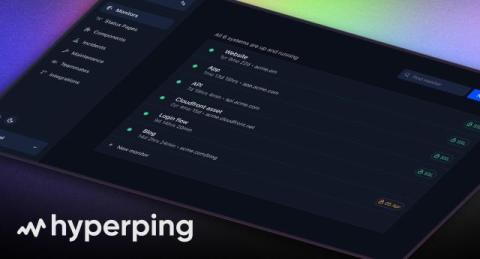
MCP for SLA Monitoring: Uptime, MTTR & MTTA

MCP for SLA monitoring gives an AI agent direct access to measured uptime, mean time to resolve (MTTR), mean time to acknowledge (MTTA), outages, and reliability risks. With Hyperping, you can ask Claude, Cursor, Codex, or another MCP client for an SLA report and get an answer based on your live monitoring data instead of copying numbers between dashboards. The distinction between monitoring data and SLA compliance matters. Hyperping measures availability and incident response.

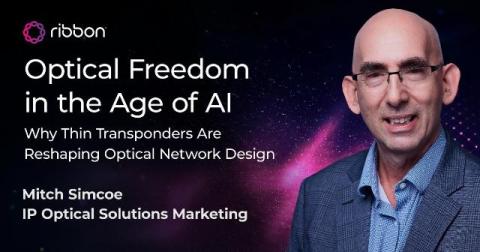
Optical Freedom in the Age of AI: Why Thin Transponders Are Reshaping Optical Network Design

AI is driving the next wave of digital transformation, but it is also creating an unexpected challenge for network operators: optical capacity is becoming a strategic bottleneck. The same AI boom fueling billions of dollars in data center investment is placing unprecedented demand on optical networking infrastructure.

Introducing Harness Agent DLC: Extending your SDLC to AI Agents

Harness Agent DLC: Ship AI Agents to Production Safely Building an AI agent is easy. Getting one into production safely is where teams get stuck. Harness Agent DLC extends the software delivery lifecycle to AI agents, giving teams a clear path to evaluate, deploy, secure, observe, and optimize agents in production. Learn more: Because agents dynamically choose their own tools, APIs, and actions, their behavior can change every time they run. Harness Agent DLC gives engineering teams the controls needed to move beyond experiments and operate agents safely at scale.

SDLC Phases and the Reliability Gap AI Can't Close

Decisions in each SDLC phase from planning to design, development, testing, deployment, and maintenance are made without sight of live production behavior. AI coding agents are widening that visibility gap faster, working faster than human engineers ever could. This piece maps exactly how this gap presents at each phase, and the harm that this brings.

I'll have my AI agent call your AI agent: Battle for your digital hub

On this episode of Masters of Data, we unpack what it actually means to expect AI to be the primary interface for everything we do. We dig into the pull toward centralizing work in a single hub like Claude versus staying spread across specialized tools like Slack, Asana and Zoom, and where the line sits between helpful automation and letting an agent speak on your behalf. We also get into the "chief of staff" agent workflow for daily roundups and why specialized, best-of-breed tools aren't going anywhere, even as hubs get smarter.

Actionable Intelligence, Not Artificial Intelligence: What AI in Data Center Management Actually Requires

“AI-powered” has become a marketing label applied to almost any data center software feature. A more useful and precise term is actionable intelligence — a four-level maturity model (descriptive, diagnostic, predictive/prescriptive, and cognitive) that shows whether a platform’s AI claims are backed by real data infrastructure or just a chatbot layered on top of an incomplete system.

AI's Role in Enhancing Digital Commerce Operations

Artificial intelligence is quickly becoming a must-have for digital businesses, not just a nice-to-have. For companies looking to sharpen their operations, AI offers powerful ways to predict what's next, smooth out customer interactions, and keep transactions safe. It's not about replacing people, but giving them better tools. This lets teams focus on big-picture strategy while AI crunches data and automates tasks. This shift is changing what's possible in terms of how efficient a business can be, how happy its customers are, and how much it can grow.