Operations | Monitoring | ITSM | DevOps | Cloud

The latest News and Information on Containers, Kubernetes, Docker and related technologies.

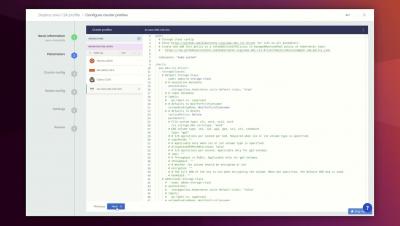
Managing Rancher Kubernetes Engine (RKE/2) with the D2iQ Kubernetes Platform (DKP)

This video describes how to use the D2iQ Kubernetes Platform (DKP) to manage an existing CNCF-conformant cluster created with Rancher Kubernetes Engine (RKE or RKE2). Getting to Kubernetes is a first step. Getting Kubernetes into production is quite another! You've got a few clusters in place already, and they may even be in production, but what you need now is some way to manage them all from the same place. DKP can help! You can use DKP to manage existing clusters as well as new clusters you create with DKP itself.

Managing Open-Source K3s with the D2iQ Kubernetes Platform (DKP)

This video describes how to use D2iQ Kubernetes Platform (DKP) to manage an existing CNCF-conformant Kubernetes cluster created with K3s, a small footprint version of Kubernetes (sometimes abbreviated "K8s"). Getting to Kubernetes is a first step. Getting Kubernetes into production is quite another! You've got a few clusters in place already, and they may even be in production, but what you need now is some way to manage them all from the same place. DKP can help!

Monitoring with Custom Metrics

By kickstarting a monitoring project with Prometheus, you might realize that you get an initial set of out-of-the-box metrics with just Node Exporter and Kube State Metrics. But, this will only get you so far since you will just be performing black box monitoring. How can you go to the next level and observe what’s beyond? They are an essential part of the day-to-day monitoring of cloud-native systems, as they provide an additional dimension to the business and app level.

Epinio Meets s3gw

Since the very first version, Epinio has made use of an internal S3 endpoint to store the user’s projects in the form of aggregated tarballs. Those objects are then downloaded and staged by the internal engine’s pipeline and, finally, they are deployed into the Kubernetes cluster as consumable applications. Epinio makes use of S3 as an internal private service. In this scenario, S3 can be thought of as an internal ephemeral cache with the purpose of storing temporary objects.

Kubernemlig's Multi-Cluster DNS Setup

Are you ready for a geeky deep-dive into the world of multi-cluster DNS setups? Buckle up, because we're about to embark on a journey through the magical realm of domain name resolution! A multi-cluster DNS setup is like the ultimate TARDIS for your servers. Just like how the TARDIS can transport the Doctor to any location in time and space, a multi-cluster DNS setup allows users to access multiple clusters of servers from anywhere in the world, using a single, convenient domain name.
Sponsored Post

Reducing Security Incidents: Implementing Docker Image Security Scanner

Are you utilizing Docker to deploy your applications? If so, you're not alone. The use of Docker has skyrocketed in popularity in recent years. While it offers numerous benefits, it also introduces new security risks that need to be addressed. But, why is reducing security incidents so important? Simple - the cost of a security breach can be devastating. From lost customer trust to financial losses, the consequences of a security incident can be severe. That's why it's crucial to take steps to prevent them from occurring in the first place. Enter Docker image security scanners.

Optimize Kubernetes workload resourcing with StormForge and Datadog

StormForge Optimize Live is a machine learning-powered performance and resource optimization solution for Kubernetes workloads. Optimize Live ingests and analyzes production observability data and recommends specific actions to optimize CPU and memory utilization. You can take these actions manually or set them to occur automatically, making it easier to maintain a high level of application performance while minimizing cloud costs.

Kubernetes Liveness Probes: A Practical Guide

Have you ever wondered how you can help Kubernetes manage your pods in the most efficient way? Kubernetes can do a decent job “out of the box,” but it can be optimized just like any other system. One such optimization in the Kubernetes world is introducing liveness probes, and in this post, you’ll learn everything about them.

Containerization 101 | Getting Started & Best Practices

Containers and Microservices architectures are no longer the new kid on the block, and it may be time to take a fresh look at your ecosystem. In this session we will provide a baseline for getting started with containerization in 2023 with a strong emphasis on security. To help the novice and the seasoned veteran, we’ll navigate topics that apply to all, including.