Operations | Monitoring | ITSM | DevOps | Cloud

Latest posts

Optimizing a Golang service to reduce over 40% CPU

10 years ago, Google was facing a critical bottleneck caused by extremely prolonged C++ compilation times and needed a totally new way to solve it. Google engineers tackled the challenge by creating a new language called Go (aka Golang). The new language of Go borrows the best parts of C++, (most notably it’s performance and security features) and combines it with the speed of Python to enable Go to quickly use multiple cores while being able to implement concurrency.

Cloud Instance Initialisation with cloud-init

Private cloud, public cloud, hybrid cloud, multi-cloud... the variety of locations, platforms and physical substrate you can start a cloud instance on is vast. Yet once you have selected an operating system which best supports your application stack, you should be able to use that operating system as an abstraction layer between different clouds.

The no-nonsense way to accelerate your business with containers

Container technology has brought about a step-change in virtualisation technology. Organisations implementing containers see considerable opportunities to improve agility, efficiency, speed, and manageability within their IT environments. Containers promise to improve datacenter efficiency and performance without having to make additional investments in hardware or infrastructure. Traditional hypervisors provide the most common form of virtualisation, and virtual machines running on such hypervisors are pervasive in nearly every datacenter.

Security Automation & Orchestration Needs a Unified Platform

Today's Security Operations Centers are inherently at risk. Plagued with skill shortages and increasing incident volume, CISOs need to counteract widespread threats-like phishing, exfiltration, ransomware and lost devices-fast. A unified Security Incident Response Platform helps expedite your response by optimizing processes and empowering your security team.

Rancher: March 2020 Online Meetup: Automating K3s Cluster Upgrades

While developing K3s to run at the edge we had to change our assumptions about how to manage these clusters at scale. A key assumption in a data center is that you have stable network connectivity, but this may not be true at the edge. You may have unreliable cellular service or limited time during the day in which you can connect. In these environments, operations such as upgrading Kubernetes or patching an operating system require a different paradigm.

How much does a status page cost?

Keeping your customers informed of the status of your website, application, or service is essential nowadays. If you don’t have a status page to communicate this, you’re missing an opportunity to improve transparency and reduce customer support burden. This is especially true if you are running an online business and your website is your main source of income, a status page is crucial not only for your business but for your customers as well.


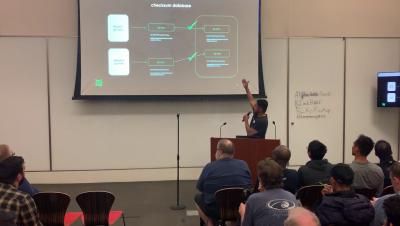
Security in Go Modules and Vulnerabilities in GoCenter at GoSF Meetup in San Francisco

Deep Datta from the JFrog Community Team shares his learnings about Go 1.13 introducing important security features to Go Modules including a checksumdb. He explains how this works and provides information on other tools in GoCenter that keep modules secure include vulnerability scanning and Jfrog Xray.